Melbourne
A tram city on a bay, seen from the eastern suburbs
We have been to Melbourne many times, most recently from late February into March 2026. That time we stayed in Box Hill, in the eastern suburbs, and then with friends in Doncaster East. We came into the city on the 109 tram. That is the way to understand Melbourne. It is large and sprawling, and the trams are what hold it together. Stay near a tram line, and the market, the gardens, the bay and the penguins are all within reach.
What is first-hand here, and what is not. The trams, the market, Chinatown, Box Hill, the gardens around Parliament, the Royal Exhibition Building, the Shrine, St Kilda, Brighton, Puffing Billy, Phillip Island and the rainforest at Toolangi are places we have been. The laneways, the galleries and the areas we did not stay in are researched, and so is anything that changes, like fares and opening days.
Last updated 24 September 2026
A little background
Melbourne stands on the country of the Wurundjeri Woi-wurrung and Bunurong peoples of the Kulin nation, who have lived around the bay and the Yarra River for tens of thousands of years. The European settlement was founded in 1835, and within twenty years the Victorian gold rush had made it one of the richest cities in the world.
That money built the city you walk through now: the wide streets of the CBD, the Victorian arcades, Parliament House and the Royal Exhibition Building, finished in 1880. Australia's federal Parliament sat in Melbourne from 1901 until Canberra was ready in 1927. The trams date from the same age of confidence, and the network is now one of the largest in the world.
The gold rush also brought the city's first large Chinese community, and Little Bourke Street has been its Chinatown since the 1850s. Today the Chinese presence is strongest in the eastern suburbs, in places like Box Hill, where we stayed. Melbourne has kept both: the old Chinatown in the grid, and the new one out on the tram line.
How Melbourne fits together
The centre is compact; the city is not. The CBD is a neat grid on the north bank of the Yarra, and most of what a visitor comes for is within a tram ride of it. Beyond that, Melbourne spreads a long way in every direction except the bay. Box Hill, where we stayed, is about 15 kilometres east of the centre, and the city carries on well past it.
So the tram decides where you stay. Trams run out from the CBD like spokes: east to Box Hill, south to St Kilda and the bay, north to Carlton. The trains and the new Metro Tunnel reach further. The seven panels below use the same area names as the rest of our Melbourne coverage.
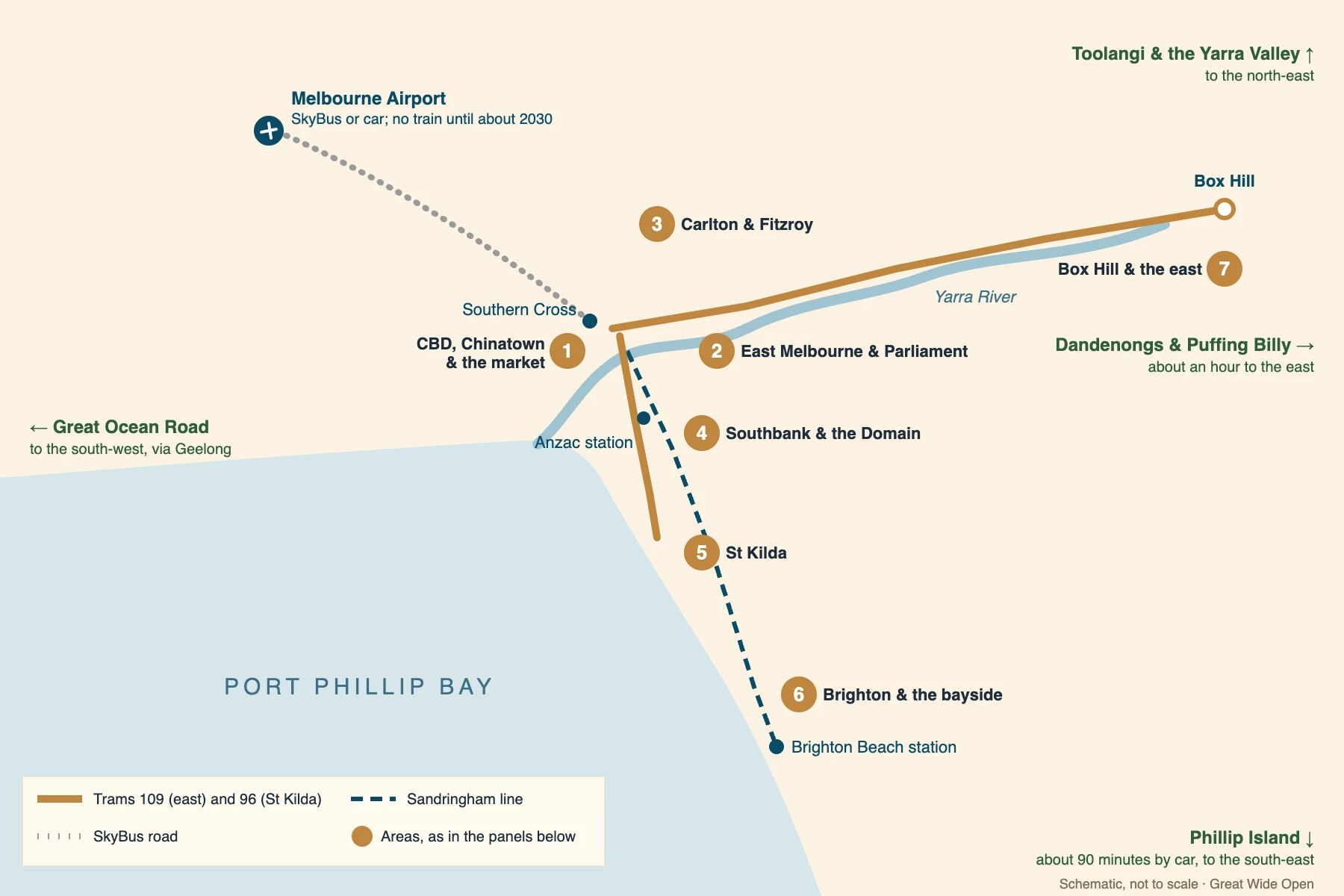
CBD, Chinatown & the market
the grid and its lanewaysThe Queen Victoria Market at one corner, Chinatown on Little Bourke Street, and between them the laneways and arcades the city is known for. We walked most of it, and trams inside the zone are free.
East Melbourne & Parliament
gardens and governmentParliament House at the top of Bourke Street, with the Fitzroy and Treasury Gardens behind it and the Melbourne Cricket Ground beyond. We walked the gardens around the Parliament buildings; it is the calmest edge of the centre.
Carlton & Fitzroy
exhibition and Italian foodNorth of the CBD, with the Royal Exhibition Building in Carlton Gardens, which we walked to, and Lygon Street's Italian restaurants. Fitzroy, to the east, has Brunswick Street's cafés, bars and shops.
Southbank & the Domain
the arts and the ShrineAcross the Yarra: the National Gallery of Victoria and the Arts Centre, then the parkland of Kings Domain and the Royal Botanic Gardens. The Shrine of Remembrance stands at its heart, and the new Anzac station is at its gate.
St Kilda
the pier and the penguinsMelbourne's seaside suburb, with a beach, a long pier and a breakwater at its end. We saw little penguins among the breakwater rocks, a few kilometres from the CBD, which still seems improbable.
Brighton & the bayside
the bathing boxesA well-off bayside suburb south of St Kilda. We walked its beach at sunset, past the painted bathing boxes, a 500-metre walk from Brighton Beach station.
Box Hill & the east
where we stayedOur base, in an Airbnb, before moving to friends in hilly Doncaster East. Box Hill is strongly Chinese in population and character, and the food is good. It is a real suburb, not a visitor district.
Places you don’t want to miss
Eight places, all of them ones we have been to. Four are in or near the centre, two are on the bay, and two are a day out of the city.
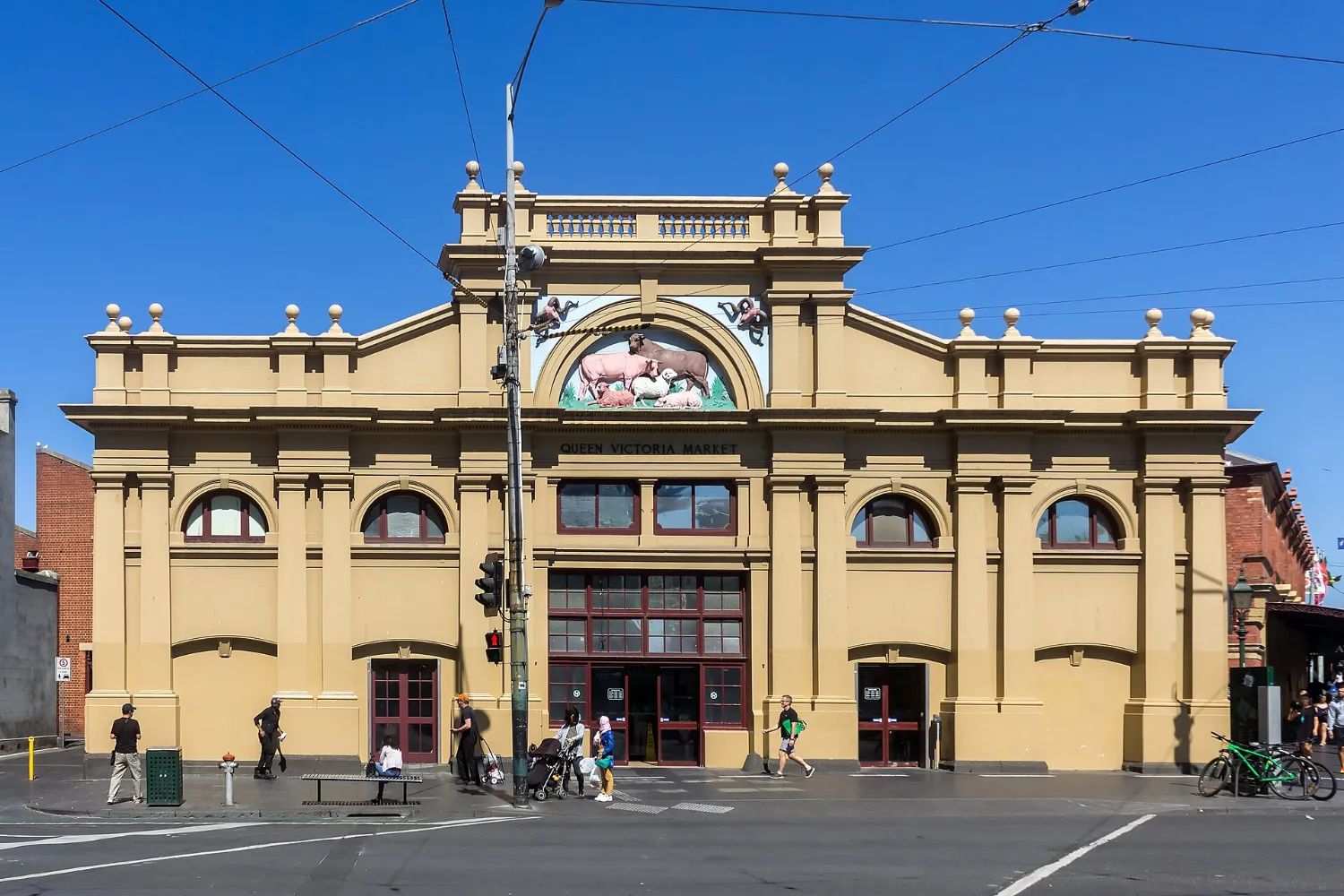
Queen Victoria Market
Our first recommendation for a first-time visitor: fruit, fish, meat, cheese and clothes under old sheds. It is closed on Mondays and Wednesdays.
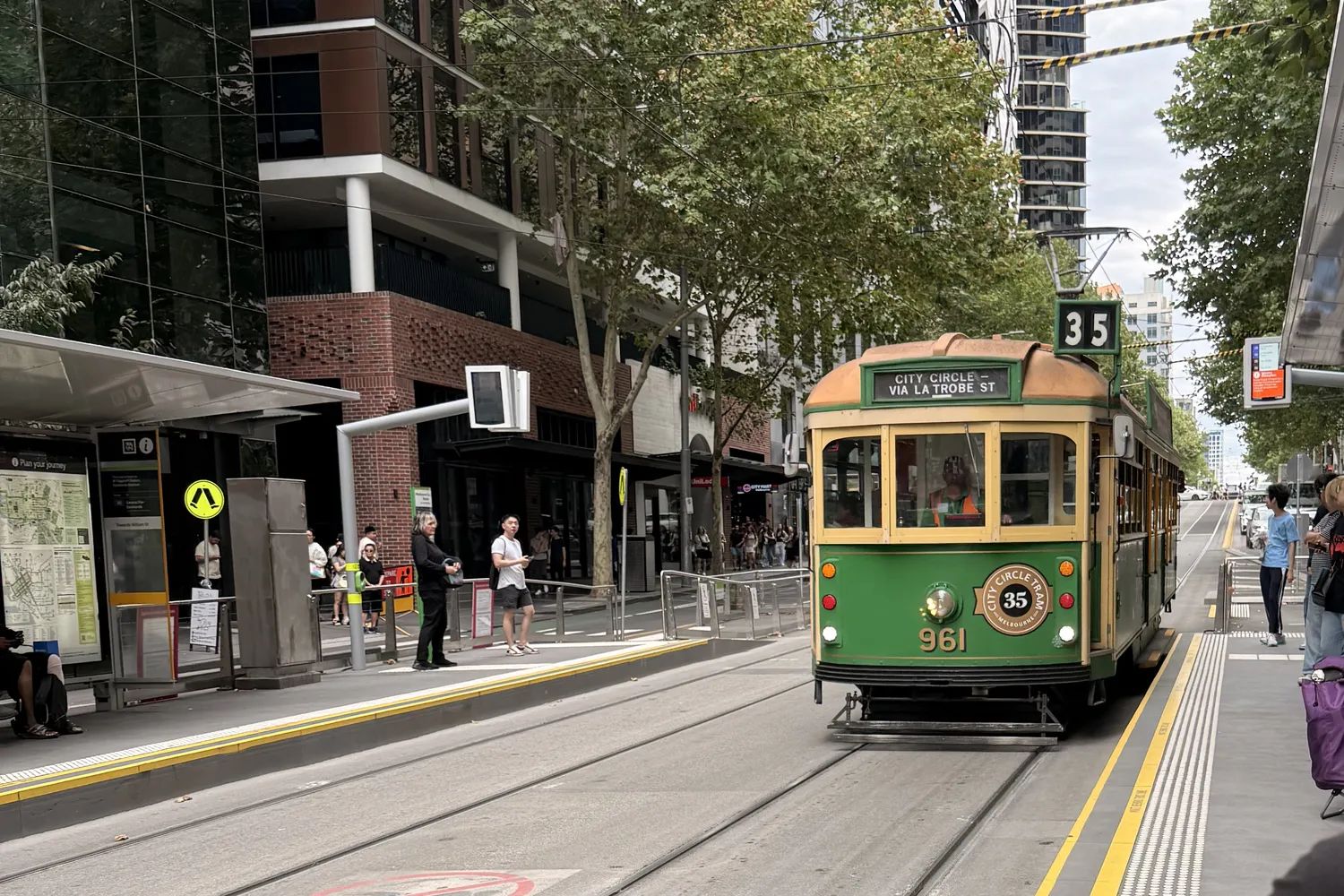
The trams
Fast, frequent and free inside the CBD zone. The heritage City Circle tram was too crowded to board when we tried, so ride an ordinary one instead.
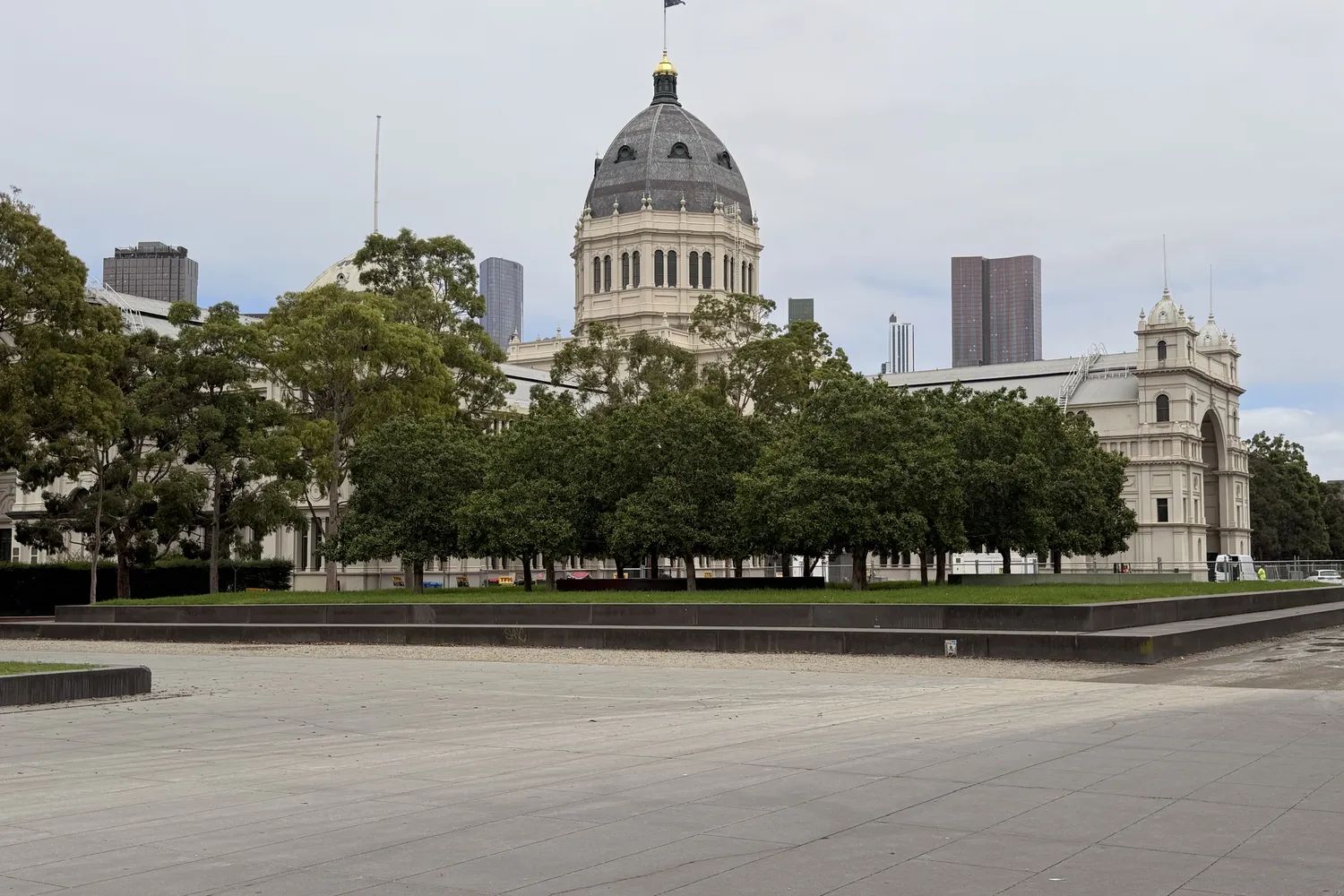
Royal Exhibition Building
Built for the International Exhibition of 1880 and a World Heritage site since 2004, set in Carlton Gardens. Walk round it, then through the gardens.
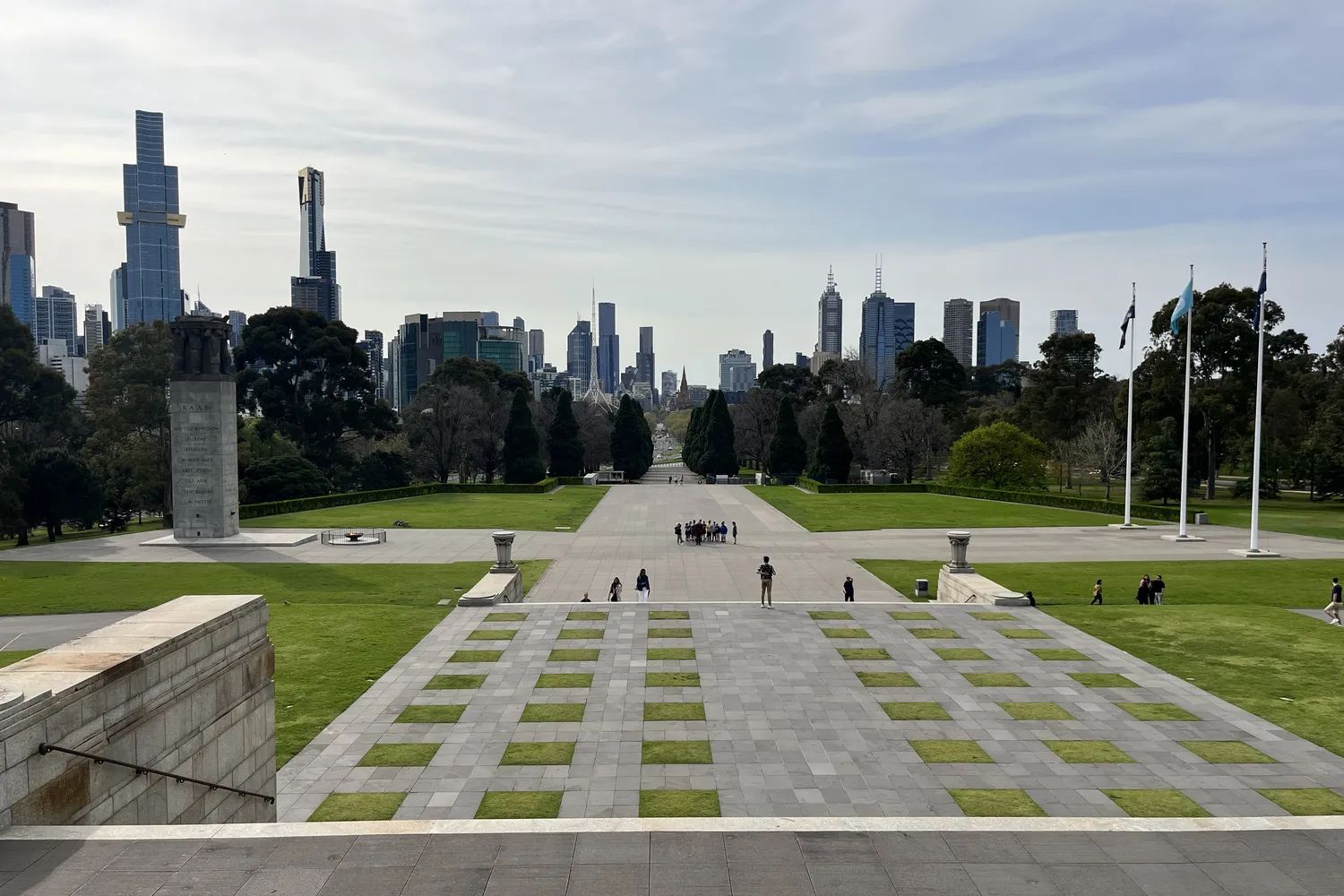
Shrine of Remembrance
Victoria's war memorial, in the parkland of Kings Domain. Climb to its balcony for the view straight down St Kilda Road to the city.
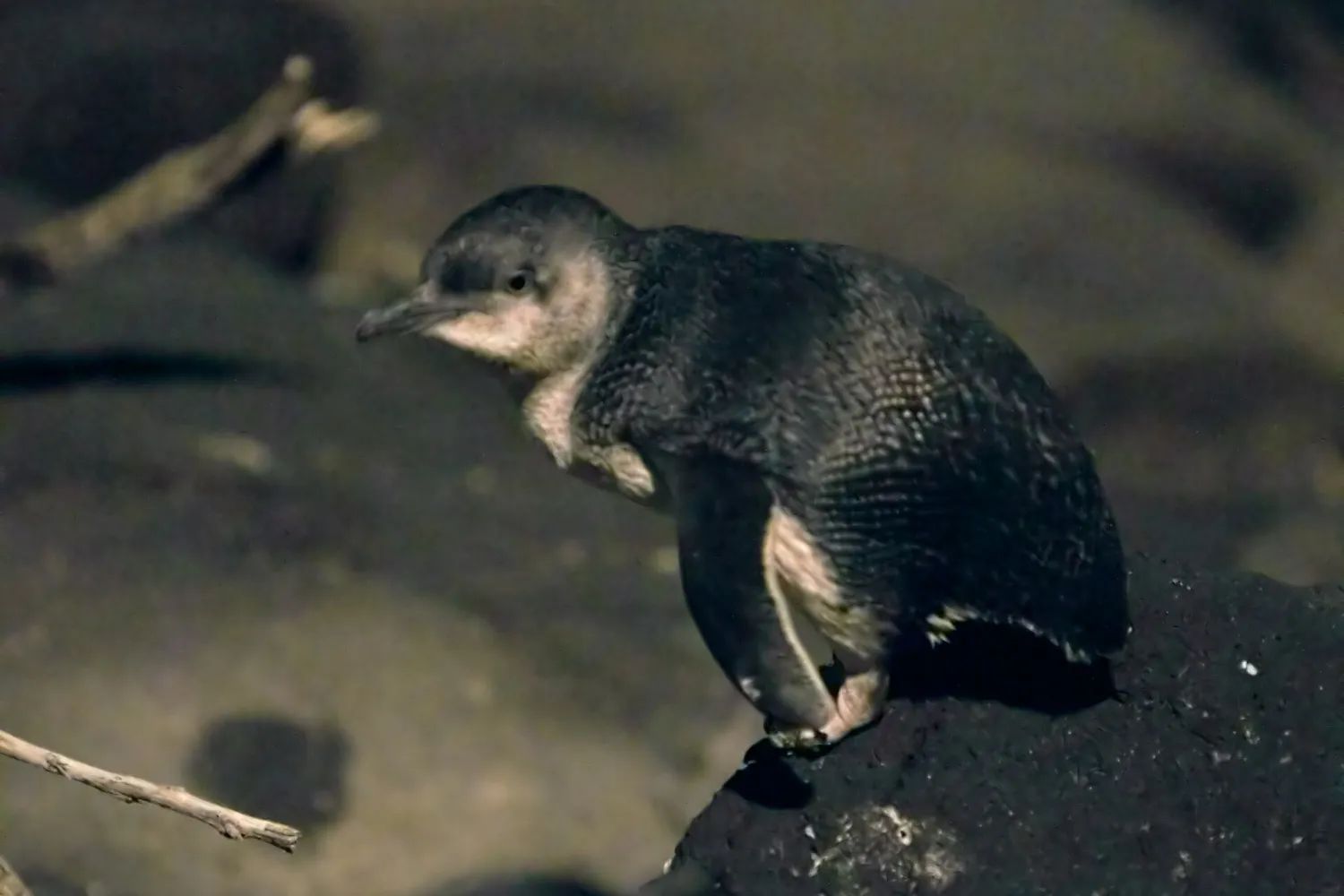
The little penguins
A colony lives on the St Kilda breakwater, a tram ride from the CBD; viewing is free but must be booked. Phillip Island's Penguin Parade is the fuller experience.
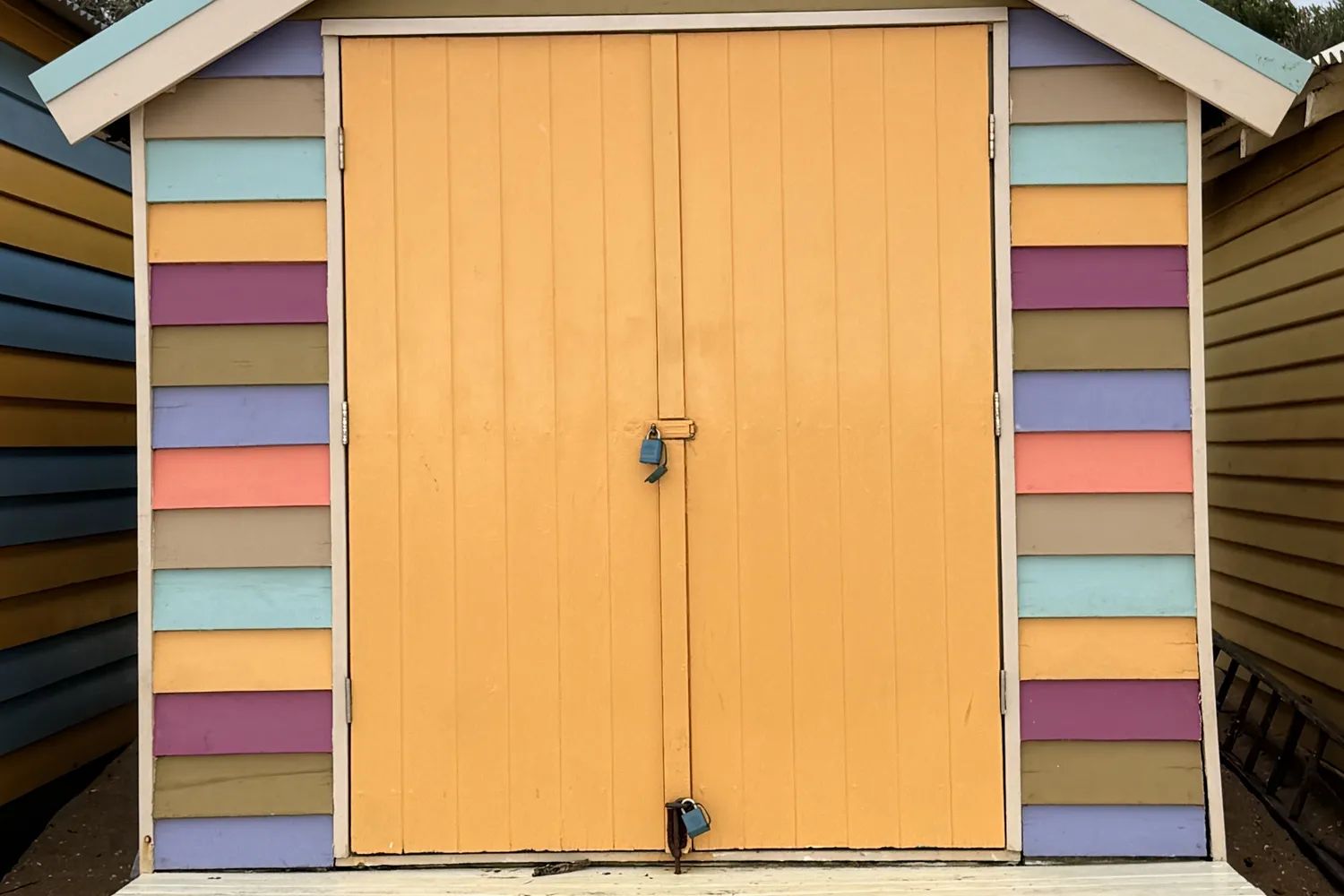
Brighton bathing boxes
A row of brightly painted beach huts on the bay, dating from the Victorian era. Come at sunset, when the wind drops and the light softens.
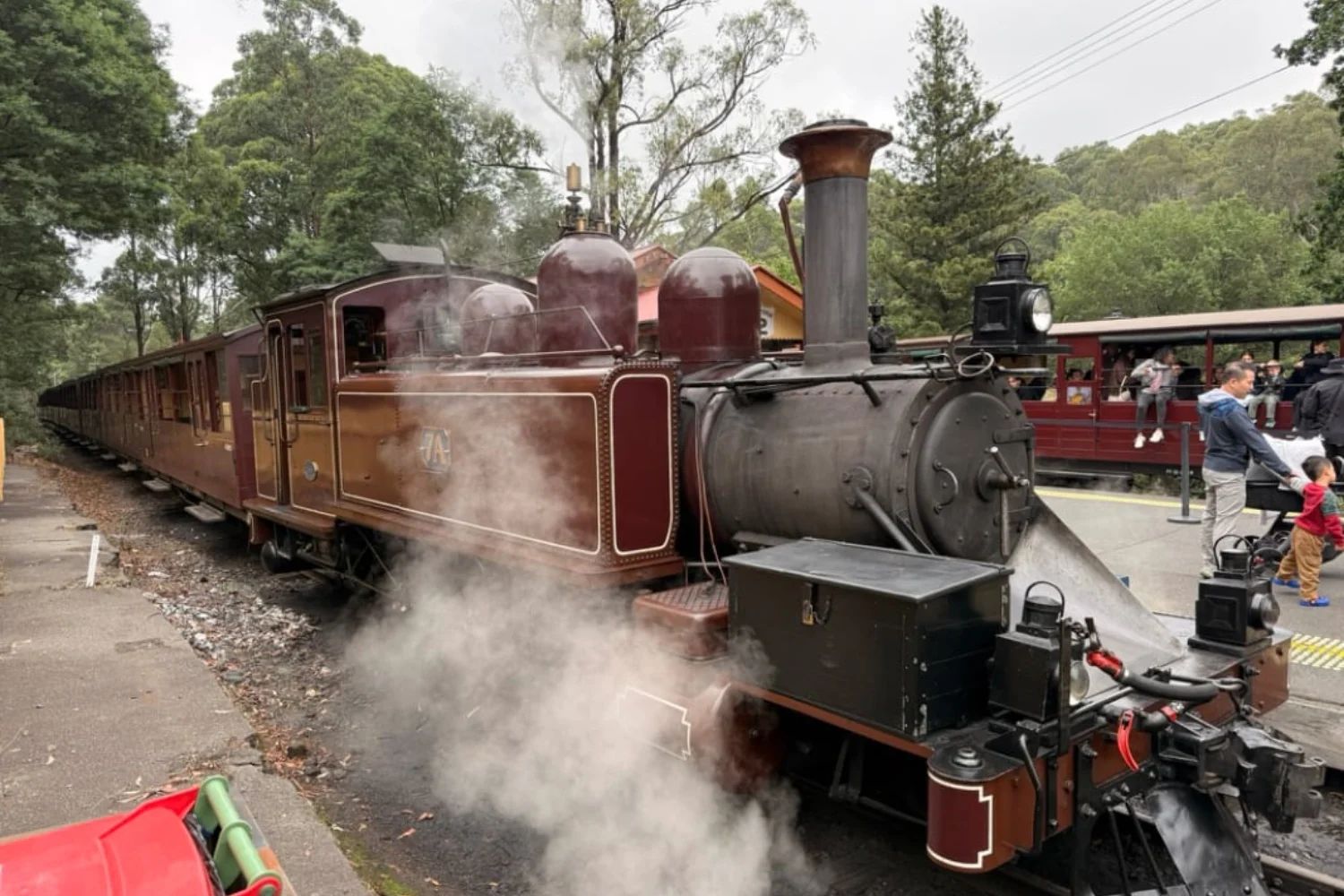
Puffing Billy
A preserved steam railway through the forest of the Dandenong Ranges, from Belgrave to Lakeside. Our guide covers the ride.
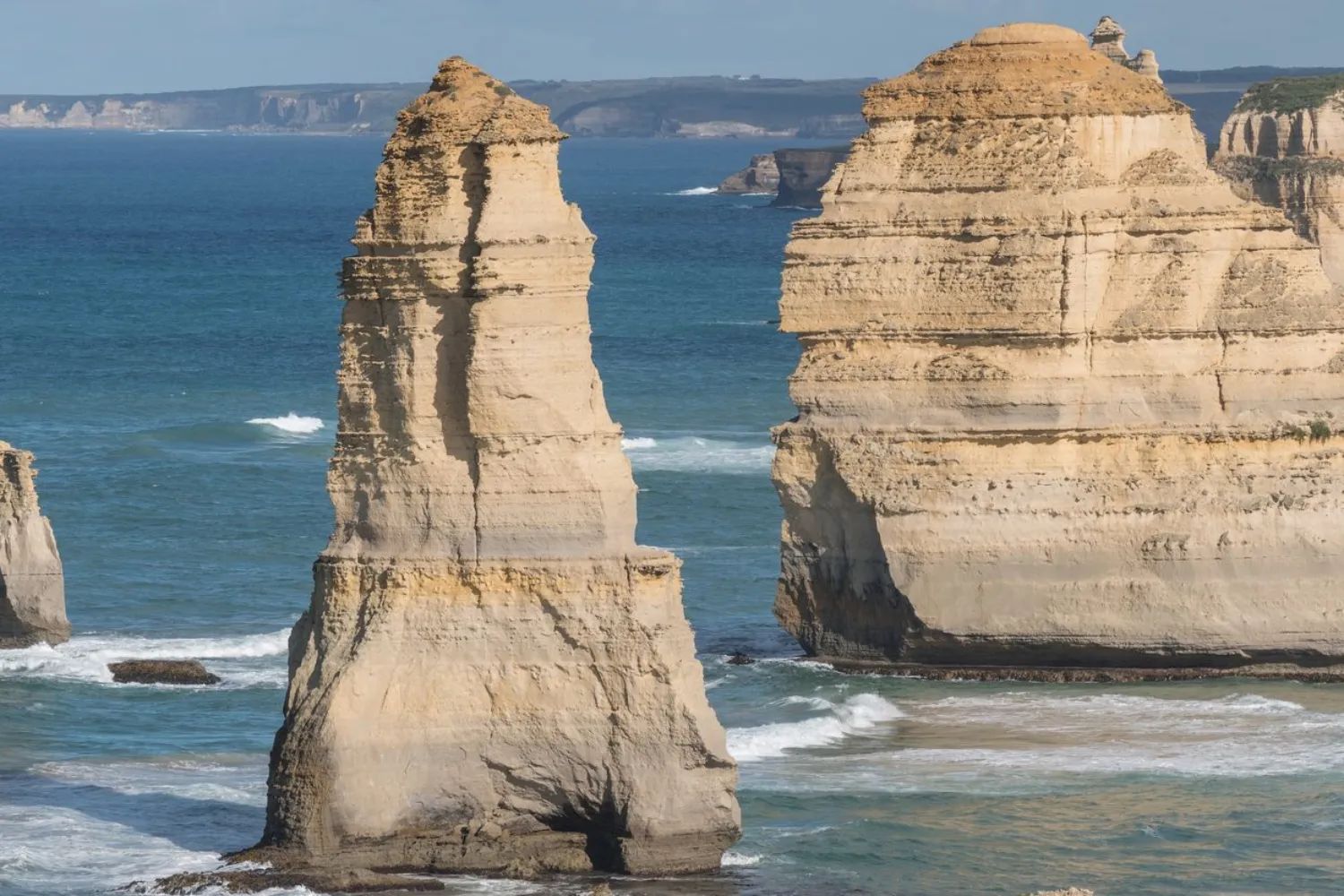
The Great Ocean Road
The coast road west of Melbourne to the Twelve Apostles. Our guide answers the question everyone asks: is one day enough?
Only Puffing Billy and the Great Ocean Road have guides so far. The other six cards carry no link rather than a link to nothing.
The four practical questions
When should I visit Melbourne?
Autumn and late spring, and what "four seasons in a day" means.
See below ↓ Where to stayWhere should I stay in Melbourne?
Eight areas compared, and why the tram line matters.
Read the guide → Where to eatWhere should I eat in Melbourne?
Six food areas, from Chinatown to Footscray.
Read the guide → Getting aroundHow will I get around?
Trams, the new Metro Tunnel, half-price fares until 2027, and the airport.
See below ↓When to visit
March to May and October to November are the months to aim for. Melbourne is milder than its reputation, but changeable. The figures below are the Bureau of Meteorology's averages for Olympic Park, by the CBD, from 2013 to 2026.
| Months | Temperature | Rain | What it means |
|---|---|---|---|
| December to February | 25–27°C by day, 14–16°C at night | The driest months, 3–6 wet days | Warm, with hot spells; school holidays and big events |
| March to May | 24°C falling to 18°C | 5–9 wet days a month | Settled and mild: one of the two best windows |
| June to August | 14–16°C by day, 7–8°C at night | The most wet days, about 9 a month | Cool and grey; good for galleries and food |
| September to November | 18°C rising to 22°C | 8–9 wet days a month | The other good window, from October |
"Four seasons in one day" is true. We had it in March: sunshine that turned to cloud, wind and drizzle within an hour, and a cold afternoon after a hot morning. Melbourne sits between the hot interior and the cold Southern Ocean, and the weather swings between the two. Carry a layer whatever the forecast says. Two events fill the city's hotels: the Australian Open tennis in January, and the Melbourne Cup, run on the first Tuesday of November. Book early if your dates overlap either, or avoid them. For the rest of the country, see our guide to the best time to visit Australia.
Where to stay
Choose a tram line before you choose a room. Melbourne is large and sprawling, and a cheap room in the wrong suburb costs you an hour a day. We stayed in Box Hill, at the end of the 109 tram, which worked because the tram ran straight into the city.
For a first visit, stay in the CBD, where trams inside the grid are free. Our guide to where to stay in Melbourne compares eight areas, from Southbank and St Kilda to Box Hill, with price bands and the hotels we would look at.
Where to eat
Go to Box Hill for Chinese food. It is strongly Chinese in population and character, and the food there is good, cooked for the people who live there. It is at the end of the 109 tram and on the train line, so it is easy to reach from the centre.
In the city, Chinatown on Little Bourke Street is a good place to eat. Its Shanghai restaurants are celebrated for soup dumplings, xiaolongbao: small buns with the soup sealed inside, eaten carefully. Carlton's Lygon Street is the traditional place for Italian food.
The Queen Victoria Market is a meal in itself: fruit, fish, meat and cheese, and the hot jam doughnuts the market is known for. It trades on Tuesdays, Thursdays, Fridays, Saturdays and Sundays. For coffee, the CBD's laneways and arcades are packed with small cafés, and Melbourne takes its coffee seriously. Restaurants change fast, so check recent reviews for a particular place.
Our guide to where to eat in Melbourne compares six food areas, from Chinatown to Footscray, with the dishes to try and a one-day food route.
Getting around
The trams are fast and frequent, and they get you into the city quicker than a car. Inside the CBD's Free Tram Zone you ride without paying; do not tap on, and watch for the signs at the stops that mark where the zone ends. Beyond it, trams, trains and buses share one fare system, and you must tap on. Ticket inspectors do check. We used the 109 from Box Hill every day, and it was quicker than driving would have been.
Public transport is half price for everyone, visitors included, until 1 January 2027. Transport Victoria cut fares from 1 June 2026; a full-fare day costs $5.70 instead of $11.40. You can now tap on with a bank card, phone or watch on trains and trams, rolled out from June 2026, instead of buying a myki card. Buses were due to follow, but we could not confirm the date, so check before relying on it. Check Transport Victoria for current fares.
The Metro Tunnel opened on 30 November 2025, with five new stations under the city: Arden, Parkville, State Library, Town Hall and Anzac, on St Kilda Road beside the Shrine. It is the biggest change to getting around Melbourne in decades.
There is no train to the airport, and there will not be until about 2030. Take the SkyBus express to Southern Cross station, a taxi, or, as we did, a hire car. We found the road access confusing on the way back, so allow extra time.
Day trips
Phillip Island is the day trip we would choose first. It is about 90 minutes by car, and its Penguin Parade is the best way to see little penguins. We sat by the beach at nightfall as they came out of the surf, walked past us and dispersed into their burrows. It was magical. Viewing is now from grandstands and viewing stands, bookings are essential, and cameras are not allowed during the parade.
The Dandenong Ranges are an hour east. Take the train to Belgrave for Puffing Billy, the steam railway through the forest to Lakeside, which we rode in March 2026. North-east, about an hour by car, Toolangi State Forest has boardwalks through rainforest and mountain ash, the tallest flowering plants on Earth; we walked them the same week. The Yarra Valley's wineries are in the same direction.
The Great Ocean Road is the big one, west through Geelong to the Twelve Apostles. We were driven along it by friends, and our guide answers whether one day is enough.
A few honest limits
Melbourne is large, and it takes time to cross. A day that mixes the CBD, St Kilda and Box Hill is a day of trams. Group your plans by area and let the trams do the work. The weather changes fast, too: pack a layer and a light waterproof even in summer, because a warm morning can turn cold and wet by mid-afternoon.
The popular free things are crowded. The City Circle tram was too full to board when we tried, and the St Kilda penguins are limited to 150 people a session, booked in advance. Book the penguins, and ride an ordinary tram around the city instead. And the airport is harder to reach than the city, until its train arrives around 2030.
A final word on Melbourne
Melbourne rewards the visitor who slows down and follows its trams. Start at the market, eat in Chinatown or Box Hill, walk the gardens around Parliament, and end the day by the bay. Then give one evening to the penguins at Phillip Island. It is the most memorable hour we have spent anywhere near the city.
Andrew + Margaret
- The Great Ocean Road Highlight
- Puffing Billy Highlight
- Our day on Melbourne's trams Journeys
- Sydney Overview
- Visiting Australia Overview
- Transport Victoria — journey planner and fares Official
- Phillip Island Nature Parks — penguin bookings Official
- Queen Victoria Market Official
- Bureau of Meteorology — Melbourne forecast Official