Robe
A small limestone port on a curving bay, with a cliff walk to a striped obelisk, a beach you can drive on, lobster boats in the harbour and a remarkable gold-rush story
Robe sits on the curve of Guichen Bay, a town of pale limestone cottages and old inns whose short main street runs down to the sea. Adelaide families have spent their summers here for generations. They come for Long Beach, where cars park on the sand, for the cliff path out to the red-and-white Obelisk, and for seafood from the boats at the marina. Under the holiday town lies an older one: a busy port of the 1850s where thousands of Chinese gold seekers came ashore and set off on foot for the goldfields.
How this page was madeWe rode through Robe on our bicycles in September 2009, on the way from Perth to Sydney, but we have not stayed to explore it. So this page is researched, from the South Australian Tourism Commission, the District Council of Robe, National Parks and Wildlife Service South Australia, Stateliner and the sources named at the end, checked on 12 November 2026. When we go back, we will say so here.
Last updated 12 November 2026
A little background
This is the Country of the Bunganditj (Boandik) and Meintangk peoples. Shell middens in the dunes south of the town record meals eaten here over thousands of years.
Governor Frederick Robe chose the site for a port in 1846. For twenty years the wool of the South East went out across Guichen Bay, more than a million pounds’ worth in the ten years to 1866. Much of the town that trade built still stands, and dozens of its buildings are heritage-listed.
Victoria charged a landing tax of £10 on every Chinese arrival, more than the voyage cost, so in 1857 ships began landing Chinese gold seekers at Robe instead, a town of about 200 people. From here they walked to the goldfields at Ballarat and Bendigo.
How many came, and how far they walked, depends on whom you read: estimates of the total run from about 15,000 to over 17,000, and of the walk from 320 to 500 km. Historians are now revising the story; a 2024 study argues the walk was an organised journey along known routes rather than the ordeal of local legend. In March 2025 searchers found the wreck of the Koning Willem II, which landed Chinese passengers here in June 1857 and was driven ashore off Long Beach a fortnight later.
The poet and horseman Adam Lindsay Gordon, one of the first Australian poets read overseas, met Maggie Park at Robe and married her in 1862. Their meeting is told several ways: at a race meeting, or as she nursed him at the Caledonian Inn after a fall.
How the place fits together
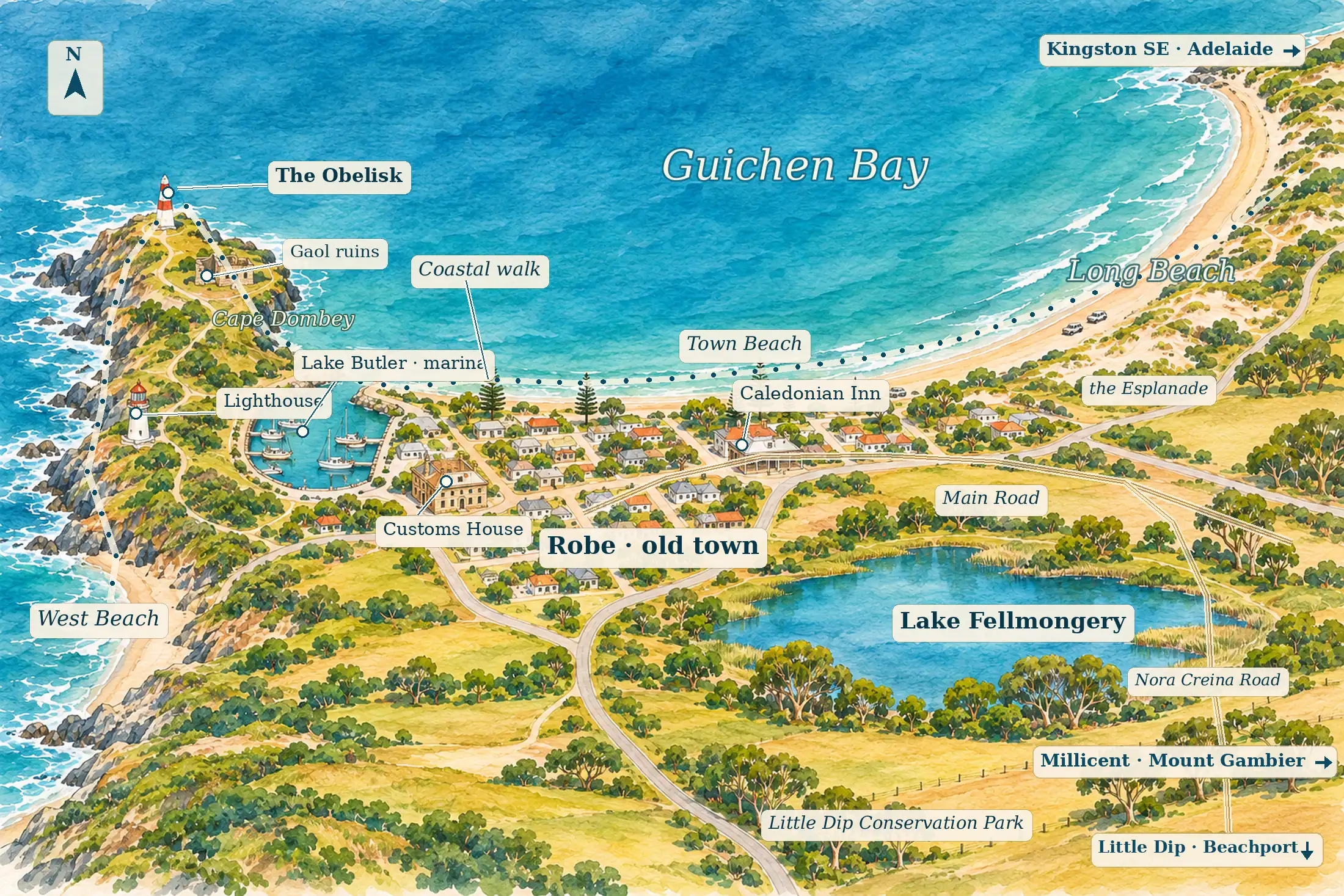
Robe faces north across Guichen Bay. The old town sits on the bay’s southern shore, with Town Beach below it. West of the town, past the Lake Butler marina, Cape Dombey carries the Obelisk and the lighthouse. Main Road leaves to the south-east past Lake Fellmongery, and Long Beach sweeps away to the north-east.
The old town on Guichen Bay
the baseVictoria Street, Mundy Terrace and Royal Circus hold most of Robe’s old buildings, its cafés and its two historic pubs, with Town Beach just below. Stay here and you can walk to everything, including the cliff path out to the Obelisk, and leave the car parked.
Lake Fellmongery and Main Road
for spaceMain Road, the way into town, runs past Lake Fellmongery, a freshwater lake used for kayaking and water-skiing. The holiday parks and many of the motels are here, among trees on the lake shore. The Lake Butler marina, where the fishing boats tie up, is at the other end of the town, below Cape Dombey.
Long Beach
for the sandLong Beach curves away north-east from the town for kilometres, with holiday houses along the Esplanade behind it. You will drive into the old town for most things, but the beach is at the door.
Places you don’t want to miss
Everything here is in the town or within ten minutes of it. None of it has a full guide of its own on our site yet, so these cards carry no links.
The Obelisk and the coastal walk
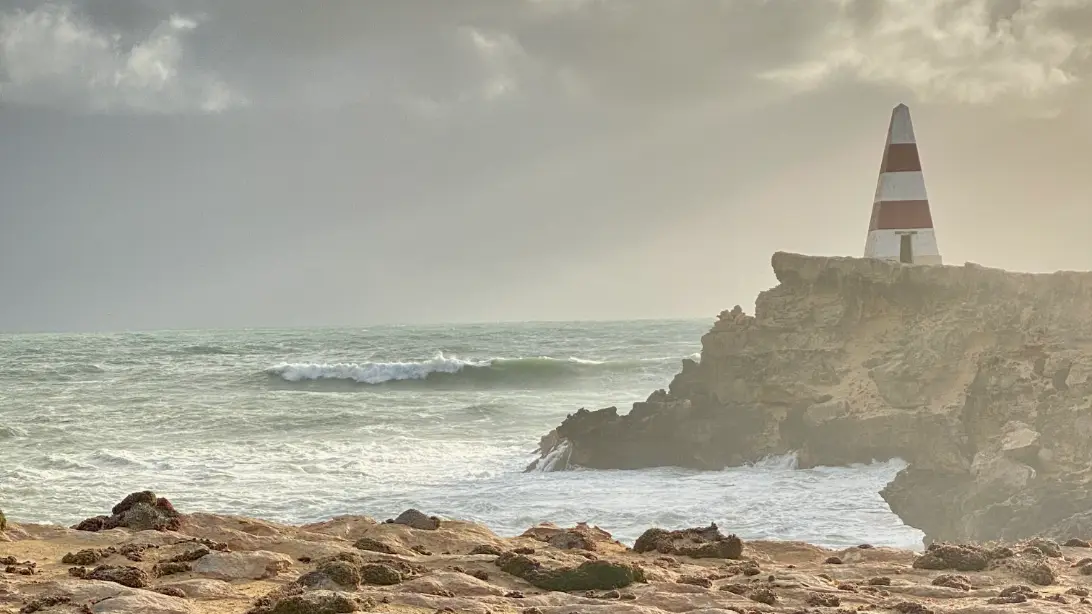
A path follows the cliffs from Long Beach, past the town, to West Beach, about 6 to 7 km; walk any part of it. Its high point is Cape Dombey, where the red-and-white Obelisk was raised in 1855 so that ships could find their way into Guichen Bay. The sea is eating the cliff beneath it, so you see it from the path, behind the fence, with the swell breaking on the rocks below. Close by are the roofless limestone walls of the colonial gaol and the lighthouse. Come in the evening, when the stripes glow against the sea.
The Customs House and Royal Circus
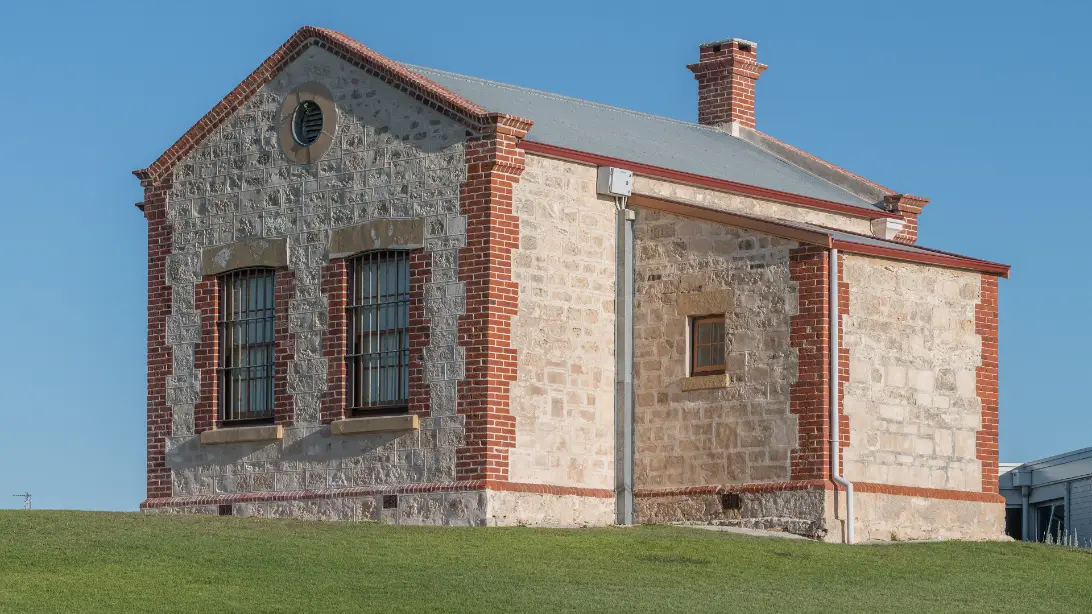
In the 1850s and 60s Robe was one of the busiest ports on this coast, and the Customs House of 1863 is the proof: for some years only Port Adelaide collected more. It stands on Royal Circus, a circle said to have been laid out so that bullock drays could turn. It is now a small maritime museum, run by volunteers and open on a few mornings a week, and the memorial to the Chinese who landed here stands close by.
Victoria Street and the Caledonian Inn
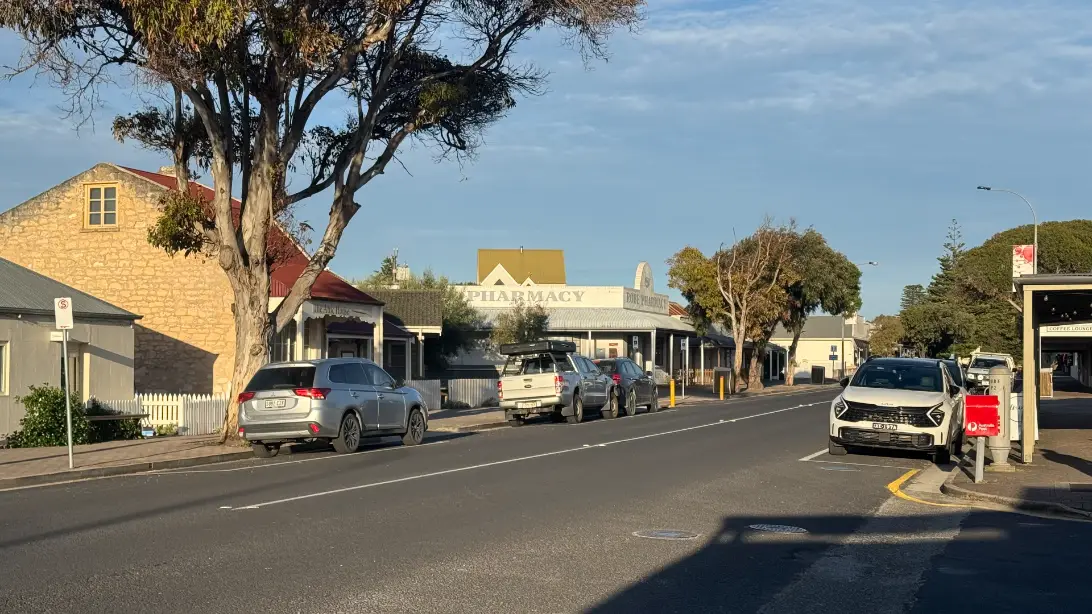
Robe’s main street is short, and many of its buildings are the 1850s and 60s limestone ones. Walk it slowly, past an old saddlery, cottages, galleries and cafés. At the end by the bay is the Caledonian Inn, a pub since the late 1850s, with an open fire in the colder months. The poet Adam Lindsay Gordon stayed here.
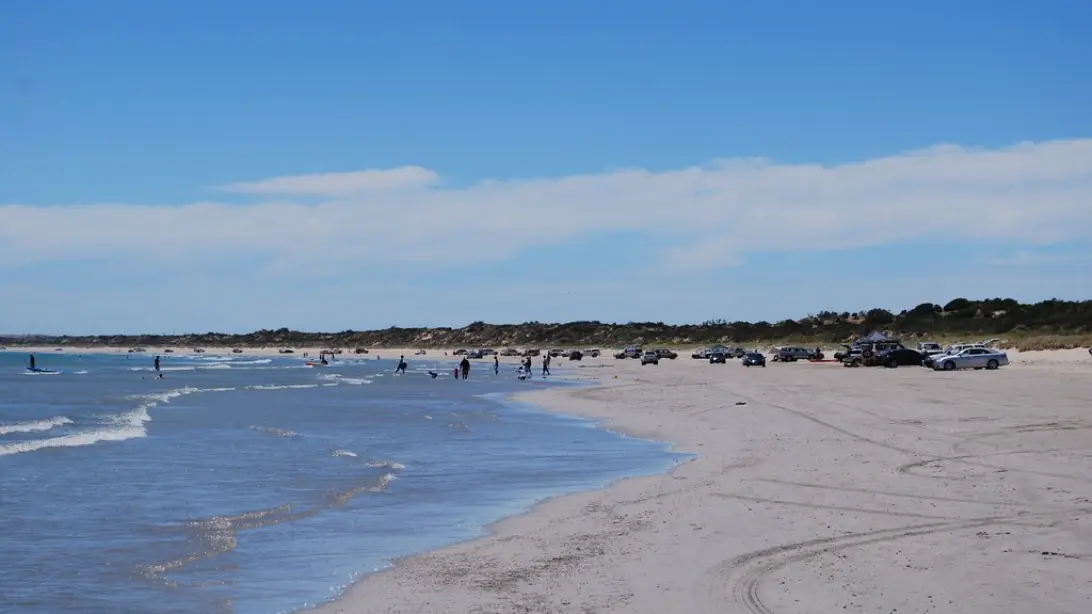
Long Beach
Long Beach runs for kilometres from the edge of town, wide and pale, with gentle surf. It is one of the few beaches where you can drive and park on the sand. In summer families set up for the day beside their cars; in winter you may have it to yourself. Anglers fish the surf beyond the third ramp.
The lakes and Little Dip. Robe is ringed by lakes. Lake Fellmongery, on Main Road, took its name in 1853 from a works that washed wool saved from a ship wrecked in the bay. Five kilometres south, Little Dip Conservation Park is a wild strip of dunes, coastal mallee and small lakes, with walking tracks and four-wheel-drive tracks to its beaches. Entry for vehicles is free.
Walk out to Cape Dombey in the last hour of the day and stop at the fence. The wind comes in off the Southern Ocean smelling of salt and seaweed. Below, the swell breaks white on the rocks and drags back through the gaps in the limestone. The Obelisk’s stripes go from red to rose to grey. Turn round, and the lights of the town are coming on across Guichen Bay.
Getting there and around
By car from Adelaide, take the Princes Highway south-east through Tailem Bend and along the Coorong, then turn off for Robe at Kingston SE; about four hours. From Victoria you come in by way of Mount Gambier and Millicent.
| To or from | Distance | What to expect |
|---|---|---|
| Adelaide | About 340 km | About 4 hours, by the Coorong and Kingston SE |
| Mount Gambier | About 135 km | About 1¾ hours, by Millicent |
| Port Fairy | About 290 km | About 3¾ hours, by Portland country and Mount Gambier |
| Meningie | About 190 km | About 2¼ hours, by Kingston SE and the Coorong |
| Kingston SE | About 45 km | About 35 minutes |
Planning estimates without stops, from OpenStreetMap routing, checked on 12 November 2026. South Australia keeps its clocks half an hour behind Victoria. On our Melbourne to Adelaide drive, Robe is the stop for nights three and four, after Port Fairy and before Meningie.
Without a car, Stateliner runs a coach from Adelaide to Mount Gambier by the coast, stopping in Robe. On its timetable from July 2025, coaches leave Adelaide at 8.45am and 12.15pm and reach Robe about five hours later. Check the current timetable for the days each service runs before you plan. See getting around Australia for car hire.
When to go and practical notes
Summer, from December to February, is Robe’s season, when the beaches fill and the town is at its fullest. Book well ahead for January and for Easter. Late spring and autumn bring calmer days and room to move. In winter the town is quiet and some cafés and shops close or shorten their hours, but the pub fires are lit and the cliff walk is yours.
The Obelisk is Robe’s emblem, and from the cliff path it is at its best at dusk. The headland beneath it is wearing away. Visitors cannot reach the structure itself, and the council has decided it cannot be saved; coastal modelling gives a one-in-two chance that erosion affects the headland by 2051. See it from the path and keep behind the fences. On Long Beach, drive only from the ramps and check sand conditions and any closed stretches with the visitor centre on Mundy Terrace before you take a car onto it.
With children, Long Beach’s gentle surf, kayaking on Lake Fellmongery and the rock pools along the coastal walk make easy days. For the history and culture of the people whose Country this is, see our guide to understanding Aboriginal and Torres Strait Islander Australia.
Where to stay and eat
Robe is the best-equipped base on this stretch of coast; Kingston SE and Beachport are smaller. Stay in the old town to walk to everything, by the lakes for a holiday park or a motel with space, or near Long Beach for the sand. Robe does not yet have separate stay and eat pages on our site, so our choices are here, researched on 12 November 2026. Where a detail comes from a listing rather than the place’s own website, we say so; confirm availability and hours directly.
The Caledonian Inn, 1 Victoria Street, has a few rooms upstairs in a pub that has stood by the bay since the late 1850s, a short walk from Town Beach. Its rooms are listed on the main booking sites rather than a site of its own, so book carefully.
Robe Lakeside Tourist Park, on Main Road, is a BIG4 park among trees on the shore of Lake Fellmongery, with villas, cabins and sites, a short walk from the town. Its booking terms are stricter at Easter and from late December to the end of January.
Robe Holiday Park, 22 Nora Creina Road, also on the edge of Lake Fellmongery, has cabins and sites, with Long Beach a five-minute walk away by its own account. Dogs are allowed except at Christmas and Easter. For a house facing Long Beach itself, look at the holiday lets on the Esplanade through local agents; we have not checked individual houses.
Where to eat
Most of Robe’s cafés and restaurants are on Victoria Street, and seafood, especially rock lobster in season, is the thing to order.
The Caledonian Inn, 1 Victoria Street, is the pub for a counter meal by the fire, with a seafood plate and, at our last report from 2024, a roast night every Wednesday. Check its current days.
Mahalia Coffee, 2 Flint Street, roasts its own beans in a café and shop on the edge of town, with food through the day and an outdoor terrace. It is worth the short drive.
Robe Town Brewery, 10 White Street, brews over a wood fire; several guides call it the only wood-fired brewery in Australia. Its tourism listing shows the tap room open from noon, Tuesday to Sunday, until 6pm, and until 9pm on Friday; confirm before you go. Go for a drink rather than a meal.
Nearby
North along the coast, Cape Jaffa and the vineyards of Mount Benson are about 40 minutes away, and Kingston SE, on Lacepede Bay, is about 35. South, Beachport, 40 minutes away, has a long jetty and a quieter version of Robe’s coast.
Inland, the World Heritage fossil caves at Naracoorte and the red-earth vineyards of Coonawarra and Penola are each a full day out, about 1½ to 1¾ hours each way.
A final word on Robe
Robe is a town to slow down in. Two nights give you the cliff walk at dusk, a morning on Long Beach, an hour among the limestone of the old port and a long seafood dinner. Stay a week in summer and you will understand why Adelaide families keep coming back.
Andrew + Margaret
- Visiting Australia Overview
- Melbourne to Adelaide via the Great Ocean Road Journeys
- Port Fairy Overview
- Getting around Australia Practical
- Understanding Aboriginal and Torres Strait Islander Australia Culture
How many nights should I spend in Robe?
Two nights on a touring trip give you a full day for the town, the beach and the cliff walk, or a day out to Naracoorte or Coonawarra. In summer many people stay a week.