Napier
An Art Deco town by the Pacific, at the door of New Zealand’s oldest wine country
On one summer morning in 1931 an earthquake and fire destroyed the centre of Napier. Within two years the town had rebuilt itself in the most modern style of the day, and what it made then is still standing: street after street of Art Deco, in what its Art Deco Trust calls the Art Deco capital of the southern hemisphere. Around it lies more to love. A long Pacific promenade under Norfolk pines, flat cycle trails along the sea, and behind the town the vineyards of Hawke’s Bay, New Zealand’s oldest wine region. Give the town a full day, and two or three nights if you want the wineries too.
How this page was madeWe have not yet been to Napier. This page is researched, from the Napier i-SITE, Hawke’s Bay Tourism, the museum, the Art Deco Trust and the official trail and wine sites, and we will say so here when we go. On our two-week New Zealand route, Napier is the North Island’s one single night; it deserves more if you can give it.
Last updated 29 September 2026
A little background
Long before there was a town called Napier, Te Whanganui-a-Orotū, the great lagoon at Ahuriri, was a rich source of food and a place of deep importance to local hapū. The Ahuriri Estuary that survives, and the Māori names returning to the landscape, are reminders that Napier’s story did not begin with Europeans or with Art Deco.
The modern town was made at 10.47am on 3 February 1931. The Hawke’s Bay earthquake, magnitude 7.8, killed 256 people across the region, 161 of them in Napier, and fire then burned almost eleven blocks of the centre. The ground rose by up to 2.7 metres, draining much of the lagoon: that new land now holds farms, houses and the airport.
Napier rebuilt at speed, in reinforced concrete and in the fashions of the moment: Art Deco above all, with Spanish Mission, Stripped Classical and Māori pattern alongside. By January 1933 it could call itself the newest city on the globe. Because so much went up so quickly, the centre hangs together as few towns anywhere do, and that is the reason to come. Our guide to Art Deco Napier tells the story building by building.
How the place fits together
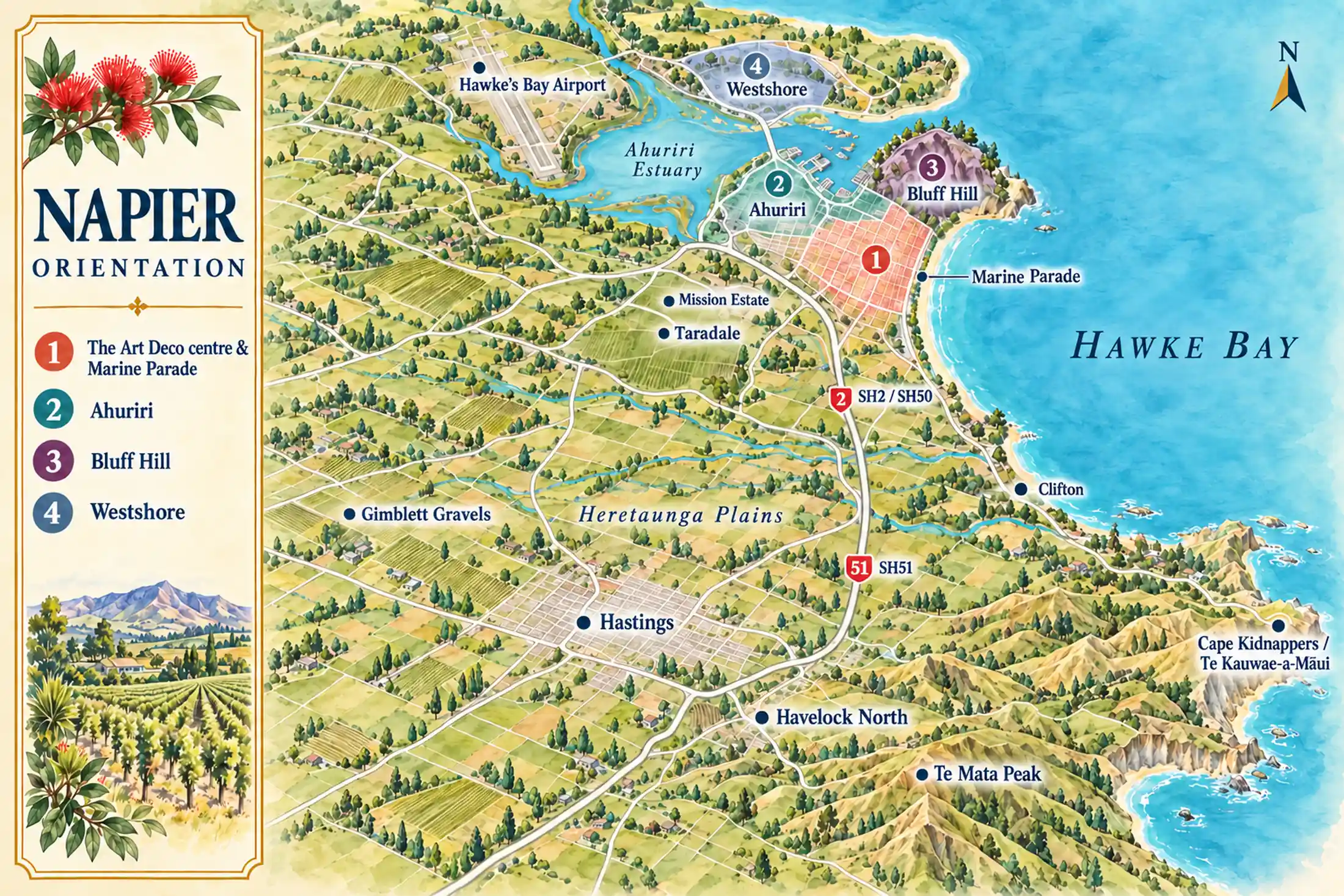
Central Napier is a narrow, walkable strip between the Pacific and Mataruahou, the headland usually called Bluff Hill. Emerson Street is the pedestrian heart of the Art Deco centre, and Marine Parade runs along the sea just beyond it. Over the hill lie the port and Ahuriri, and across the estuary Westshore and the airport. Taradale, where the oldest wineries are, is about fifteen minutes south-west; Hastings and Havelock North, about twenty-three minutes south, open onto the rest of the wine country.
The Art Deco centre & Marine Parade
the walkable heartThe rebuilt 1930s streets around Emerson, Tennyson and Hastings Streets, with the museum, the Art Deco Centre and the long seafront all within a few minutes’ walk.
Ahuriri
the port after darkThe old port on the far side of Bluff Hill: warehouses turned restaurants, the marina, and the National Tobacco Company building, by NZ Geographic’s account the most lavish building of the rebuilding.
Bluff Hill (Mataruahou)
views over the portThe headland between the centre and the port, with the lookout at its top and bed and breakfasts on its streets. Walking down to dinner is easy; walking back up is the price of the view.
Westshore
beach by the airportA quiet beach suburb across the estuary, on land the 1931 earthquake lifted out of the lagoon. Close to the airport, and out of the way without wheels.
Places you don’t want to miss
Six things earn their place, and two of them have guides of their own.
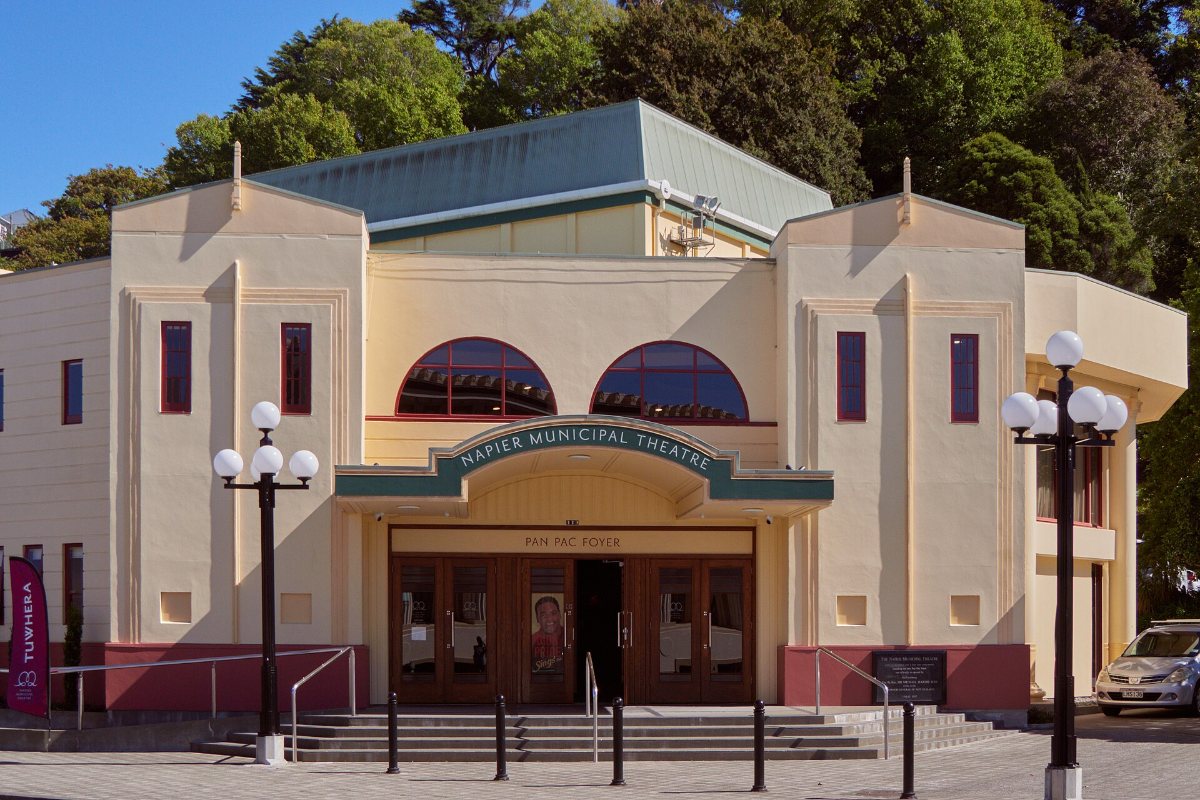
Art Deco Napier
A whole town centre rebuilt in two years after 1931, in the style of its moment, with Māori pattern in the ornament. Walk it with an Art Deco Trust guide and look above the verandahs. Read the guide →
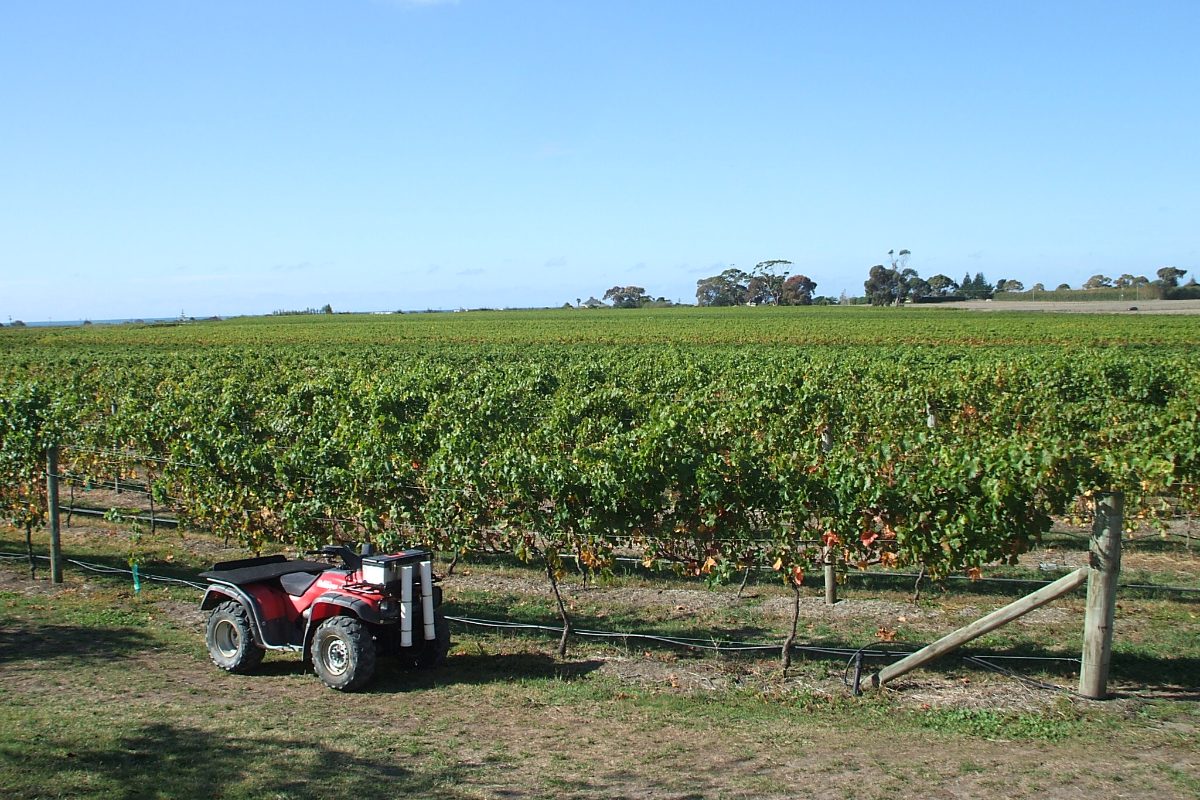
Hawke’s Bay wine country
New Zealand’s oldest wine region, and one of the twelve Great Wine Capitals of the world, starts at Taradale on Napier’s edge. Red blends, syrah and chardonnay, tasted at the cellar door. Read the guide →
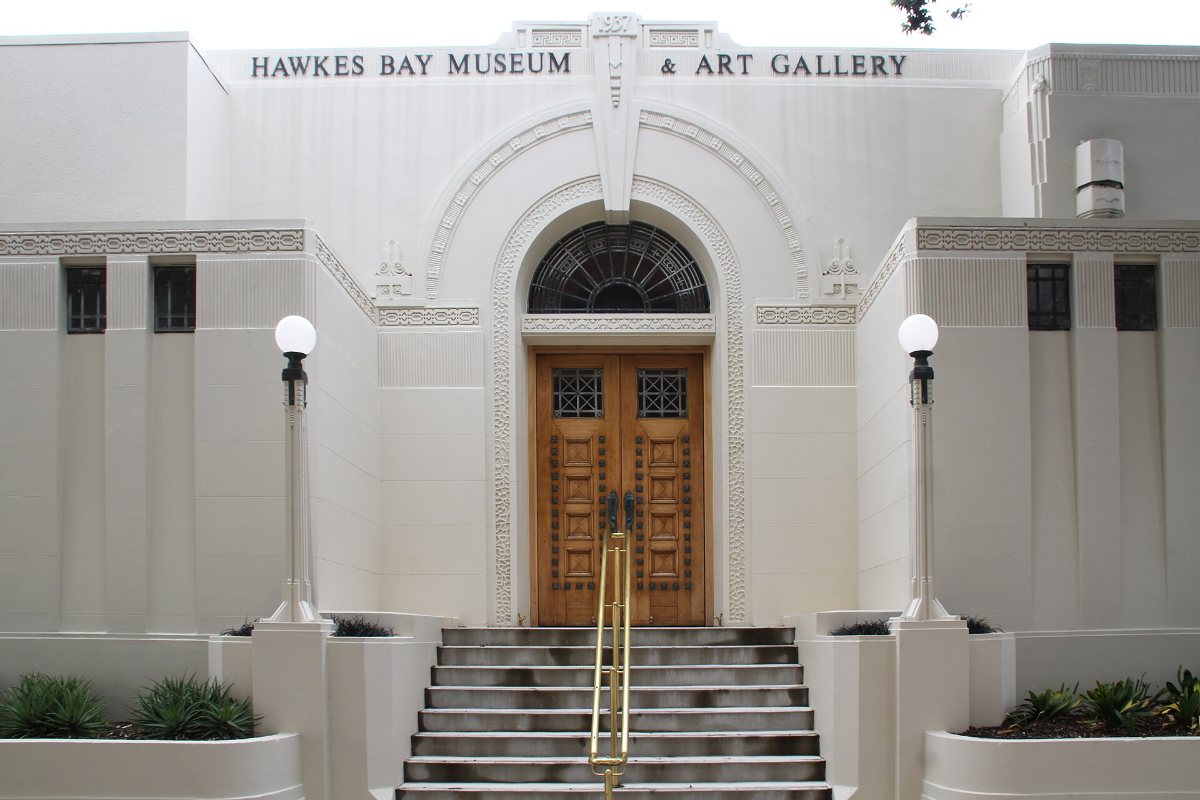
Hawke’s Bay Museum
Free to enter and open every day, where Tennyson Street meets Marine Parade. Its Shockwave exhibition tells the 1931 earthquake through the people who lived it: see it first and the town means more.
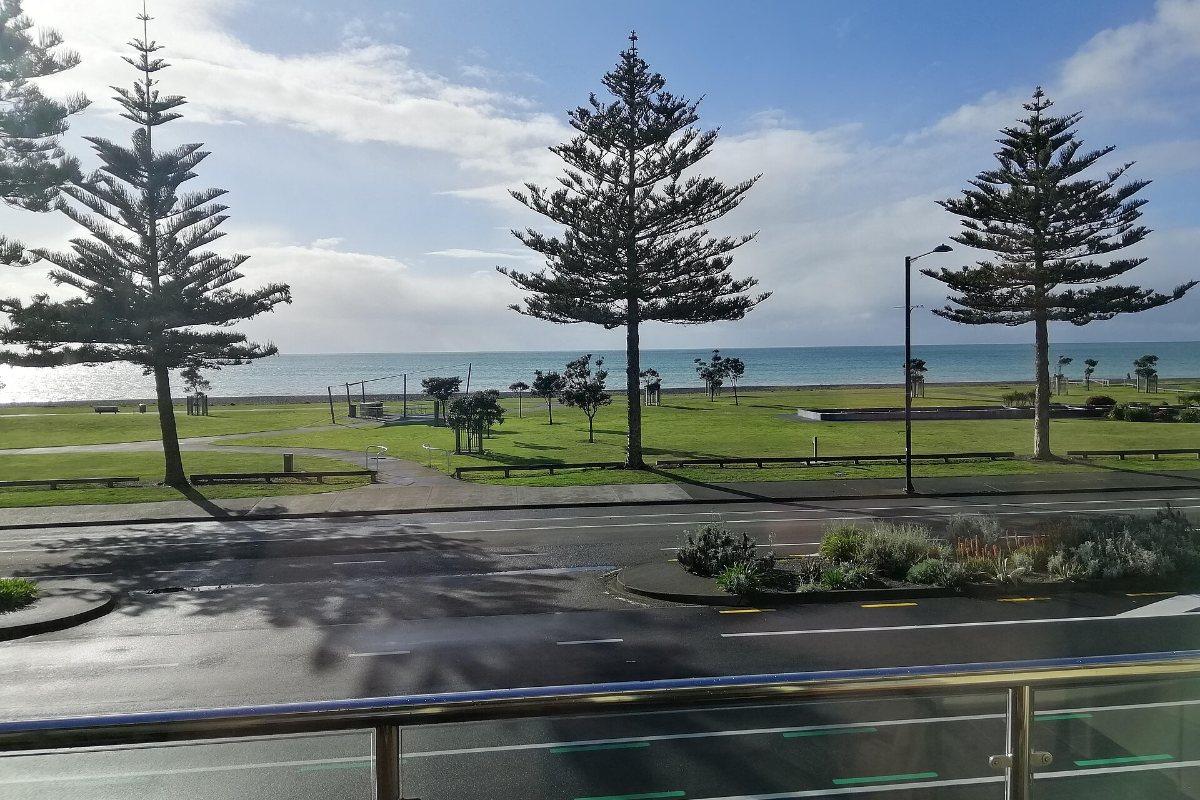
Marine Parade
Napier’s long front room: Norfolk pines, gardens, the Sound Shell and colonnade, the statue of Pania of the Reef and the National Aquarium, with the whole Pacific on the other side.
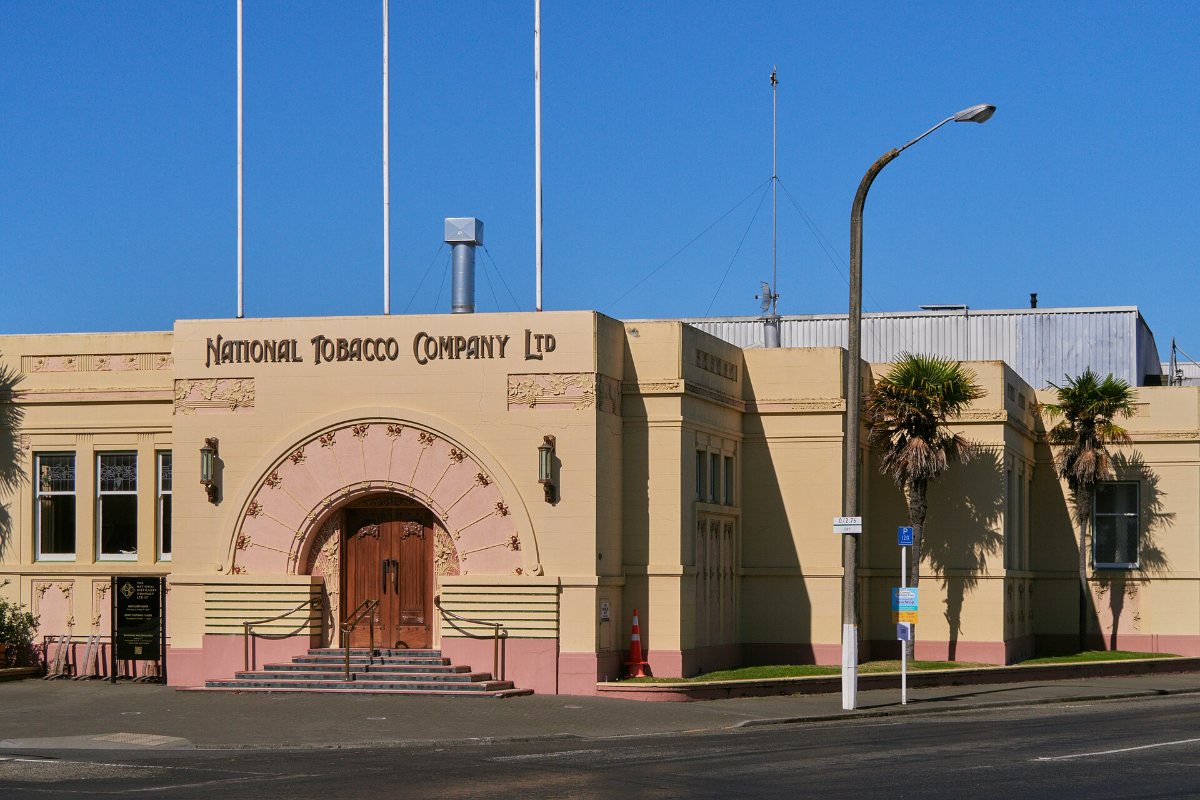
Ahuriri and the Tobacco building
The old port holds Louis Hay’s National Tobacco Company entrance of 1933, framed in raupō and roses. Walk the quays after it and stay on for dinner by the water.
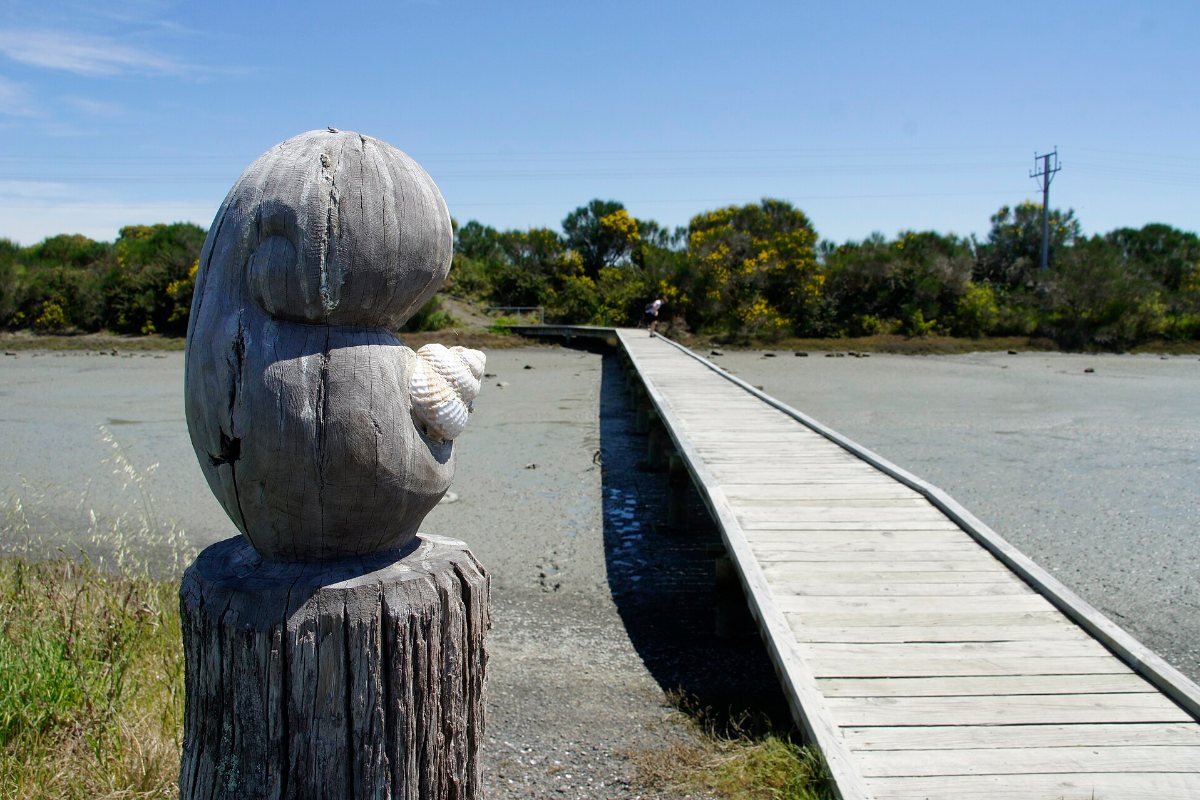
The trails by bike
Hawke’s Bay Trails runs to more than 200 kilometres of wide, smooth and mostly flat paths. From Napier the Water Ride follows the seafront, harbour and estuary; the Wineries Ride runs out to the cellar doors.
Go down to Marine Parade early, before the promenade fills, and step onto the top of the shingle beach, well back from the water: the council warns that it shelves steeply and has a strong undertow. Feel the stones take your weight. Then close your eyes and listen as each wave breaks and draws back down the slope. This is the sea that brought Napier its port, its view and, on a February morning in 1931, its reckoning.
Getting there and around
By air. Hawke’s Bay Airport, which Air New Zealand calls Napier/Hastings, is about ten minutes by road from the centre, with domestic flights to Auckland, Wellington and Christchurch. From a cruise ship, the port shuttle drops passengers at the i-SITE on Marine Parade, a short walk from everything in the centre.
| From | By car | Also by |
|---|---|---|
| Taupō | About 2 hours | InterCity coach |
| Rotorua | About 3 hours | InterCity coach |
| Wellington | About 4 hours | Coach or a direct flight |
| Auckland | 5 to 6 hours | Coach or a direct flight |
Planning estimates in normal conditions. The road from Taupō and Rotorua, State Highway 5, is the one most likely to close after bad weather, so check the NZ Transport Agency’s journey planner before you set off.
In town. The Art Deco centre, the museum and Marine Parade are best on foot. Ahuriri is easy by bike, bus or a short taxi ride; you can walk, but the hill and the port roads make it longer than it looks. Regional buses link Napier with Taradale, Hastings and Havelock North.
For the wineries, take a tour, a bike or a driver who is not tasting: our wine country guide compares the four ways to spend the day.
When to go and practical notes
Napier works all year. Summer brings warm, settled days and the most pressure on rooms; spring and autumn are best for walking and cycling, and autumn is harvest in the vineyards. The town is busiest for the Art Deco Festival, next held from 18 to 21 February 2027, when vintage cars and period costume fill the streets: a joy if you want the spectacle, a problem if you hoped for a spontaneous room.
The Napier DiscoverPass. If you have children, or a spare day, the i-SITE sells a pass to five of the town’s attractions: the National Aquarium, Ocean Spa, Bay Skate, the Faraday Museum of Technology and Par2 MiniGolf, with a bonus second visit to your favourite.
As at 28 September 2026 it costs $65 for an adult, $40 for a child and $180 for a family, against $82, $50 and $265 at full price. It is sold as a 2026 pass and collected from the i-SITE at 100 Marine Parade, so if you are travelling in 2027, ask the i-SITE whether it continues.
Two further things. New Zealand’s sun is fierce even when the sea breeze makes a day feel mild, so carry water and sunscreen on long rides. And if the ground ever shakes long or strong on the coast, move inland or to higher ground at once, without waiting for a warning: Civil Defence puts it as Long or Strong, Get Gone.
Marine Parade is the finest walk in the town, beside a spectacular stretch of Pacific. It is not a swimming beach: it shelves steeply and has a strong undertow, and in 2022 the council moved its summer lifeguards to Ahuriri Beach, which it names as the safest place to swim.
Where to stay and eat
Sleep in the Art Deco centre on a first visit, especially without a car: you can walk to the museum, the seafront and the start of every Art Deco walk. Choose Havelock North if the wineries are the point of the trip, and Westshore for an early flight. Bluff Hill has the views and the bed and breakfasts, if you do not mind the climb home.
Our guide to where to stay in Napier compares six areas on a map, with what a night costs in each.
Eat in Ahuriri for dinner by the water, and give one day to a long vineyard lunch around Havelock North or Taradale. Our guide to where to eat in Napier covers the quay, the winery restaurants and the farmers’ markets, and shows how to build good food into a single day.
Nearby and day trips
Hawke’s Bay wine country
This is the reason many people give Napier more than a night. Hawke’s Bay has made wine since 1851, and in 2023 it joined Bordeaux, Napa and Porto among the twelve Great Wine Capitals of the world.
Its warmth sits between Burgundy’s and Bordeaux’s; critics set its best syrah, from the stony Gimblett Gravels, beside the Rhône and its chardonnay beside white Burgundy; and more than thirty cellar doors will pour you a tasting. Our guide to Hawke’s Bay wine country covers what to taste, eight cellar doors to start with and how to spend the day.
Hastings, Havelock North and Te Mata Peak
These go together. Hastings is the working centre of the Heretaunga Plains, with its own 1930s buildings and the Sunday farmers’ market; Havelock North is smaller, leafier and well supplied with places to eat. Above it, Te Mata Peak gives the wide view over vineyards, orchards and the bay. The summit road is narrow near the top, so take care.
Cape Kidnappers / Te Kauwae-a-Māui
The long headland at the south-eastern end of the bay, with pale cliffs and a large mainland gannet colony. It is a fine trip while the birds are nesting, but not one to improvise: the shore route depends on the tide and is affected by rockfall and closures. Check the Department of Conservation’s advice; the i-SITE books guided overland trips to the colony.
A final word on Napier
Come for the Art Deco by all means, but do not leave when you have seen it. Napier is a place to stop for a while: to ride the flat miles along the water, to taste what the plains behind it grow, and to understand how a town made something so good-looking out of the worst morning in its history.
Andrew + Margaret
- Visiting New Zealand Overview
- Art Deco Napier Highlight
- Hawke’s Bay wine country Highlight
- Where to stay in Napier Decide
- Where to eat in Napier Practical
- New Zealand in two weeks Journeys
- Getting around New Zealand Practical
- Napier i-SITE — visitor information and the DiscoverPass Official
- Hawke’s Bay Tourism Official
- Art Deco Trust — walks, tours and the festival Booking
- Hawke’s Bay Museum Official
- Hawke’s Bay Trails — routes and conditions Practical
- Department of Conservation — Cape Kidnappers Safety
- Lauris Edmond, Hot October (1989) Reading
- Janine McVeagh, Earthquake: The Diary of Katie Bourke, Napier 1930–31 (2004) Reading
- Peter Shaw, Art Deco Napier: Styles of the Thirties Reading
Is Napier worth visiting?
Yes: for a day on its own, and for two or three nights with the wineries of Hawke’s Bay. The Art Deco centre is the draw, but the seafront, the cycle trails and the wine country are what make a longer stop worthwhile.
Can you visit Napier without a car?
For the town, easily: the centre, the museum and Marine Parade are all walkable, and Ahuriri is a short ride. For the wineries and Te Mata Peak, take a tour, a bike or a car; for the gannets at Cape Kidnappers, a guided trip is the surest way.
Can you swim at the beach in Napier?
Not along Marine Parade, which shelves steeply and has a strong undertow. The council names Ahuriri Beach as the safest place to swim, and patrols it in summer.