Hong Kong Itinerary: 1 to 3 Days, Both Sides of the Harbour
Three days that show both sides of the harbour, and how to cut them to one or two
Hong Kong rewards the traveller who stays at street level: across the harbour on a ferry that has run since 1888, up through the forest to the Peak, into markets that sell goldfish by the bag and orchids by the armful, and out to a bronze Buddha on a mountain above the sea. These three days give you the island, Kowloon and Lantau, in that order.
The route suits a first visit of three or four nights, and anyone who would rather walk than queue. With one day, Day 1 stands on its own; with two, take Days 1 and 2.
3 days · 3 nights · one base in Tsim Sha Tsui or Jordan · MTR, ferry, tram, bus and on foot · Tsim Sha Tsui to Tsim Sha Tsui
We have been coming to Hong Kong since 1980, and in each of the last three years we have stayed about a month. Every stop on these days is one we have made ourselves. On those long stays we now base ourselves in Sha Tin, in the New Territories; for three days, the harbour side of Kowloon puts every morning within easy reach. The Hong Kong hub has the wider picture.
Last updated 10 October 2026
The itinerary, day by day
Open one day, or all three.
Day 1Hong Kong Island — the harbour, the Peak and the old westferry, bus and tramStar Ferry → The Peak → Central → Hong Kong Park → Man Mo Temple → Harbour by night
The first day crosses to the island and climbs it. It gives you the harbour at water level, the city from above, then the older streets where colonial Hong Kong began, and it ends back on the water after dark.
- EarlyThe Star Ferry to CentralSeeVictoria Harbour·Central Pier·the walkways
Ten minutes on the Star Ferry is still the best introduction to Hong Kong: the slap of water, the thud of the gangway, the towers of Central growing as you cross. People have made this crossing since 1888 and still describe it as the moment the city arrives. From the pier, the elevated walkways carry you into Central above the traffic. Find breakfast there.
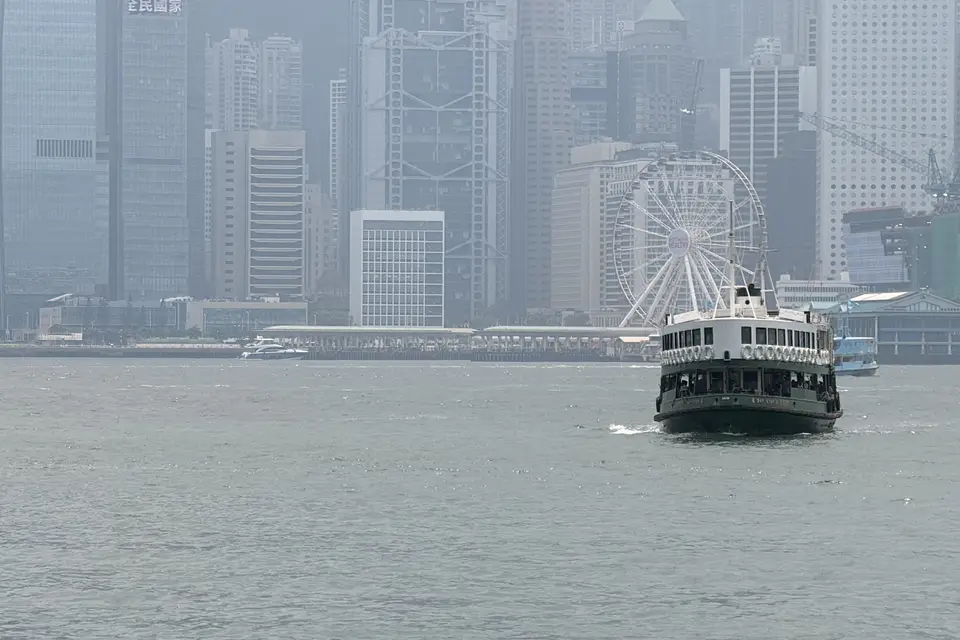
- By Citybus 15 from Exchange Square: top deck, front seat if you can.
- MorningThe Peak and Lugard RoadSeeLugard Road·Victoria Gap·the harbour from above
The bus climbs through the Mid-Levels in hairpin bends and the city drops away beneath you. At the top, leave the shopping terraces and walk the Lugard Road circuit, a level path cut into the hillside where the trees open onto the whole harbour. It takes under an hour, and is easy with a pushchair. In the morning, before the haze thickens, this is the view most people come to Hong Kong for, and it is quieter here than on the platforms above. Our Victoria Peak guide has the detail.
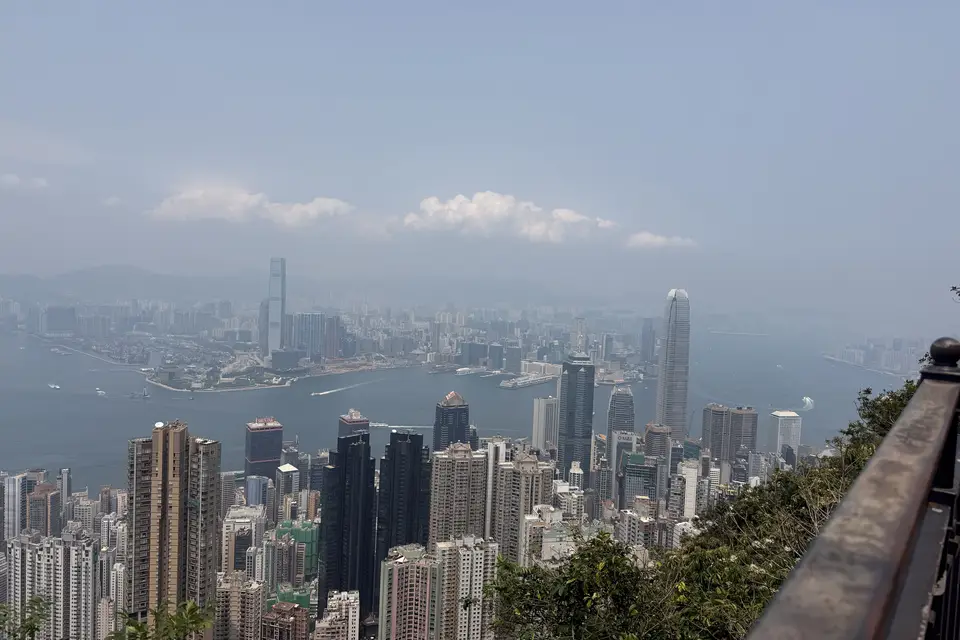
- Down by green minibus 1, bus 15 or the Peak Tram.
- MiddayLunch in Central
Central at lunchtime is all choice, from noodle shops to the food halls under the towers. Eat where the office workers queue.
- Walk east, or take the tram, to Admiralty.
- AfternoonHong Kong Park and Flagstaff HouseSeethe aviary·the Museum of Tea Ware·the ponds
People come to Hong Kong Park for green quiet among the towers: water, birdsong from the walk-through aviary, and shade. At its heart, Flagstaff House, among the oldest colonial buildings still standing, holds the Museum of Tea Ware, and an hour among its teapots and quiet rooms is a deliberate slowing of the day. Entry is free.
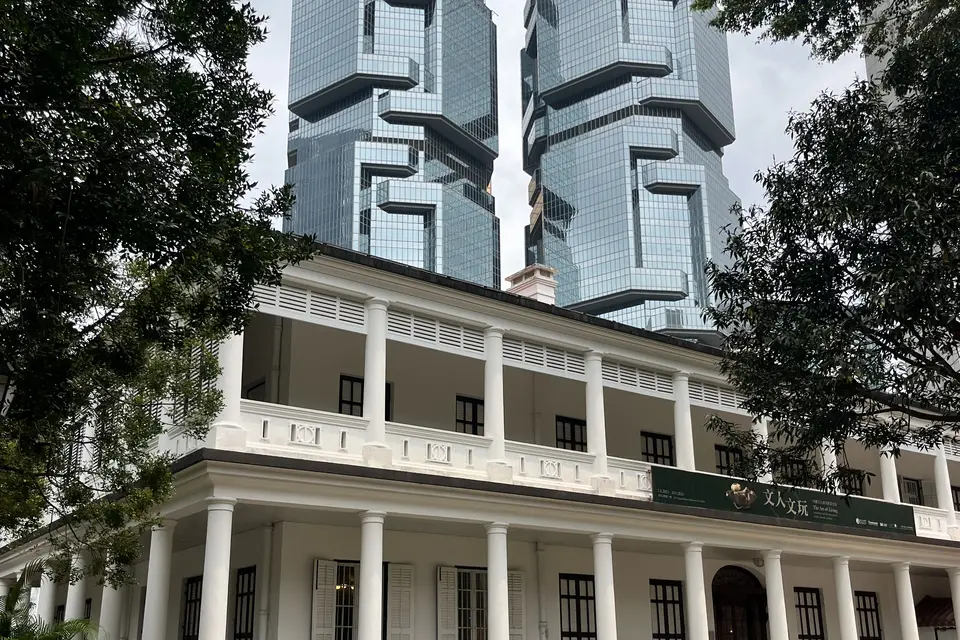
- By tram west to Western Market, then up the slope.
- Late afternoonHollywood Road and Man Mo TempleSeeWestern Market·Man Mo Temple·the antique shops
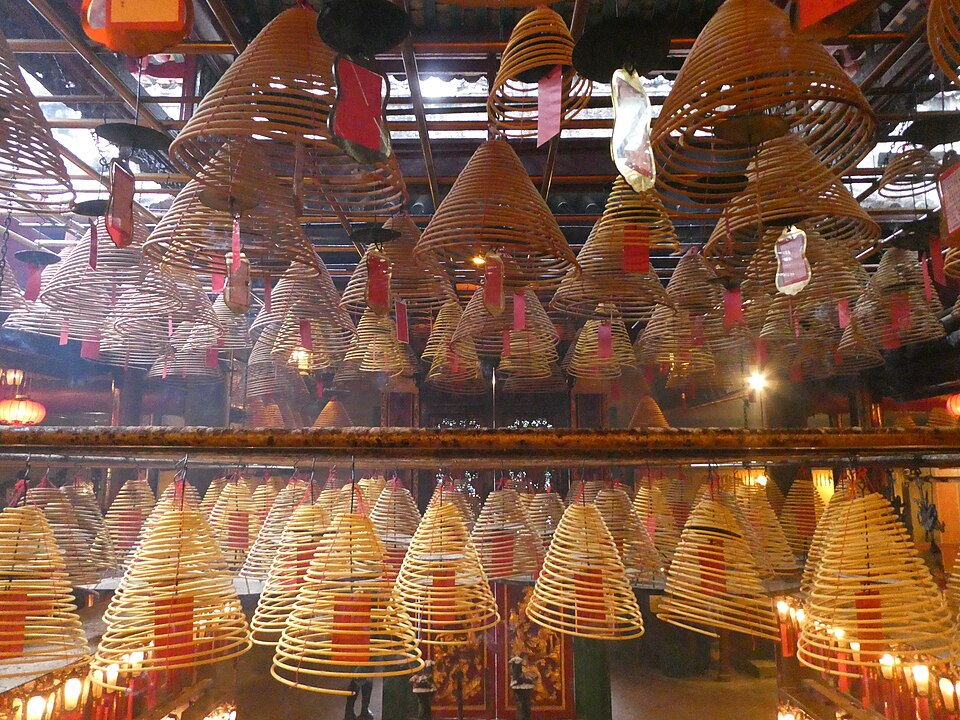
Visitors come to Hollywood Road for a sense of the older city beneath the new: antique dealers, scroll shops, stalls of curios, and the Man Mo Temple, smoky and red-lit, where people have asked the gods of literature and war for help since 1847. It is the heart of Central and Western. The lanes up from the harbour are steep, and some are flights of steps. See the temple first, then find dinner in the small local restaurants nearby.
- Walk down to Central Pier.
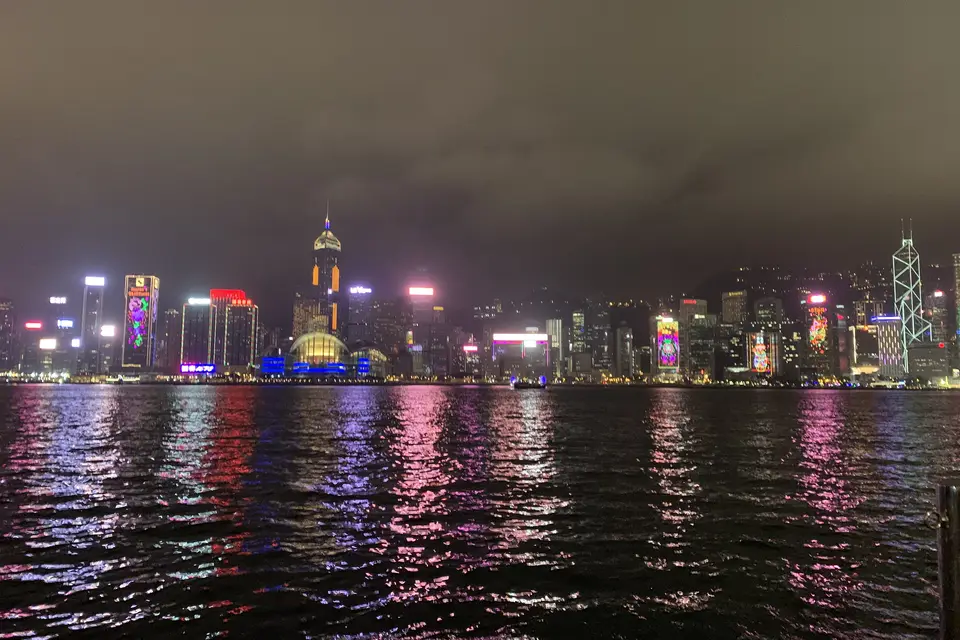
- NightThe Star Ferry after darkSeethe lit skyline·the Tsim Sha Tsui promenade
Cross back after dinner. At night the harbour is at its most theatrical: towers lit in colour, black water moving under the bow, the Kowloon shore coming towards you. Walk the promenade once you land. The nightly light show was suspended in September 2026; the skyline does not need it.
Sleeping here · Tsim Sha Tsui or Jordan, nights 1 to 3. Stay within a few minutes of an MTR station on the Kowloon side, so the Star Ferry is a walk away and the MTR runs north to Day 2's markets and west to Tung Chung for Day 3. A mid-range hotel or serviced apartment suits a first visit. Rooms are small and harbour views cost more: choose the location before the view. Our where to stay guide compares the areas.
- Travel
- Star Ferry, Citybus 15, minibus or Peak Tram, the tram — all on one Octopus card
- Stay
- Tsim Sha Tsui or Jordan — nights 1 to 3
- Eat
- Central at lunch; Sheung Wan's local restaurants for dinner
- Check
- The Tea Ware museum is shut on Tuesdays. Man Mo Temple closes at 6pm
Day 2Kowloon — morning tai chi, markets and the waterfrontMTR and on footShek Kip Mei → Pei Ho Street → Flower Market → Ladies' Market → Kowloon Park → TST
Day 2 stays on the Kowloon side and goes where Hong Kong lives: housing estates, street markets and parks, working south from Sham Shui Po to the harbour.
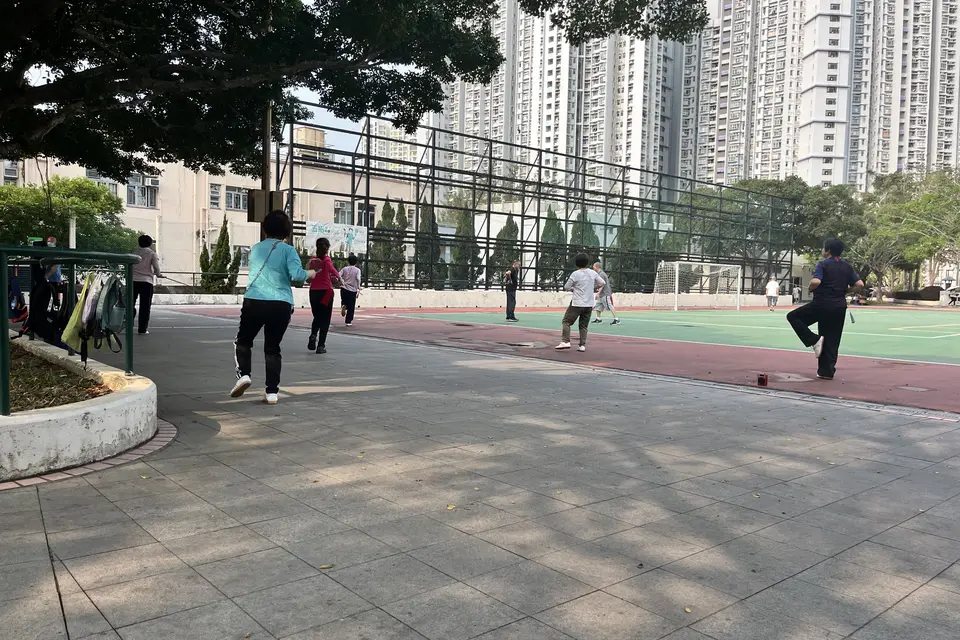
- EarlyShek Kip Mei Park and Nam ShanSeemorning tai chi·the Nam Shan estate
Go early, when the park belongs to the people who exercise there: tai chi groups, walkers, a few with fans or swords. Nobody minds a visitor joining quietly at the back; our tai chi guide explains how. Afterwards, breakfast as the estate does, on congee with yau char kwai, the long fried dough, in the shopping centre at Nam Shan.
- Walk south into Sham Shui Po.
- MorningThe markets around Pei Ho StreetSeePei Ho Street·Apliu Street·Mei Ho House
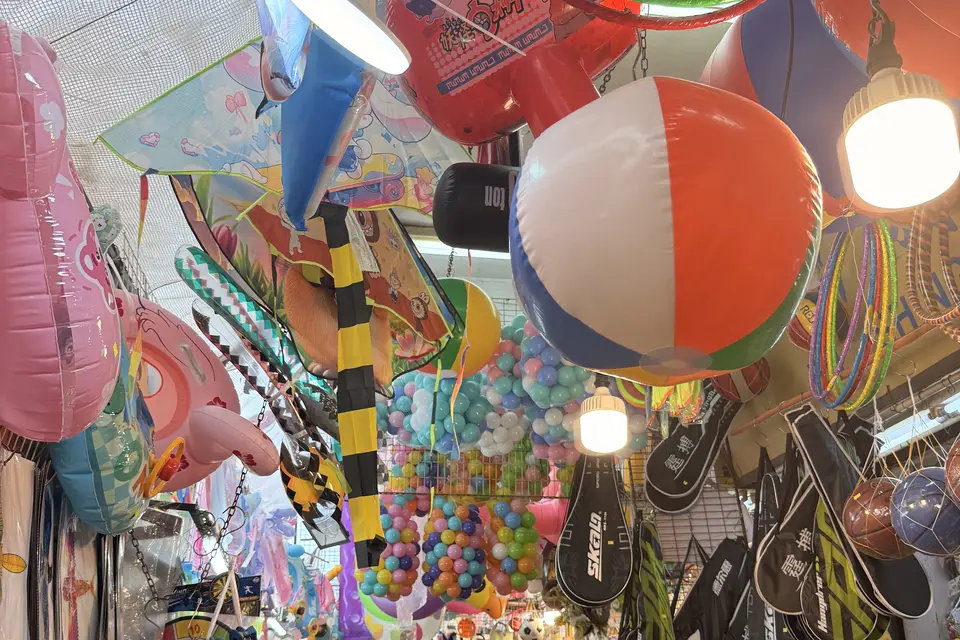
Sham Shui Po is where Hong Kong shops for itself, cheaper and louder than anything near the harbour. Stalls of toys, clothes, buttons and electronics fill the streets: the city at its most ordinary and most absorbing. Mei Ho House, a short walk away, tells how the 1953 fire here began the city's public housing.
- MTR from Sham Shui Po to Prince Edward.
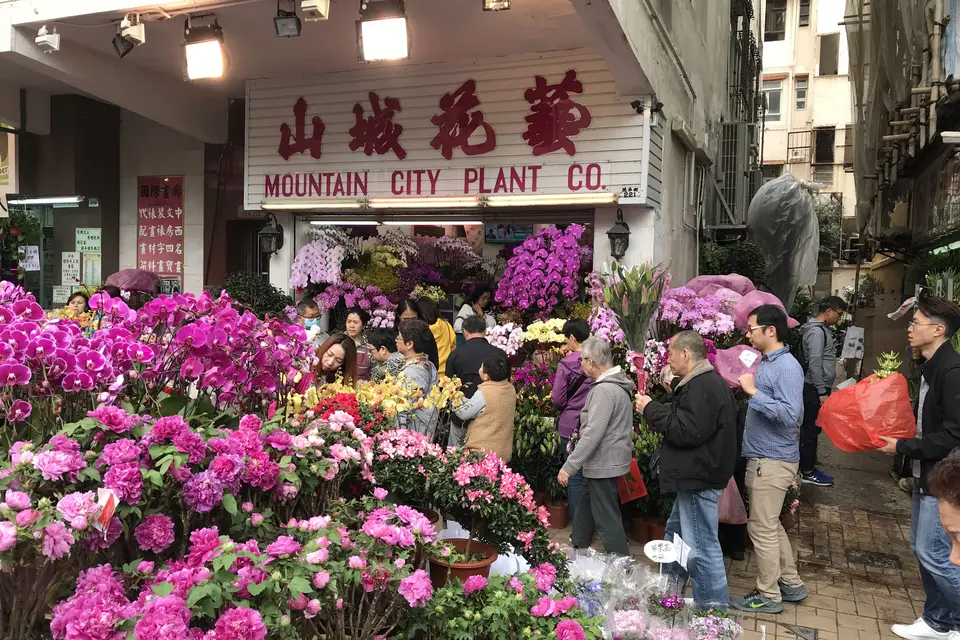
- Late morningThe Flower Market and the Bird GardenSeethe Flower Market·the Bird Garden·Goldfish Street
A street of florists heaped with orchids and blossom, then a garden where old men bring songbirds in carved cages to sit together in the shade. Walk on to the north end of Tung Choi Street, where goldfish hang in bags along the shopfronts. It is an hour of colour and birdsong in the middle of Mong Kok.
- On foot, south down Tung Choi Street.
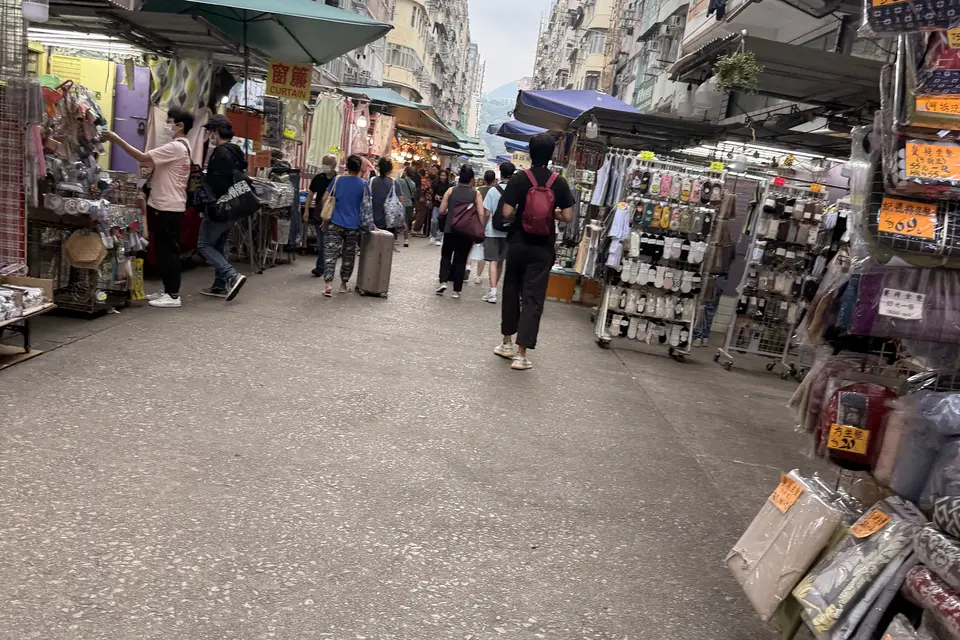
- AfternoonLunch and the Ladies' MarketSeethe Ladies' Market·Mong Kok's street stalls
Eat noodles or wontons in Mong Kok, then walk the Ladies' Market, a long run of stalls for gifts, clothes and souvenirs at its liveliest in the afternoon. Bargain with good humour: the first price is an opening. Our street markets guide covers the rest.
- MTR, or walk Nathan Road, to Jordan.
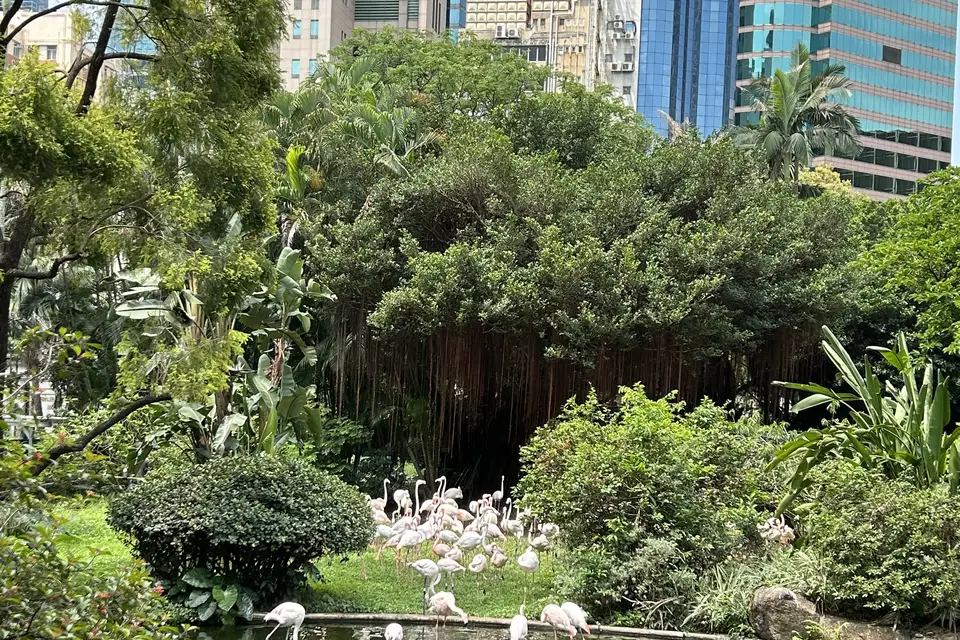
- Late afternoonKowloon ParkSeethe Chinese garden·the aviary·the flamingos
Kowloon Park is the green pause before the harbour: a Chinese garden with ponds and pavilions, an aviary, and a lake of flamingos a few steps from the traffic of Nathan Road. Sit for a while; local people do.
- Walk south to the harbour.
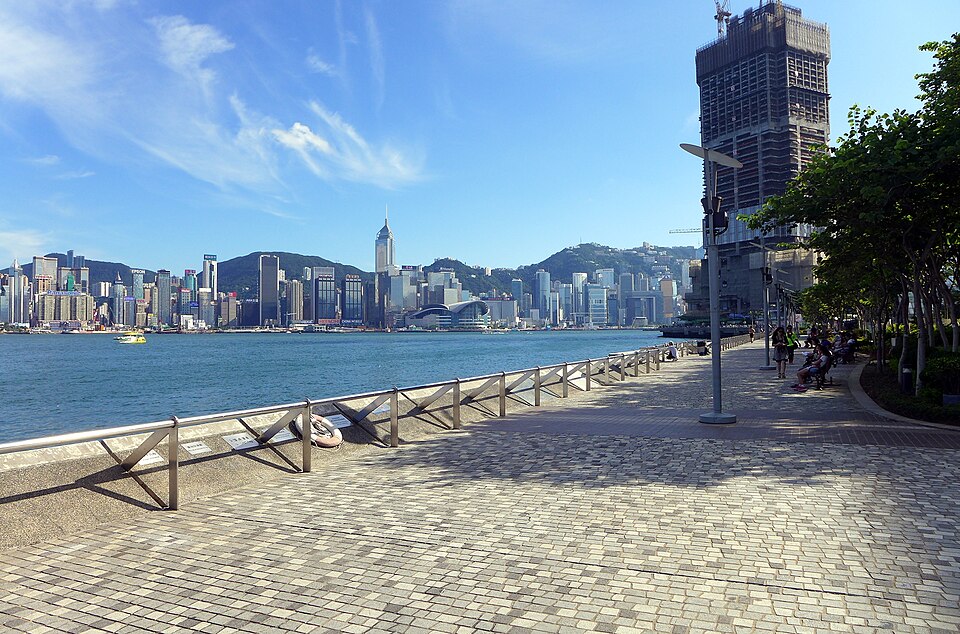
- DuskThe Tsim Sha Tsui waterfrontSeethe Clock Tower·the Avenue of Stars·the island skyline
Reach the promenade as the light goes and the island's towers begin to glow across the water. The old railway Clock Tower and the Avenue of Stars are here, but the point is the view and the evening air off the harbour. For a late finish, Temple Street's night market is a short walk north at Jordan, in Yau Tsim Mong.
- Travel
- MTR between districts, the rest on foot
- Stay
- Tsim Sha Tsui or Jordan — night 2
- Eat
- Congee in Sham Shui Po, noodles in Mong Kok, Temple Street at night
- Check
- Ladies' Market opens at midday. Kowloon Park's Bird Lake shut 10–19 Nov 2026
Day 3Lantau — the Big Buddha, Po Lin and Tai OMTR, cable car and busNgong Ping 360 → Big Buddha → Po Lin → Tai O
The last day leaves the city for Lantau, the largest of the islands, where mountains, a monastery and a fishing village sit beyond the airport. It is the longest day of the three and the one most worth an early start. Our Islands District profile sets the scene.
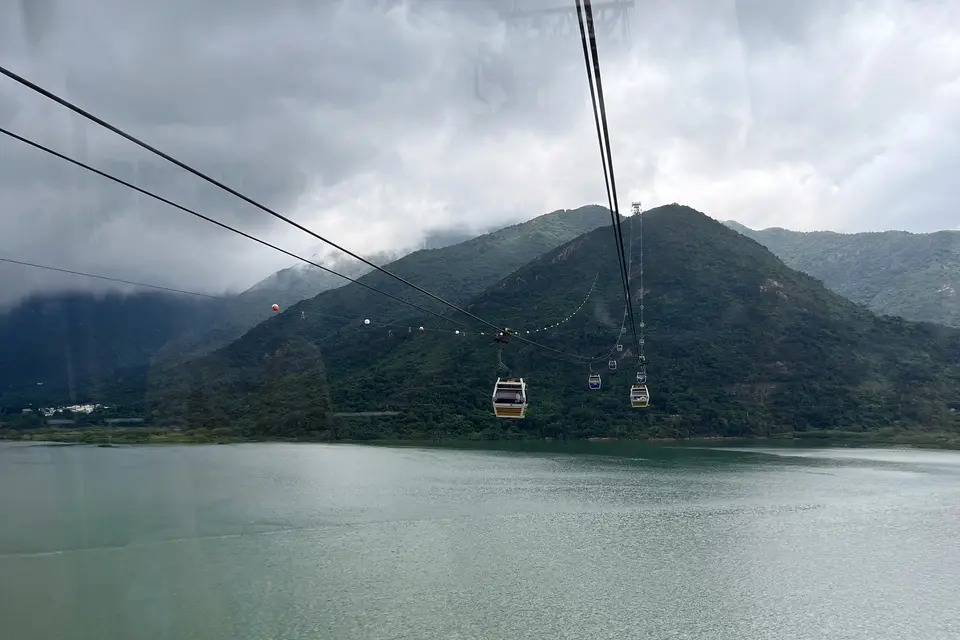
- MorningNgong Ping 360Seethe cable car·Tung Chung Bay·the airport below
The cable car lifts you from Tung Chung over the bay and up into the hills. People describe the ride as the moment the city gives way to green: water, then forest, then the first sight of the Buddha on its peak. Be there when it opens to miss the longest queue.
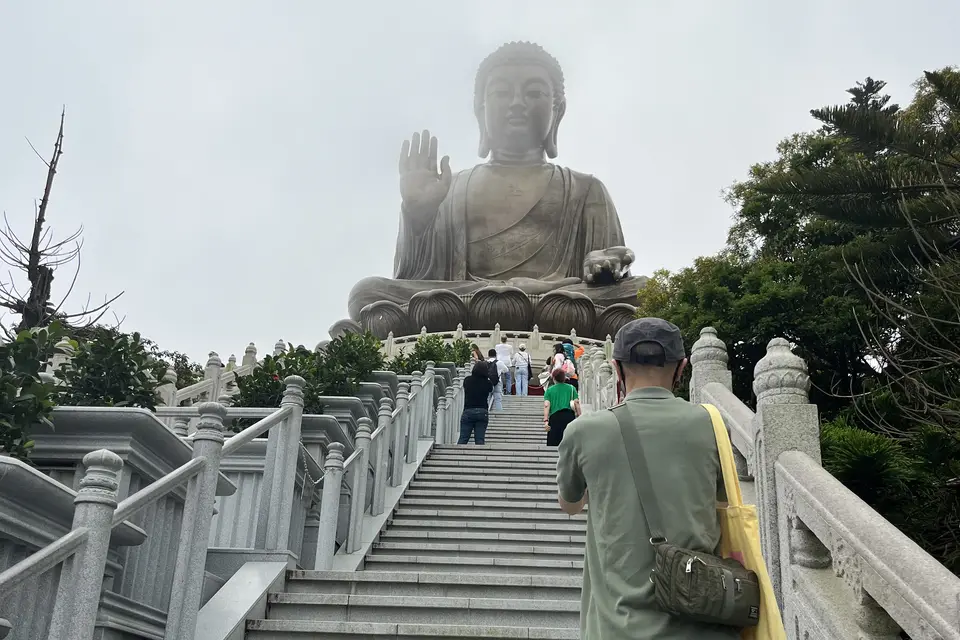
- Late morningThe Big BuddhaSeeTian Tan Buddha·the steps·the view to the sea
What people find at the Tian Tan Buddha is scale and stillness together: a bronze figure, one hand raised, above a monastery, with land and sea falling away on every side. Climb the 268 steps for the view, then stay a while at the top; a small road serves visitors who cannot manage them, so ask at Ngong Ping. Even crowded, the setting has a calm that makes people linger.
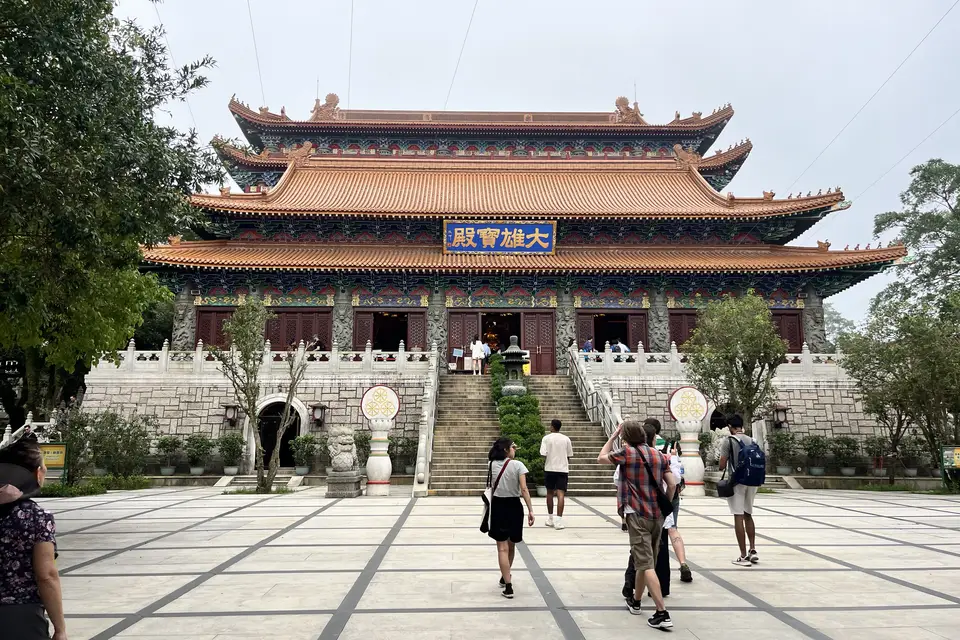
- MiddayPo Lin MonasterySeethe Grand Hall·the incense courtyard·vegetarian lunch
Visitors often say Po Lin is where the day slows down: halls in gold and red, the courtyard heavy with incense, monks and worshippers going about a working monastery's day. Eat here, and take your time over it.
- NLB bus 21 down to Tai O.
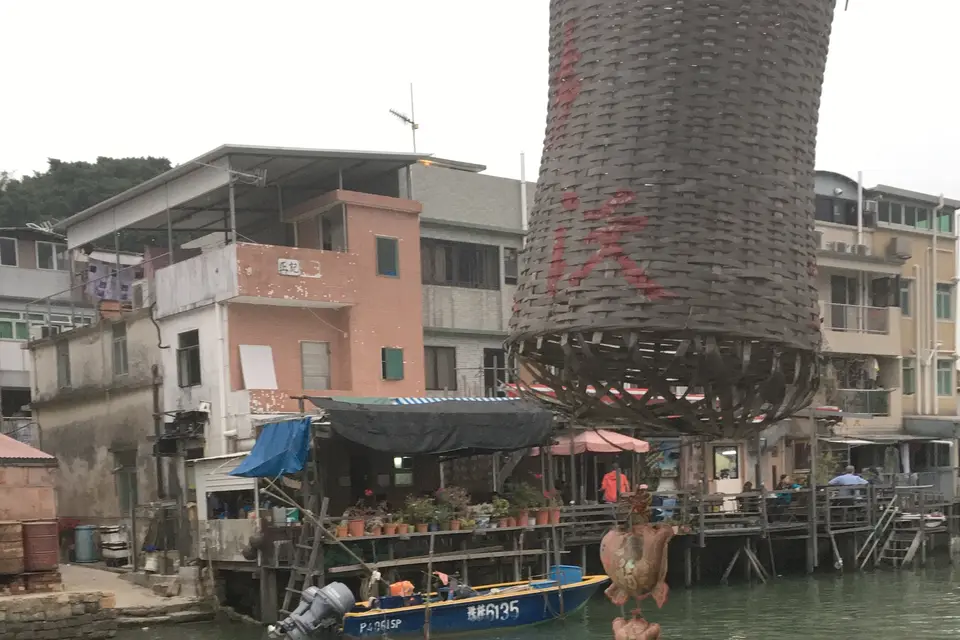
- AfternoonTai OSeethe stilt houses·the creeks·the dried-seafood stalls
People come to Tai O for a sense of another Hong Kong: houses on stilts over tidal creeks, fish drying in the sun, small boats, families who have lived on the water for generations. Walk the lanes, take a short boat ride if you like, and ask before photographing anyone at home.
- Travel
- MTR, cable car, bus 21; back by bus 11, or bus 1 and the Mui Wo ferry
- Stay
- Tsim Sha Tsui or Jordan — night 3
- Eat
- Vegetarian lunch at Po Lin; seafood and snacks in Tai O
- Check
- Cable car stops for maintenance and wind; NLB bus 23 goes up instead
Step in from Hollywood Road and let your eyes adjust. The light is red and low, and the air is thick enough to taste: sandalwood, ash, a faint sweetness of burning paper. Above you, coils of incense hang from the ceiling like slow clocks, each one burning for days on behalf of whoever paid for it. Ash drifts down onto your shoulders. Somewhere a pot of fortune sticks is being shaken, a dry rattle, until one falls. Stand still, and the traffic outside goes quiet.
Before you commit
The hardest day is the third. Lantau is a full day of transfers and depends on the cable car and the weather: cloud can sit on the Buddha all day. If the forecast is poor, swap Days 2 and 3, or take the Lamma walk instead.
The one booking worth making is Ngong Ping 360. Buy tickets online for a weekend or a public holiday, when the queue at Tung Chung can be long. It is also the route's biggest single cost: fares vary by cabin, ticket type and where you buy, so check the operator's site. Nothing else on these days needs booking.
What three days leave out: the New Territories, the hills and the outlying islands beyond Lantau, Macau, and the theme parks. Each needs a day of its own, and our day trips page sets them out.
With children · Every MTR station has a step-free entrance, and the Peak circuit, the waterfronts and Tai O are level, so much of this route works with a pushchair. The hard parts are the lanes off Hollywood Road, Kowloon's crowded markets and the Big Buddha's 268 steps. Ngong Ping 360 is free under three, with a child fare to eleven. Our Hong Kong with children guide has more; Ocean Park or Hong Kong Disneyland can replace a day.
Get an Octopus card when you land; it pays for every ferry, tram, bus and train on this route. Our getting around guide explains it, and the best time to visit says which months suit the walking.
Small change carries you a long way here. The Star Ferry costs HK$5 on the upper deck and HK$4 on the lower on weekdays; the tram costs HK$3.30; the Peak Tram HK$82 single or HK$116 return. A rise in Star Ferry fares was applied for in March 2026 and we could not confirm the outcome, so check before you go. Our cost guide has the rest.
Make it yours
The route holds its shape if you shorten it, slow it or swap a day.
Take Day 1 for the harbour, the Peak and the old city; add Day 2 for Kowloon and both sides of the harbour. Lantau is what you lose, and it is the day to add on a return visit.
With seven days, our week in Hong Kong keeps these three and adds the south side, Wong Tai Sin and two nights in Sha Tin, with a river ride and the Geopark's rocks.
With hours rather than days, our layover guide says what fits between flights and when to start back to the airport.
For a quieter, shorter Day 3, ferry from Central to Yung Shue Wan and walk over the hill to Sok Kwu Wan, past beaches, with seafood at the end. You trade the Buddha and Tai O for an easy island walk.
On a fine, hot Day 3, bus from Central to Deep Water Bay, walk the coast path to Repulse Bay and go on to Stanley. Beaches and sea air replace Lantau's mountains; our own choice in summer.
If Day 1 is wet, keep the Peak for the first clear morning and swap in the Museum of Art on the Tsim Sha Tsui waterfront, or a pick from our museums guide. You lose the view, not the day.
If the route slips
Weather is the usual reason a Hong Kong day fails, in summer and early autumn above all. The Observatory's warnings govern everything: under Typhoon Signal No. 8 or a Black Rainstorm warning, expect ferries and the cable car to stop, buses to be withdrawn and much of the city to close. We could not find one official list of what stops, so check the Observatory and each operator on the day.
Recover in this order. Keep Day 1 if you can, because the harbour and the Peak are the centre of the trip. Move Lantau to the clearest day, since it needs good weather most. Then drop the Ladies' Market or Kowloon Park, which fold easily into an evening. If the Peak is in cloud, come down and go back up another morning.
A final word on three days in Hong Kong
Three days will not exhaust Hong Kong; they will show you why people keep coming back. We have been returning for more than forty years, and we still take the Star Ferry as if for the first time.
Andrew + Margaret
- Visiting Hong Kong Overview
- Where to stay in Hong Kong Decide
- Where to eat in Hong Kong Practical
- Getting around Hong Kong Practical
- The first 72 hours Practical
- A Hong Kong layover Journeys
- Hong Kong with children Practical
- Victoria Harbour, and what writers have made of it Highlight
- Star Ferry: fares and sailings Official
- Ngong Ping 360: tickets and closures Booking
- Hong Kong Observatory: warnings Safety
- Discover Hong Kong Official
- Xi Xi, My City: A Hong Kong Story (1979), translated by Eva Hung Reading
- Eileen Chang, Love in a Fallen City (1943), translated by Karen S. Kingsbury Reading
- Wong Kar-wai, Chungking Express (1994), filmed in Tsim Sha Tsui and on the Mid-Levels escalator Reading
Is three days enough for Hong Kong?
For a first visit, yes: it covers the harbour, the Peak, Kowloon's markets and Lantau at a walking pace. Overnight visitors stayed 3.1 nights on average in 2025, according to the Tourism Board. A week lets you add the New Territories, the islands and Macau.
Will I manage without Cantonese?
Yes. Street signs, MTR stations and announcements are in English as well as Chinese, and English is widely understood in shops and on transport along this route. A destination written in Chinese helps with taxis.