Nelson
A sunny small city on Tasman Bay, and the gateway to Abel Tasman National Park, Golden Bay and the Great Taste Trail
Nelson is where the South Island turns golden. The city sits on a wide, sheltered bay at the top of the island, among the sunniest places in the country, and within an hour or so lie the beaches and granite headlands of Abel Tasman National Park. Between the two, a cycle trail runs past vineyards, orchards and hop gardens, and Nelson calls itself New Zealand’s craft-brewing capital. Give it three nights: one day for the city, one in the park, and one on the trail or over the hill in Golden Bay.
How this page was madeWe last travelled in the South Island before 2011, and not in a way we can describe from memory. So this page is researched from the Department of Conservation, newzealand.com, Nelson Tasman’s own tourism body, the operators’ own pages and the sources named at the end, checked on 17 October 2026. Where they leave a question open, we say so. When we go, we will say so here.
Last updated 17 October 2026
A little background
The Māori name for Nelson is Whakatū. Māori lived around these coasts for centuries before Europeans came, and the iwi of the area changed more than once through conquest and migration; our guide to understanding Māori New Zealand gives the wider background. The first Europeans to reach the region came with the Dutch navigator Abel Tasman, who arrived in Golden Bay on the night of 17 December 1642. The meeting with Ngāti Tūmatakōkiri there turned violent: four of his sailors were killed, and he sailed on without taking on water. The national park and Tasman Bay carry his name; Golden Bay is also known by its Māori name, Mohua.
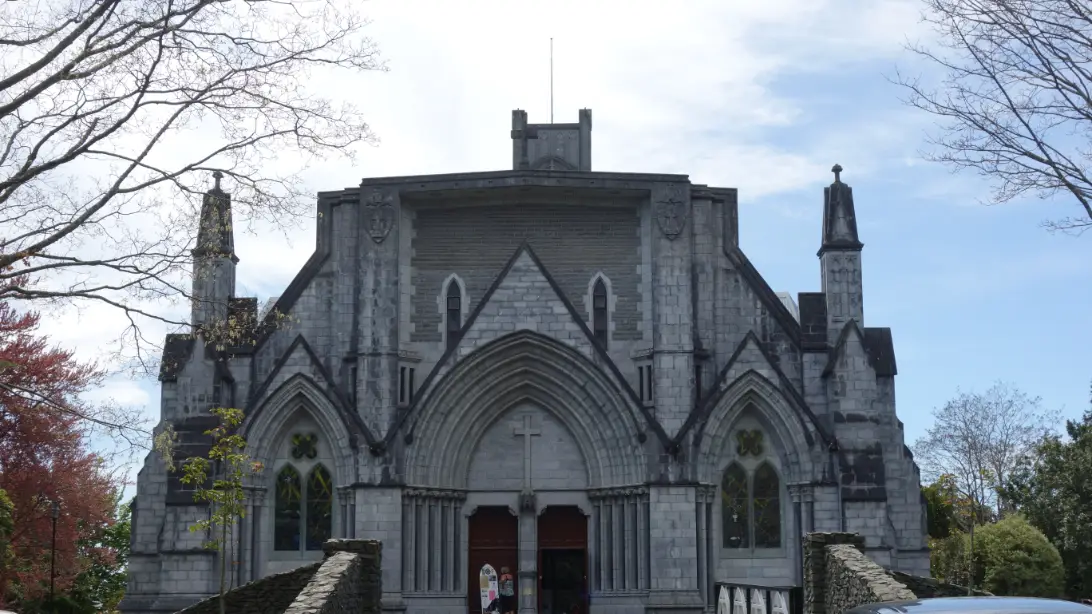
The New Zealand Company’s settlers arrived in 1841 and 1842, and in 1858 Queen Victoria made Nelson a city and the seat of a bishop, which is why it calls itself the oldest city in the South Island. The settlement was not easy: a dispute over land led Nelson settlers into the Wairau Affray, across the hills in Marlborough, in which twenty-two settlers and four Māori died, and a later inquiry found the settlers in the wrong. Today about 50,800 people live in the Nelson urban area. The sunshine is real: in 2024 the region recorded 2,760 hours, second in the country.
The painter Toss Woollaston, one of New Zealand’s most important twentieth-century artists, worked here: he picked fruit in Māpua in the 1930s and 1940s and later built his studio at Riwaka. Te Ara, the national encyclopedia, reproduces his Nelson landscapes; they are listed at the end of this page.
How the place fits together
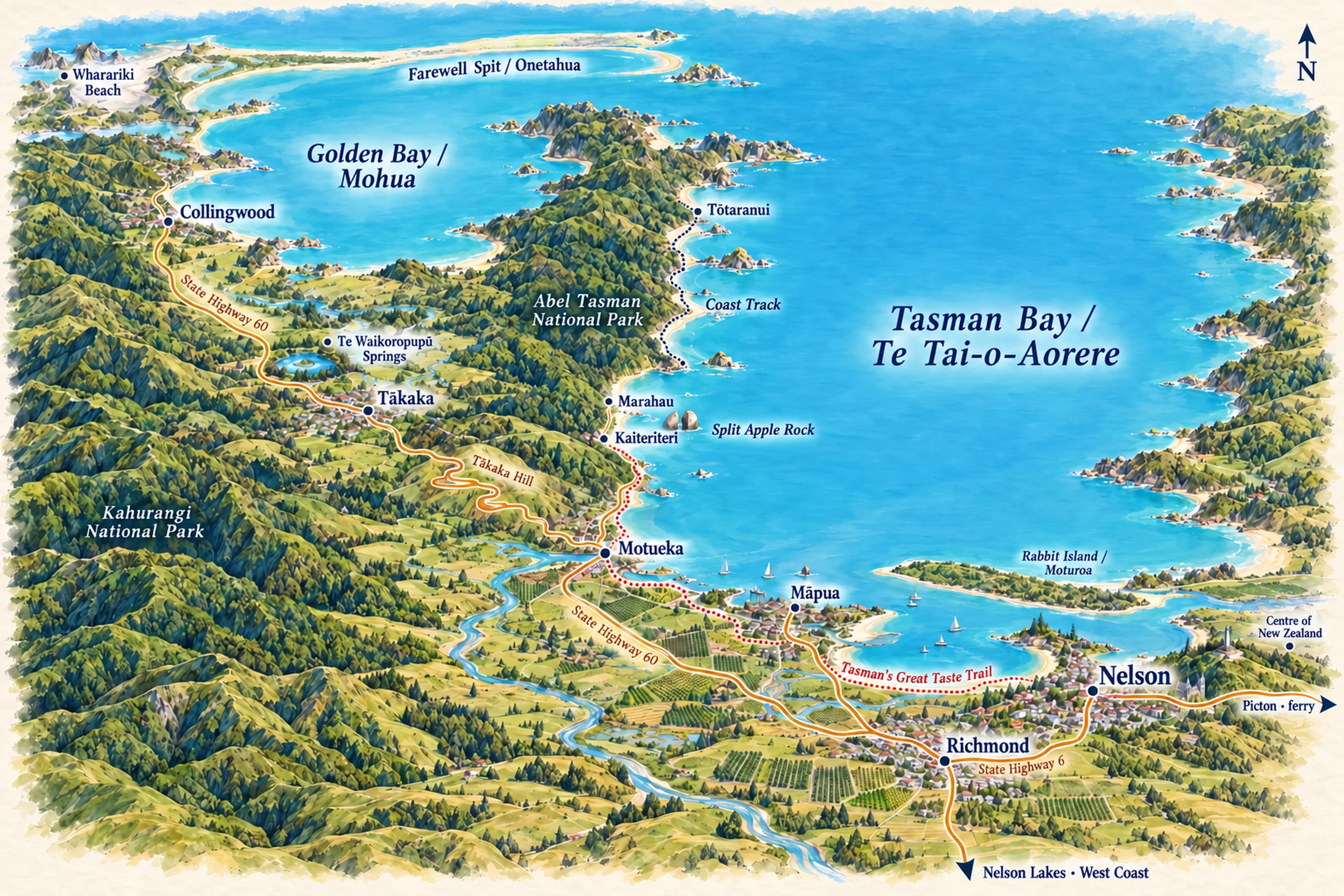
Nelson faces north over Tasman Bay, and the region runs west from it along the coast. The road leaves the city through Richmond, crosses the Waimea plains, passes Māpua and Motueka, and reaches the park at Kaiteriteri and Marahau. Beyond the park, over the Tākaka Hill, lies Golden Bay. To the south, the road to the West Coast passes the turning for Nelson Lakes; to the east, the road to Picton and the ferry.
Nelson city
the baseMost visitors base themselves here: the cathedral steps, Trafalgar Street, the Saturday market and the waterfront are all within a walk, and Tāhunanui beach is minutes away. Richmond, to the south, is where the cycle trail and the road west begin.
Māpua and the Moutere
the taste trailA small village built round its wharf, with a summer ferry across the inlet to Rabbit Island. Behind it the Moutere hills hold vineyards, cideries and the Moutere Inn. Stay here for a slower pace between the city and the park.
Motueka
the working townA working town of orchards and hop gardens rather than a resort, with supermarkets and the head office of one of the park’s boat operators. A practical base close to the park, without the beach settlements’ holiday bustle.
Kaiteriteri and Marahau
the park’s front doorKaiteriteri is a curve of golden sand where boat trips into the park begin; nearby Marahau is where the Coast Track starts and the kayak companies keep their boats. Stay here if the park is your reason for coming.
Golden Bay
over the hillCut off by the Tākaka Hill, Golden Bay has a character of its own: artists, long beaches and little hurry. Tākaka is the main town and Collingwood the base for Farewell Spit. A long day trip from Nelson; a better stay of two nights.
Places you don’t want to miss
The national park is the headline, and the rest of the region within an hour or so of the city is easy to combine with it: a beach with a split boulder offshore, a cycle trail that stops for lunch, a wharf to swim from, and the city’s own hill and museums.
Abel Tasman National Park
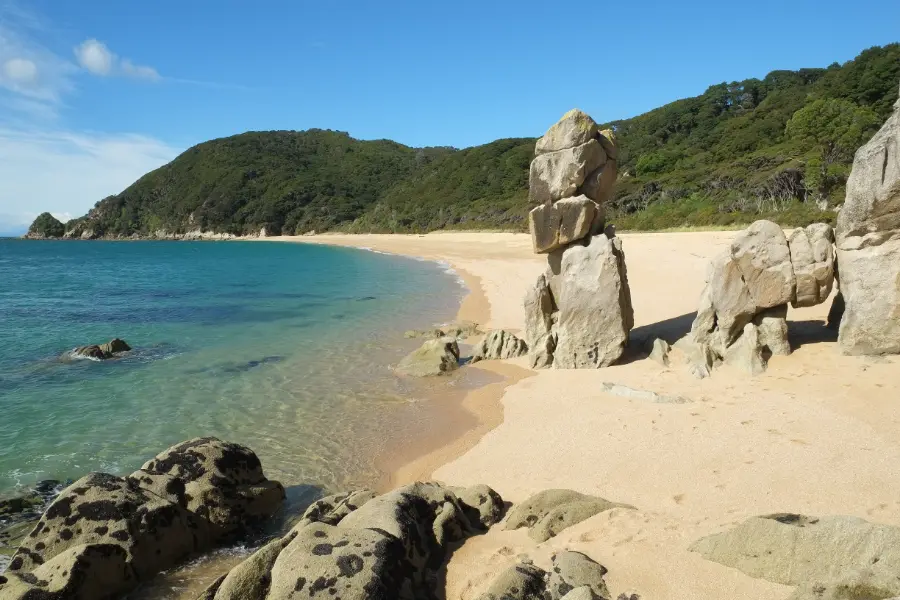
Golden beaches, granite headlands and clear water: the region’s main draw. Take a water taxi to a beach and walk back, paddle a kayak, or walk the Coast Track. Day walks are free; huts must be booked all year. Read our full guide.
Kaiteriteri and Split Apple Rock
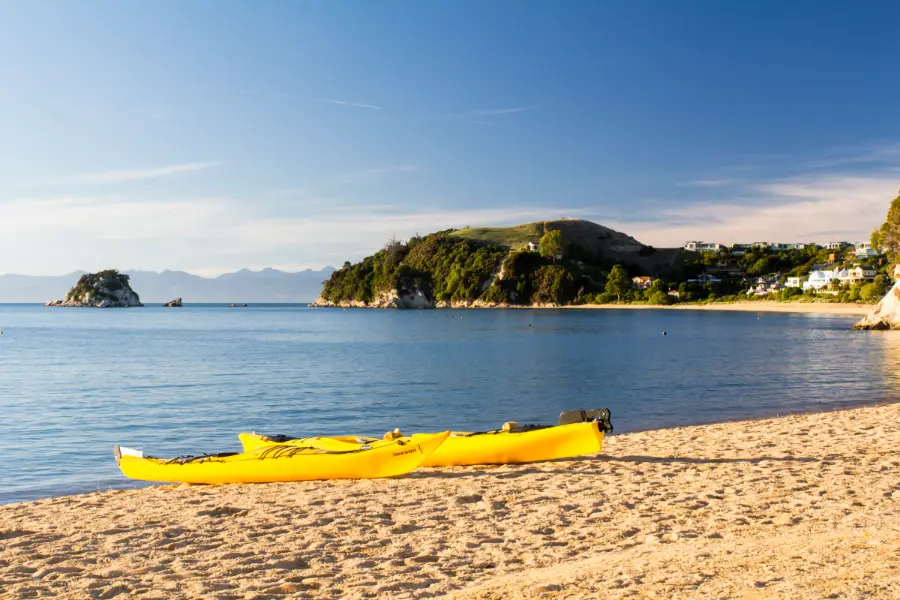
A golden beach where boat trips into the park begin. A short track leads to the shore opposite Split Apple Rock, Tokangawhā, a granite boulder cleft in two: wade towards it at low tide, or kayak out at high tide.
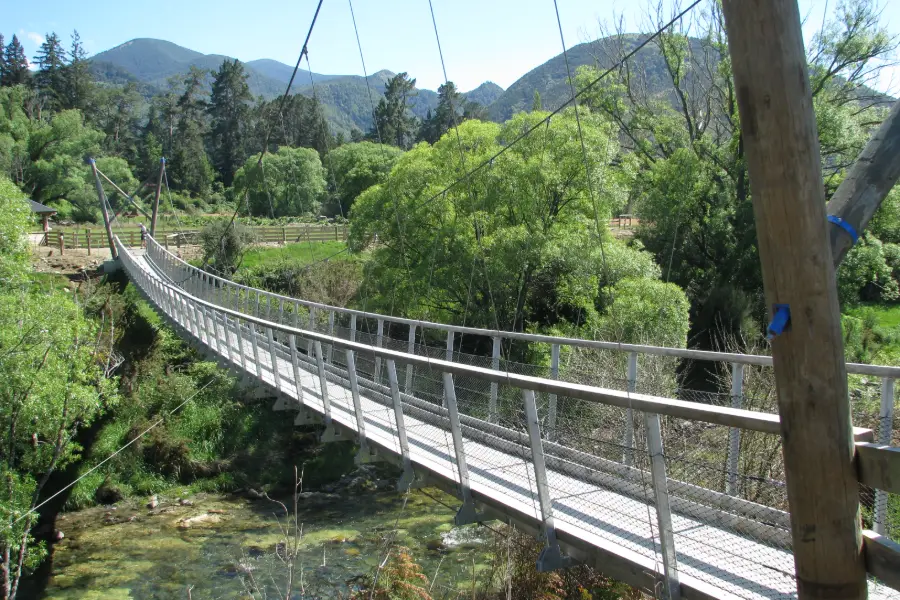
Tasman’s Great Taste Trail
One of the national Great Rides: about 200 km of mostly off-road cycling, graded easy to intermediate, past vineyards, orchards and cafés. Ride it in one to four days, or a section in a day; bike hire and guided e-bike tours are offered.
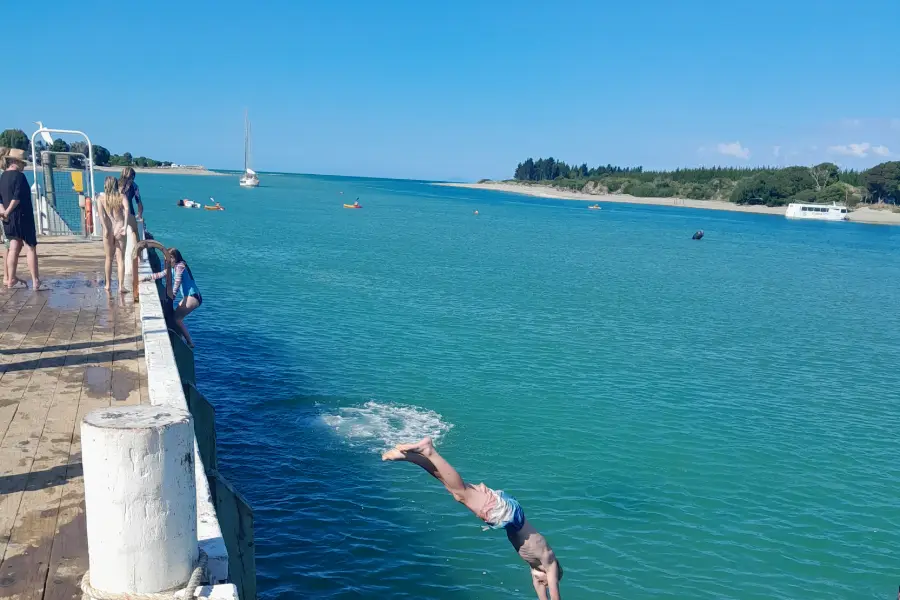
Māpua wharf
A small wharf turned into an afternoon out: a brewery and places to eat on the water and, on a hot day, swimmers jumping off the end. From late September to late May a ferry crosses to Rabbit Island, linking two sections of the cycle trail.
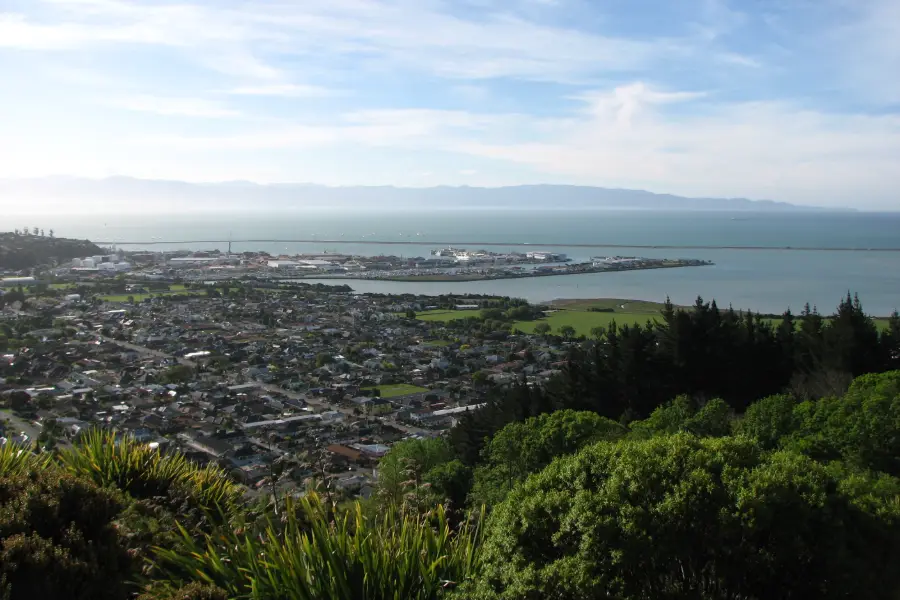
The Centre of New Zealand walk
A climb of 20 minutes to an hour from the Botanical Reserve, at the end of Hardy Street, to a view over the city and the bay. The name dates from the 1870s, when the hill was the centre point of a national survey; the true centre lies elsewhere.
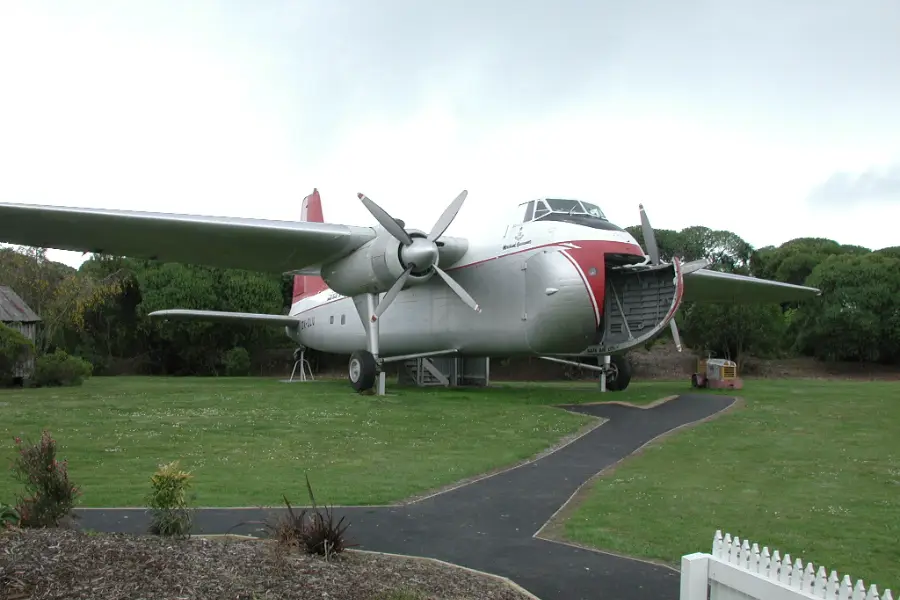
Founders Heritage Park and the classic cars
Two rainy-day choices in the city. Founders Park is a village of heritage displays, a train ride and a Bristol Freighter aircraft, open daily, $12.10 for adults. The Nelson Classic Car Museum shows more than 150 cars, open daily from 10am to 4pm, $20 for adults.
Climb to the Centre of New Zealand towards the end of the day and find a place to sit. Below, the city spreads to the water; beyond the port, Tasman Bay opens out, with the hills of the far shore lined up across it. Watch the light change on the water as the sun drops towards the west, and notice how much of the region you can hold in one view: the coast road you will take tomorrow runs out of sight beneath those hills.
Getting there and around
From the North Island, most travellers take the ferry from Wellington to Picton, about three and a half hours, then drive 134 km to Nelson, about 1 hour 45 minutes. Our three-week New Zealand route spends its first South Island night here, and our guide to getting around New Zealand covers the crossing. By coach, InterCity runs from the Picton ferry terminal to Nelson in about 2 hours 20 minutes. By air, Nelson has domestic flights from Auckland, Wellington and Christchurch on Air New Zealand and Sounds Air; there are no international flights.
Around the region, a car makes everything easier. From Nelson it is about 1 hour 5 minutes to Marahau and 1 hour 15 minutes to Kaiteriteri, more in holiday traffic; about two hours over the Tākaka Hill to Golden Bay; and about an hour and a half to Nelson Lakes. Local buses serve Nelson and Richmond, and a bus continues to Motueka and Kaiteriteri; inside the park, booked water taxis run year-round between Marahau or Kaiteriteri and Tōtaranui.
Times from newzealand.com, InterCity, the park boat operator and publisher guides, checked on 17 October 2026. We found no official time for Nelson to Tākaka, so the two hours is a common estimate. Check the NZ Transport Agency before you set off.
When to go and practical notes
October to April is the season for the park and the beaches: long days, warm water, and the Great Walk at its busiest. Holiday periods fill Kaiteriteri and Marahau, and the boat operator warns of slow beach traffic then. The Māpua ferry runs only from the end of September to the end of May. Winter is quieter, and the Coast Track huts cost less.
Huts and campsites must be booked in advance all year, and in summer you may stay no more than two nights in each. Three estuaries are crossed on foot and depend on the tide: at Awaroa there is no alternative route, and DOC allows the crossing only in daylight, from 1 hour 30 minutes before to 2 hours after low tide. Check the tide times and DOC’s alerts before you set out.
Where to stay and eat
Where to stay
Where you sleep depends on what you came for. For the city, its restaurants and day trips in every direction, stay in Nelson. For the park, a night or two at Kaiteriteri or Marahau saves two hours of driving a day and puts you on the beach for the first boat. Motueka is a practical stop on the way, and Golden Bay deserves two nights of its own. Our guide to where to stay in Nelson and the region compares all five areas and names places to stay in each.
Where to eat and drink
The region eats well rather than famously, and drinks better still. Nelson Tasman’s own tourism body calls Nelson the craft-brewing capital of New Zealand; hop gardens line the roads west of the city, and the Moutere hills are wine country. We have not eaten or drunk here, so the table says what each place is and when it opens, not how it tastes.
| Place | What it is | Open | Watch for |
|---|---|---|---|
| Hopgood’s & Co. | A contemporary restaurant at 284 Trafalgar Street | Tuesday to Saturday, 5.30pm to 9pm | Dinner only; book ahead |
| Boat Shed Café | A restaurant over the water at 350 Wakefield Quay | Lunch and dinner daily; from 9am at weekends | Book; holiday hours vary |
| Golden Bear Brewing | A brewery with a Mexican-style kitchen, on Māpua wharf | Thursday and Friday from 4pm; weekends from noon | Closed from July to mid-September |
Beer, wine and cider. Nelson Tasman’s tourism site lists the region’s wineries, breweries and distilleries, and its cellar doors and taprooms are easy to find along the Great Taste Trail and in the Moutere. A guided e-bike tour of the wineries on the trail was offered from NZ$425.
Other places to find for yourself. The city centre has many more cafés, bars and taprooms than these, around Trafalgar, Hardy and Bridge Streets, and the Saturday market is a good place to taste local food.
Nearby and day trips
Three of the region’s best-known places are too far for a casual afternoon: Golden Bay is about two hours over the Tākaka Hill, and Nelson Lakes about an hour and a half south. Make Golden Bay an overnight stay if you can.
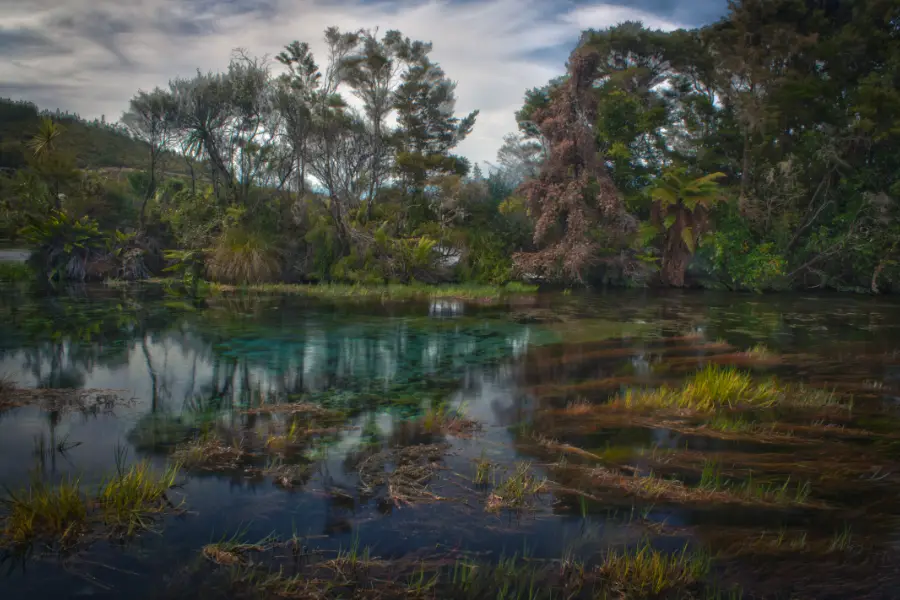
Te Waikoropupū Springs
Springs of astonishing clarity near Tākaka, sacred to Māori and protected: look, but do not touch the water. A 45-minute loop through forest, fully accessible, leads to a platform over the main spring. DOC asks for a close watch on children.
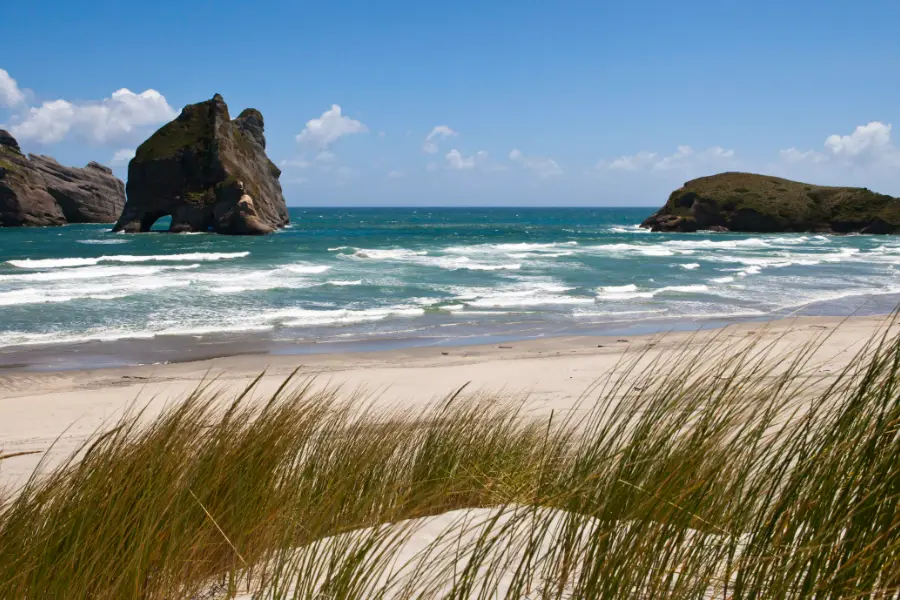
Farewell Spit and Wharariki Beach
At the far end of Golden Bay, Farewell Spit curves out to sea: a bird sanctuary where you may walk only its base, and beyond that only with a licensed tour. Nearby Wharariki Beach has rock arches, caves and seals. Base yourself at Collingwood.
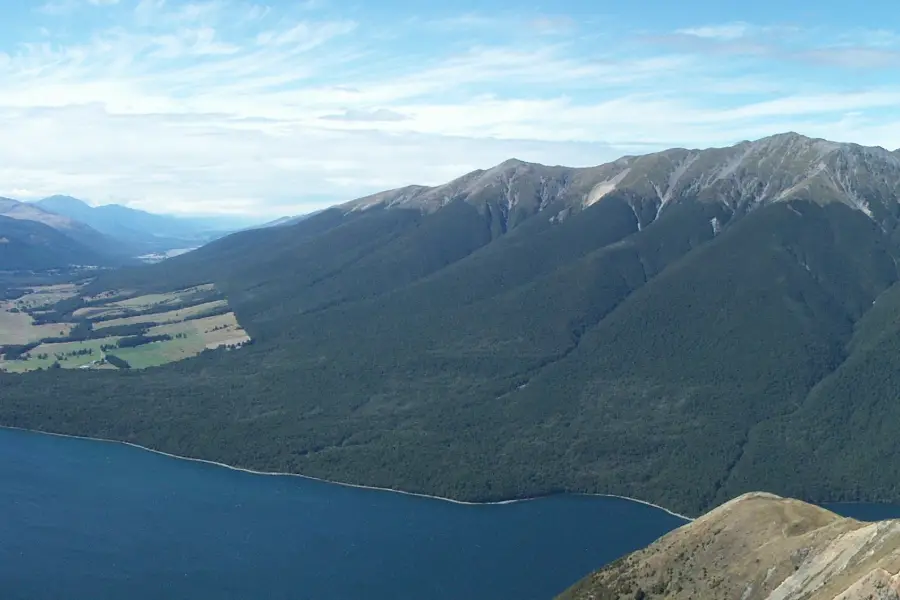
Nelson Lakes National Park
Alpine lakes and beech forest about an hour and a half south of Nelson. At St Arnaud the jetty on Lake Rotoiti is among the region’s most photographed places; tracks follow the shore, and a popular day out is to Whisky Falls, about 40 m high.
A final word on Nelson
Nelson is a city to use as much as to see. Spend a morning in it, then go west: into the park by boat or on foot, along the trail by bike, or over the hill to Golden Bay. Book the park early, keep a day for the weather, and finish with a local beer as the sun goes down over the bay.
Andrew + Margaret
- Abel Tasman National Park Highlight
- Where to stay in Nelson Decide
- Visiting New Zealand Overview
- New Zealand in three weeks Journeys
- Getting around New Zealand Practical
- Best time to visit New Zealand Practical
- Understanding Māori New Zealand Culture
- Nelson Tasman — the regional tourism site Official
- Department of Conservation — Abel Tasman Coast Track Safety
- Department of Conservation — Farewell Spit Official
- Tasman’s Great Taste Trail Official
- NZ Transport Agency — journey planner Safety
- Toss Woollaston’s Nelson landscapes, Te Ara Reading
- Toss Woollaston, Motueka Harbour (1970), Te Ara Reading
How many days do you need in Nelson?
Three nights covers the city, a day in Abel Tasman and a day on the trail or in Golden Bay; five or more lets you walk part of the Coast Track and stay over the hill.
Should I stay in Nelson or near Abel Tasman?
Nelson is better for restaurants and day trips in every direction; Kaiteriteri or Marahau is better if the park is your main reason for coming, because the boats and the track start there.
Can you visit Abel Tasman without walking the whole track?
Yes. Many visitors take a water taxi to a beach and walk back, or kayak for a day. Day walks are free; only overnight stays need booking.
Can you get to Nelson without a car?
Yes: coaches run from the Picton ferry and there are domestic flights. Buses reach Motueka and Kaiteriteri; for Golden Bay and Nelson Lakes a car is easiest, or look for a tour.