Mokpo
An old port at the end of the line, with a hill in its streets and the sea at every turn
Mokpo is where the railway from Seoul runs out and the islands begin. A treaty port from 1897, it keeps the brick buildings of its colonial years in the lanes below Yudalsan, a hill of bare rock that rises out of the old town. A cable car swings over the hill and out across the sea to Gohado island, and from spring to autumn a fountain plays in the bay at night. Above all, people come to eat: small octopus, fermented skate and, in summer, croaker. It is two and a half hours from Seoul by KTX, and the port for the ferry to Jeju. One night gives you an afternoon and an evening.
How this page was madeWe have not yet been to South Korea, and this guide is researched rather than remembered. It draws on the city’s tourism site, the Korea Tourism Organization, The Korea Herald, the ferry operator’s timetable, the venues’ own listings and the sources named at the end, checked on 13 October 2026. Where sources disagree, we say so. When we go, we will say so here.
Last updated 13 October 2026
A little background
Mokpo was a naval post and a fishing harbour until 1897, when the Korean court opened it to foreign trade. Under Japanese rule from 1910 it grew rich as a port for the rice and cotton of the south-western plains, much of it shipped to Japan, and its streets still show it. The former Japanese consulate of 1900 stands in red brick on a rise above the old town, and the office of the Oriental Development Company, the colonial land company, stands a few streets away. Both are now museums, and the old town was a filming location for the television drama Hotel del Luna.
In 1935 the singer Lee Nan-young recorded Tears of Mokpo, a song of parting at the port. Under colonial rule many heard in it a lament for the country, and by his own later account its composer meant one line that way. Kim Dae-jung, who grew up here, became president in 1998 and won the Nobel Peace Prize in 2000.
One change to know about: since 1 July 2026 Mokpo has been a city within the new Jeonnam-Gwangju Special Metropolitan City, whose English name has not yet settled. Stations and signs still say Mokpo.
How the city fits together
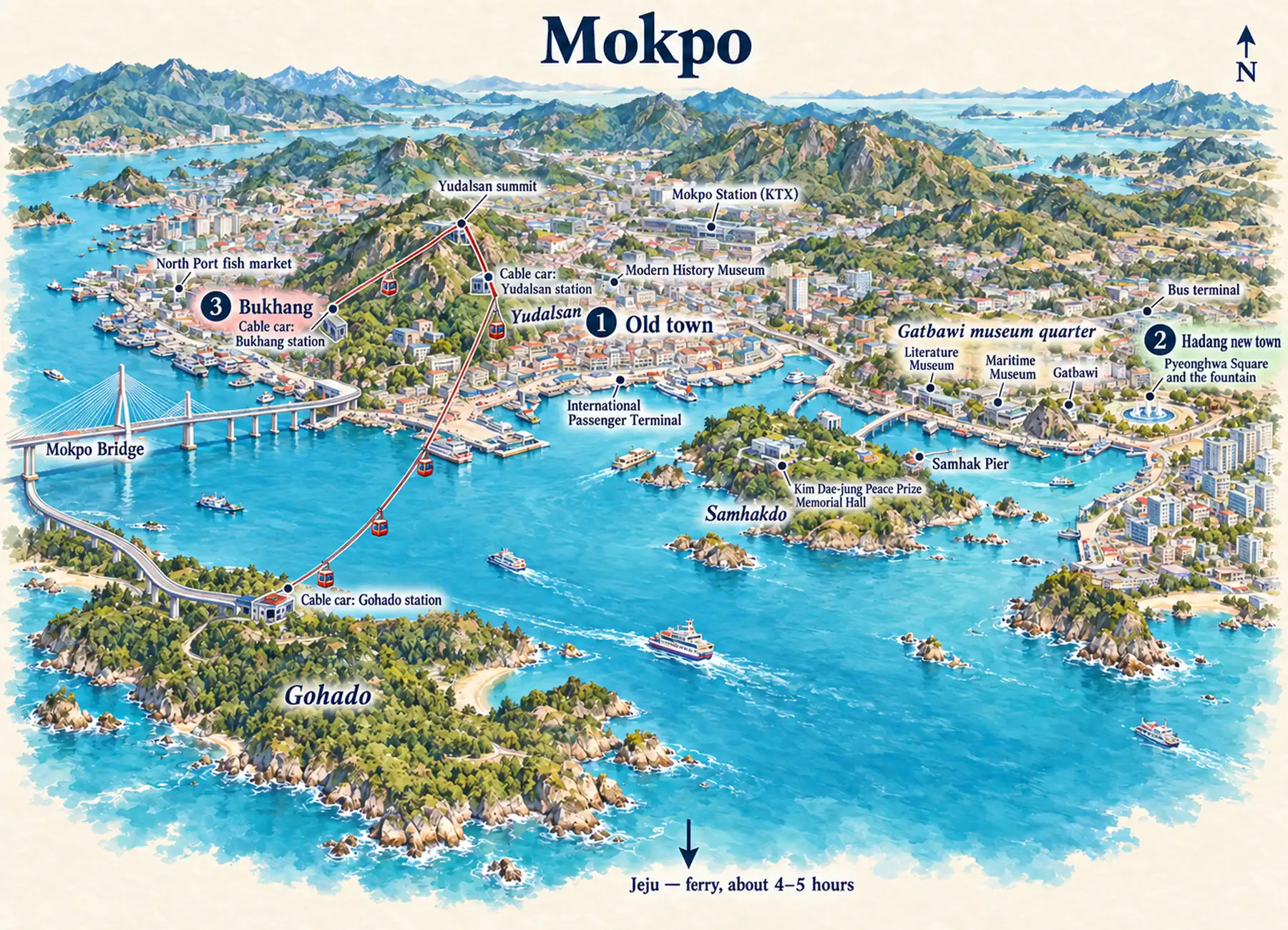
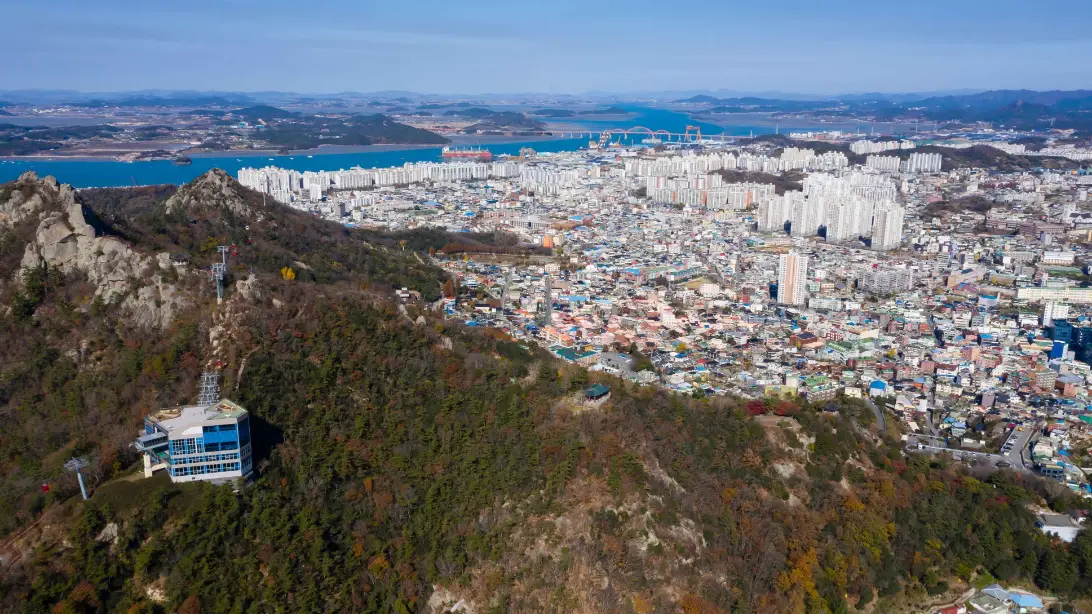
Mokpo sits on a hilly peninsula at the mouth of the Yeongsan River, with the sea on three sides and islands offshore. The old town lies between Yudalsan and the southern shore, around the station and the ferry piers. The cable car leaves from Bukhang, the north port, crosses the hill and the strait, and ends on Gohado. The newer town of Hadang lies four or five kilometres east, along a shore that runs past the Gatbawi rocks and the museums to Pyeonghwa Square.
Old town
port and hillMokpo Station, the lanes of Yudal-dong and Manho-dong with their brick buildings of the treaty-port years, the two museums of modern history, and the paths up Yudalsan. Both Jeju ferry piers are about a kilometre and a half from the station. It is where we would stay; see where to stay below.
Hadang new town
sea front, eveningsThe newer town on the eastern shore: Pyeonghwa (Peace) Square, a long promenade, the sea fountain, newer hotels and the restaurants and bars that fill after dark.
Bukhang
the north portThe north port, where the cable car begins, beside the North Port fish market. Choose live seafood on its ground floor and eat it upstairs; see where to eat below.
Places you don’t want to miss
The sights fall into two clusters, which one day can join: the old town, hill and cable car in the west, and the shore from Gatbawi to Pyeonghwa Square in the east.
The Mokpo Marine Cable Car
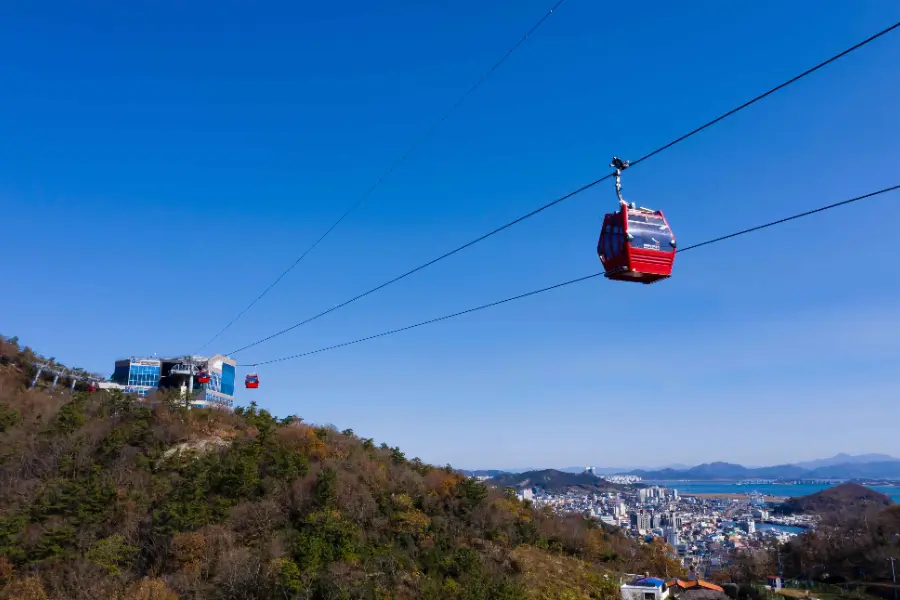
Opened in 2019, it runs more than three kilometres from Bukhang over Yudalsan and across the sea to Gohado; a third of its cabins have glass floors. A round trip takes about forty minutes and costs about 24,000 won in a standard cabin, by one 2026 guide; on the way back, get off at Yudalsan and walk down.
Yudalsan
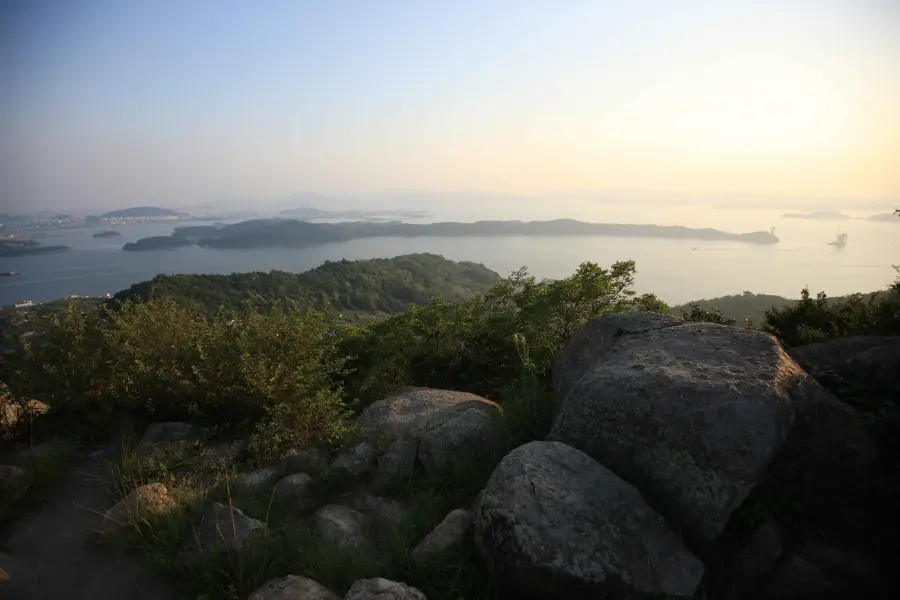
A 228-metre hill of bare rock laced with paths, pavilions and legends. Near the top stands the monument to the song Tears of Mokpo, and the summit looks out over the islands. Free; allow one to two hours on foot.
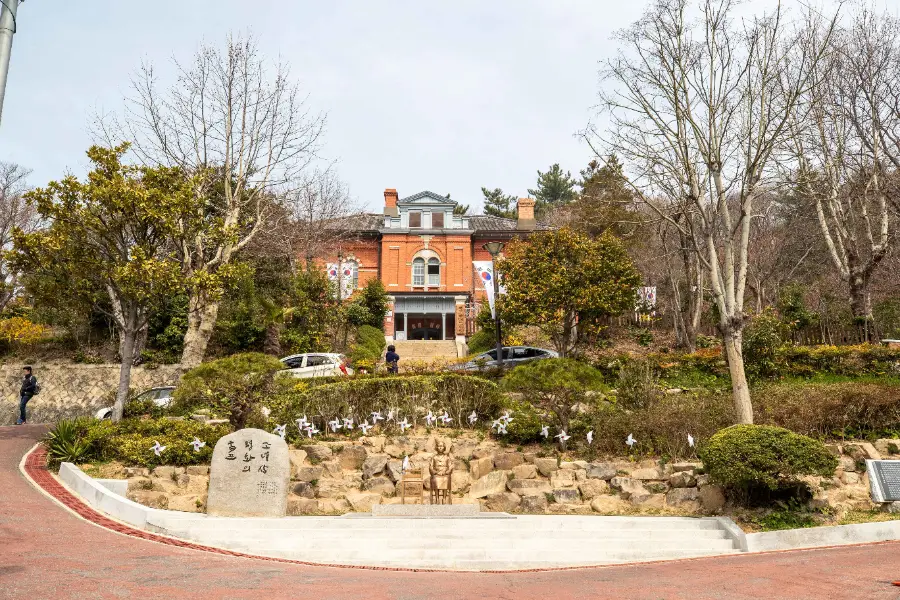
The modern history museums
The former Japanese consulate of 1900 and the former office of the Oriental Development Company, a few minutes from the station, tell the story of the port and of colonial rule. Closed on Mondays.
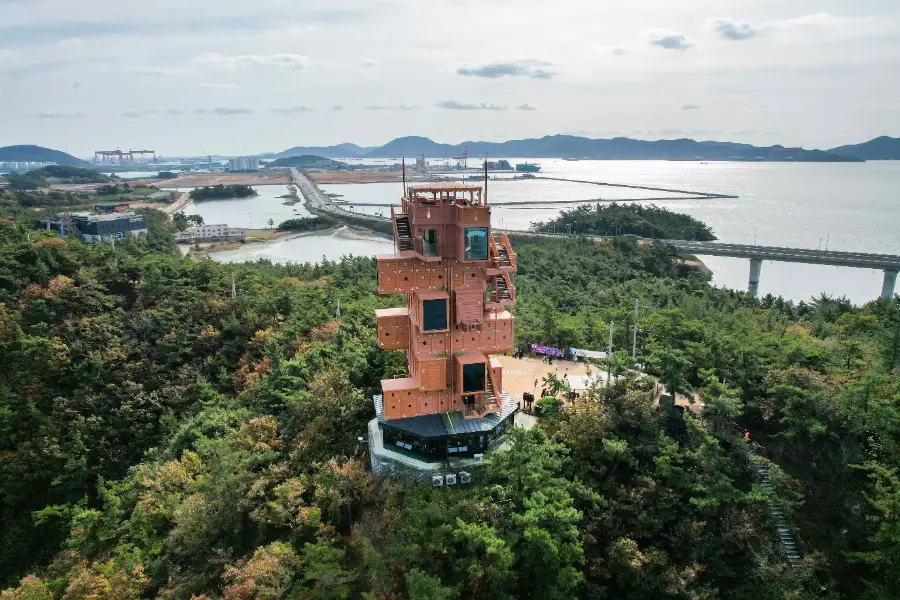
Gohado
The island at the end of the cable car. A boardwalk of about 1.8 kilometres follows its shore, and a deck modelled on Admiral Yi Sun-sin’s warships looks back to the city and Mokpo Bridge.
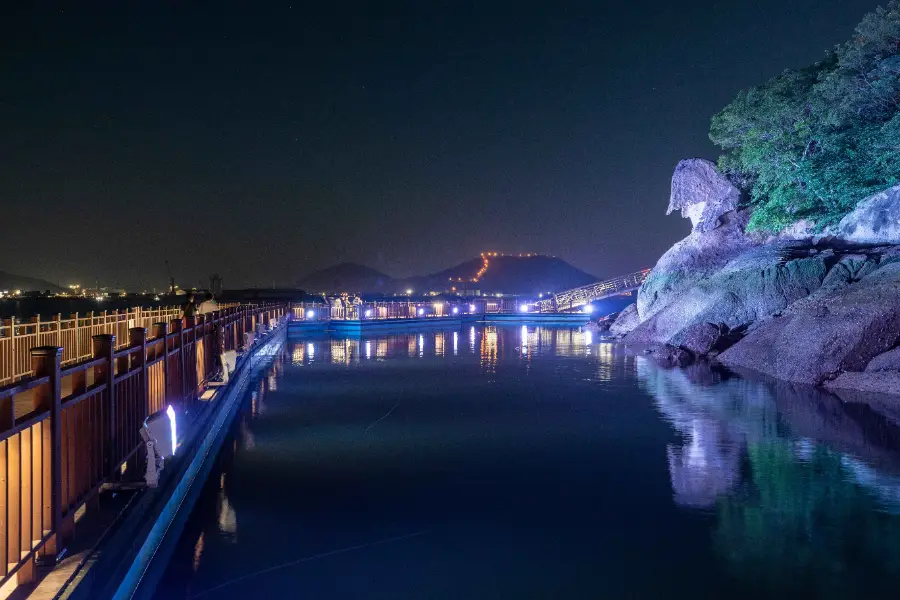
Gatbawi and the museum quarter
Two sea-worn rocks said to look like men in wide hats, seen from a floating walkway. Beside them are the Literature Museum and the National Maritime Museum, with the cargo of a fourteenth-century ship wrecked off Sinan. Closed Mondays.
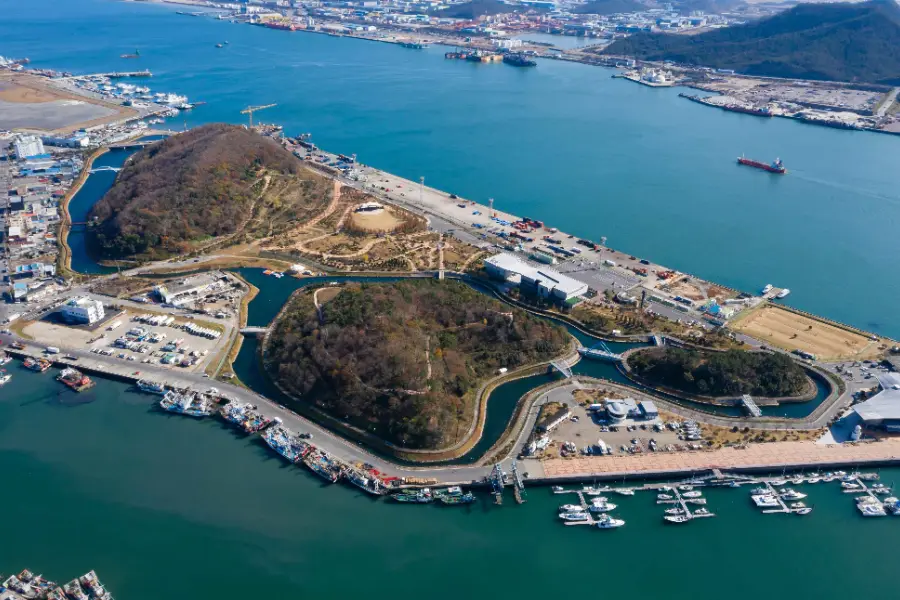
Kim Dae-jung Nobel Peace Prize Memorial Hall
On Samhakdo, a park islet near the ferry piers, a free museum to the president who grew up in Mokpo and won the Nobel Peace Prize in 2000 for democracy and reconciliation with the North. Closed Mondays.
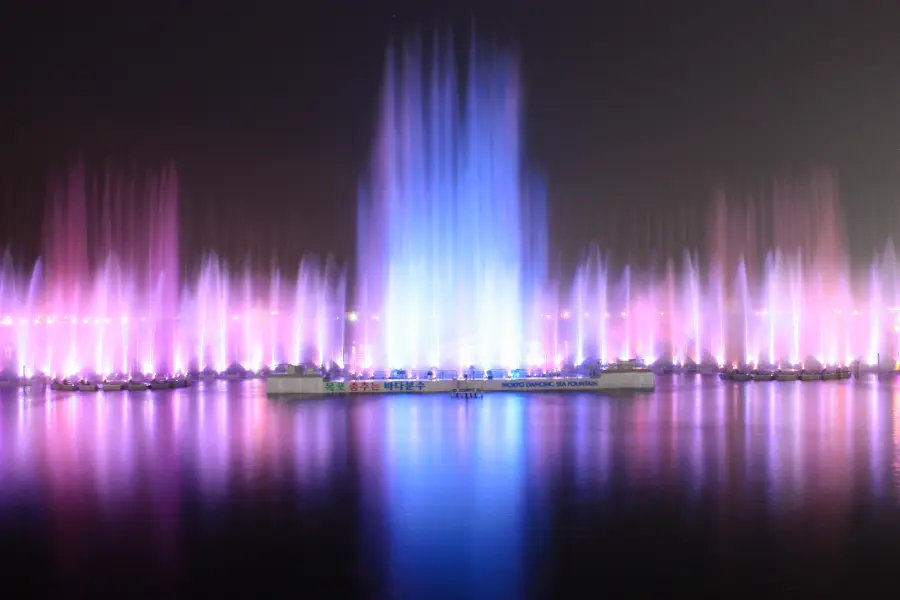
Pyeonghwa Square and the sea fountain
Hadang’s sea front at its liveliest. From April to November a fountain in the bay plays to music on most evenings at 8pm and 8.30pm, with a 9pm show in summer and on Fridays and Saturdays, by its listing for 2026. Free; none on Mondays.
None of the seven places above has a guide of its own on our site yet, so the cards carry no links. We will link each one as we write it.
The Literature Museum by Gatbawi honours four Mokpo writers: the playwright Kim U-jin, whose centenary it marked in August 2026; Park Hwa-seong, whom the city counts as Korea’s first woman novelist; the playwright Cha Beom-seok; and the critic Kim Hyun. The poet Kim Ji-ha was born here too, in 1941. His satire Five Bandits (1970) mocked the military government and led to his arrest; a later death sentence was commuted after a public outcry.
Climb Yudalsan in the late afternoon and stop near the song’s monument, below the summit rocks. Look south over the roofs of the old town to the harbour, the long green island of Gohado and the bridge beyond it, and watch the cable cars cross slowly over the water. Notice how close the sea is to everything: the ferries at their piers, the fishing boats, the islands fading into the haze. A song made this view a byword for parting. Stay until the lights come on along the shore, and listen to the port below.
Getting there and around
By train, Mokpo is the end of the Honam line. The KTX runs from Yongsan in Seoul and stops at Gwangju Songjeong on the way.
| To or from | How | What to expect |
|---|---|---|
| Seoul | KTX from Yongsan | 2 hours 20 minutes to about 2¾ hours, by train; about 48,000 won |
| Gwangju | KTX from Gwangju Songjeong | About 30 minutes |
| Jeju, morning | Ferry, 8.30am, usually from Samhak Pier | Every day; arrives about 12.45 to 1.20pm |
| Jeju, overnight | Ferry, 1am, International Passenger Terminal | Most nights; arrives about 5.30am |
| Jeju, afternoon | Ferry, 2pm, Samhak Pier, from 7 November 2026 | Most days; arrives about 6.50pm |
Train times and fare from a timetable listing updated on 13 October 2026; ferry times from Seaworld Express Ferry’s pages for each ship, read the same day, for the timetables to 6 November and from 7 November 2026. Check both before you travel.
The Jeju ferry, run by Seaworld Express Ferry, carries cars, and car space sells out first. Three ships share the route and the timetable changes with the season. By the operator’s times the crossing takes from 4¼ hours to just under 5. The sailings leave from two piers on the south shore, both a few minutes by taxi from the station, and the pier depends on the ship and the day: check your ticket.
By air, Muan International has been closed since the crash of December 2024, and in August 2026 still had no date to reopen. Gwangju Airport, about an hour away, has domestic flights, including to Jeju.
In town, walk the old town and take a taxi or bus further out. For travel cards, see getting around South Korea.
When to go and practical notes
Spring and autumn are the easiest seasons, mild and good for the views. Summer is hot and humid, with the monsoon from late June into July, but it is the season of croaker, best from late July to mid-August, and of the fountain at its fullest. Winter brings wind off the sea, and high wind can stop the cable car and delay ferries.
A Monday in Mokpo is still a good day for Yudalsan and the cable car, which run every day, weather permitting. But the museums close on Mondays, by their listings: both modern history museums, the Literature and Maritime museums and the Kim Dae-jung hall. The fountain is dark on Mondays too, and from December to March.
Where to stay in Mokpo
For one night, stay in the old town. The station, both ferry piers, the museums and the paths up Yudalsan are all within a walk or a short taxi ride, and the lanes are quiet after dark. Choose Hadang for a room on the sea front, the promenade and livelier evenings, at the cost of a taxi to the station and the piers. In our own sample, a weeknight in November 2026, rooms in the old town were cheaper than those in Hadang.
The 1am ferry is another way to spend the night: you sleep on board and reach Jeju at about 5.30am. The operator lists shared economy rooms and private cabins, so check what your ticket includes. It does not sail every night.
Where to eat in Mokpo
Many Koreans travel to Mokpo simply to eat, and the city keeps a list of its nine tastes. Three lead it.
Sebal nakji, small octopus with thin legs, is eaten chopped and still moving, in a clear soup with radish, or grilled. Hongeo samhap is fermented skate, with an ammonia sharpness that is an acquired taste, served with boiled pork and aged kimchi; the prized skate from Heuksando island can cost 120,000 won or more a plate, and imported skate far less. Mineo, croaker, is eaten raw in summer. The rest of the list is the sea too: blue crab, braised hairtail, pomfret, gizzard shad, monkfish and a rockfish broth.
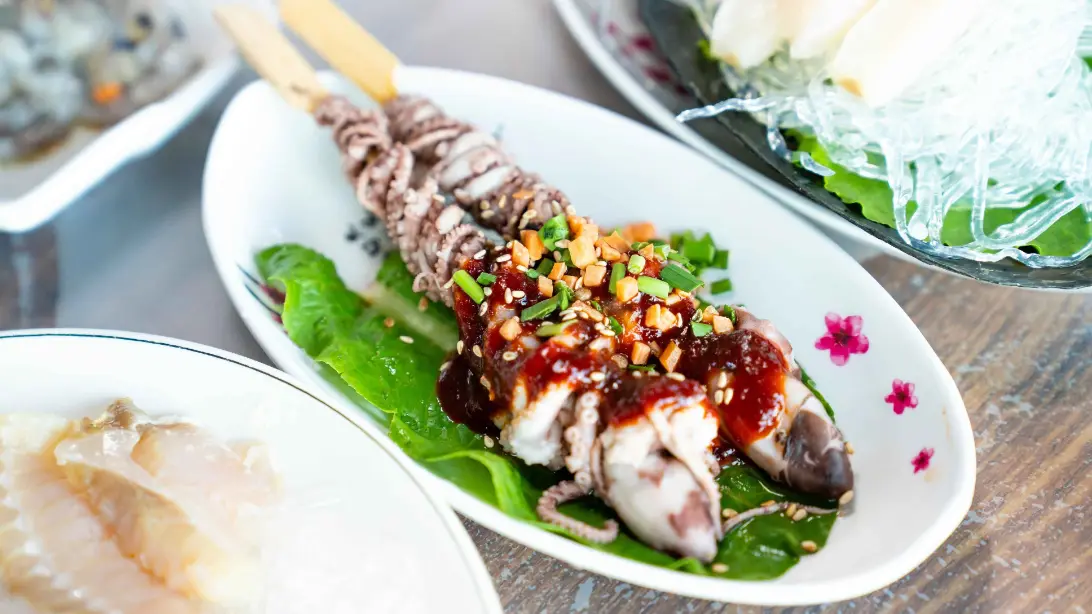
For the wider Korean table, see our guide to what to eat in Korea.
A final word on Mokpo
Give Mokpo an afternoon and a night. Ride over the sea, climb the hill at dusk, eat the octopus, and take the morning boat to Jeju. Further out, the islands of Sinan, Purple Island and Jeungdo among them, each want a day of their own.
Andrew + Margaret
- Visiting South Korea Overview
- Gwangju Overview
- Jeju Overview
- South Korea itineraries Journeys
- South Korea in Two Weeks Journeys
- Getting around South Korea Practical
- What to eat in Korea Culture
Should I take the ferry or fly to Jeju?
Flying from Gwangju is quicker in the air, but the ferry leaves from the town you are already in and needs no trip to an airport. Take the 8.30am sailing if you want to arrive by early afternoon and see the islands on the way, or the 1am sailing to sleep on board. Take the ferry if you are bringing a car.
Is one night enough?
For the old town, the hill, the cable car and a seafood dinner, yes, if you arrive by early afternoon. Stay two if you want the museums by Gatbawi as well, or a day on the islands.