Hawke's Bay Wine Country
New Zealand’s oldest wine region, and its largest maker of premium red wine
Most people abroad know New Zealand wine as sauvignon blanc from Marlborough. Hawke's Bay is the other New Zealand: warmer, older and red. It is the country's oldest wine region, with vines since 1851, and its second largest, and critics compare its best wines with those of Bordeaux, Burgundy and the Rhône. In 2023 it became one of the twelve Great Wine Capitals of the world, alongside Bordeaux, Napa and Rioja. Its cellar doors sit among orchards and stony vineyards a short drive from Napier, and most of them will pour you a tasting of their best.
Hawke's Bay among the world's wine regions. A wine region is defined above all by warmth, and Hawke's Bay sits in an interesting place. Its growers measure its summer heat at about 1,470 growing degree days, between Burgundy, at about 1,120, and Bordeaux, at about 1,550, with some 2,200 hours of sunshine a year. That is warm enough to ripen the grapes of Bordeaux, merlot and cabernet, and cool enough to keep freshness in chardonnay. It also suits syrah, the grape of the northern Rhône; Quill & Pad describes Trinity Hill's Homage as Rhône-like, made by a winemaker inspired by a vintage at Jaboulet in Hermitage, rather than in the rich style of Australian shiraz.
What deserves celebrating. Three things. The first is the red blend, merlot and cabernet in the manner of Bordeaux: New Zealand Winegrowers calls red blends and chardonnay the region's best-known wines. The second is syrah, which New Zealand Winegrowers calls “incredibly impressive”; the best come from the Gimblett Gravels, about 800 hectares of stony old riverbed west of Hastings. The third is chardonnay, which Decanter has called considerably underpriced against white Burgundy. The measure of quality in all three is the classic one: balance, a finish that lingers, and the ability to improve for ten years or more in the bottle.
What to keep in mind. Hawke's Bay is not uniformly great. It sits at the cool edge for cabernet sauvignon, which in a wet or cool year struggles to ripen, and that is why merlot, which ripens earlier, leads most of the blends. Vintages vary more than in warmer regions, and the top bottles are not cheap. The reward is freshness: at their best, wines that taste of fruit rather than of heat, and a chardonnay that critics rate as serious value.
How to taste it if you are new to wine. A cellar door tasting is a short flight, four to six small pours, usually from white to red. Look at the colour, swirl, smell, then sip, and do not be shy of the spittoon if you are driving. Ask two questions at every stop: which vineyard the wine comes from, and whether you can compare two vintages side by side. The difference a year makes is the quickest way to understand what winemakers mean by vintage.
Wines and vintages to look for. Te Mata's Coleraine, first made in 1982, is one of the region's longest-running fine red blends, and its Elston chardonnay is among those Decanter features. Trinity Hill's Homage syrah has been called a strong contender for New Zealand's best wine by Quill & Pad, whose critic scored it 95 to 98 points. For the reds, the Gimblett Gravels growers and Jancis Robinson both rate 2013 and 2014 as outstanding years; the growers also praise 2020 and 2021. For chardonnay, Decanter picks out 2024, 2021 and 2014. Wines from 2023, the cyclone year, are fewer and uneven.
How this page was madeWe have not yet been to Hawke's Bay, and we have not tasted these wines. This page is researched, from Hawke's Bay Winegrowers, New Zealand Winegrowers, the wineries themselves and the critics we name, and every judgement of a wine or a vintage is theirs, not ours. When we go, we will say so here.
Last updated 29 September 2026
Why it matters
Wine came to Hawke's Bay with the Marist missionaries, who planted vines in 1851; Mission Estate at Taradale, which traces itself to them, is recognised as New Zealand's oldest surviving winemaking concern. Church Road, a few minutes away, has made wine for more than 125 years and keeps a museum in its cellars. For most of the twentieth century, though, New Zealand drank little wine of its own, and the reputation of the region is recent.
It is also small by world standards. New Zealand Winegrowers counts more than 200 vineyards and 125 producers here, making about 8 per cent of the country's wine. But Hawke's Bay Winegrowers describe it as the largest producer of premium red wine in New Zealand, and in May 2023 it was admitted to the Great Wine Capitals network, founded in Bordeaux in 1999, as its twelfth member. The other eleven include Bordeaux, Porto, Mendoza, Cape Town, Adelaide, Verona and San Francisco with Napa Valley: company that tells you how the wine world now sees it.
It rests on a flood. Until 1867 the Ngaruroro River ran through what is now the Gimblett Gravels; that year a great flood moved it north, and it left behind a bed of deep, free-draining stones that no farmer wanted. The first red vines went in during the early 1980s, and by 1991 there were only about 20 hectares.
Today some 800 hectares of vineyard cover the old riverbed, nine-tenths of it red: merlot, syrah, cabernet sauvignon and malbec. Its growers mark the district's boundary by the soil itself, and each year a leading Australian critic, Andrew Caillard MW, chooses a dozen of its reds to send to wine writers around the world. Reviewing the 2021 selection, the critic Ken Gargett scored none below 93 points out of 100, and the syrahs averaged over 96: on the 100-point scale critics use, anything above 95 is outstanding.
| Wine | Producer | Style | Why it matters |
|---|---|---|---|
| Coleraine | Te Mata Estate, Havelock North | Red blend, cabernet and merlot | Made since 1982; a 32-vintage collection has sold at auction for $19,000 |
| Elston | Te Mata Estate | Chardonnay | Featured by Decanter among the region’s leading chardonnays |
| Homage | Trinity Hill, Gimblett Gravels | Syrah | First made in 2002; a contender for New Zealand’s best wine, in Quill & Pad’s view |
| Syrah | Stonecroft | Syrah | From vines the winery dates to 1984, among the oldest syrah in the country |
| TOM | Church Road, Taradale | Premium range | The winery’s flagship range, named for its founder, Tom McDonald |
| Annual Selection | Gimblett Gravels growers; a dozen wines a year | Red blends and syrah | Chosen each year since 2008 and sent to critics worldwide |
The wines are chosen from the critics and bodies named on this page; we have not tasted them. Read 29 September 2026.
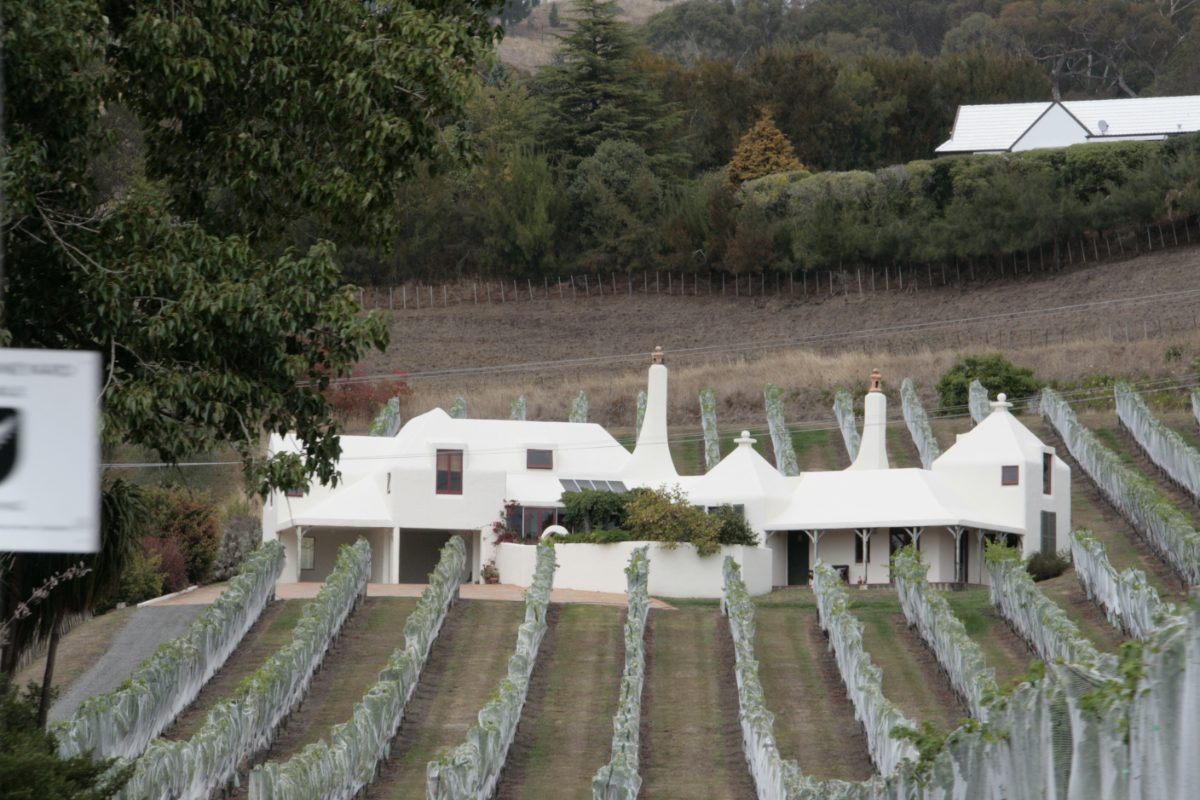
After the cyclone
On 13 and 14 February 2023, weeks before harvest, Cyclone Gabrielle brought more than five times the usual February rain. Floodwater and silt swept through vineyards in the Esk Valley and around Puketapu, and wet weather brought disease to much of the crop. The Gimblett Gravels, Bridge Pa and Te Awanga came through better. The 2023 wines are fewer, but critics found small parcels of exceptional chardonnay and syrah, and the 2024 harvest, small again, was called by Bob Campbell MW “small but beautiful”. The cellar doors on this page were open when we checked; a few in the worst-hit valleys have moved or changed their hours.
What it's like
Hawke's Bay wine country is not one valley but a wide, flat plain, the Heretaunga Plains, with the vineyards scattered across it among orchards, market gardens and small towns. It has four quite different landscapes, and a good day visits at least two of them.
Taradale, on Napier's south-western edge, is the old heart of it: Mission Estate on its hillside and Church Road's cellars and museum just below. This is where the history is, and the most comfortable first stop from Napier.
The Gimblett Gravels, west of Hastings, are flat and stony: an old riverbed, deep in river stones, that farmers once thought too poor to use. That is the point. The stones drain fast and hold the sun's heat, and the vines planted in them since the 1980s make the region's most celebrated reds.
Havelock North sits under Te Mata Peak, the long ridge that rises from the plains. Hawke's Bay Tourism tells the story of its shape: a sleeping giant, the chief Te Mata, who died trying to bite his way through the hills to win his rival's daughter, though local iwi tell more than one story of the mountain. Te Mata Estate, Black Barn and Craggy Range are all close by, and the village has good cafés and restaurants.
Between them lie quieter districts that repay a second day: the Bridge Pa Triangle, south-west of Hastings, which New Zealand Winegrowers names with the Gravels as home to some of the region's best wines; Bay View and the Esk Valley, north of Napier, where the cyclone did its worst damage; and Central Hawke's Bay, further south and more scattered.
Te Awanga, on the coast, is where the vineyards meet the sea. Hawke's Bay Tourism describes picture-postcard views across to Cape Kidnappers, and the wineries here make much of their chardonnay.
The cellar doors themselves range from the grand to the homely. Most offer a choice between a self-guided flight and a hosted tasting, in which someone talks you through each wine; at the smaller wineries the person pouring may well be one of the family who made it. Either way, the conversation is part of the tasting. Hosts are used to beginners, and the best question is the simplest: what should I notice about this one?
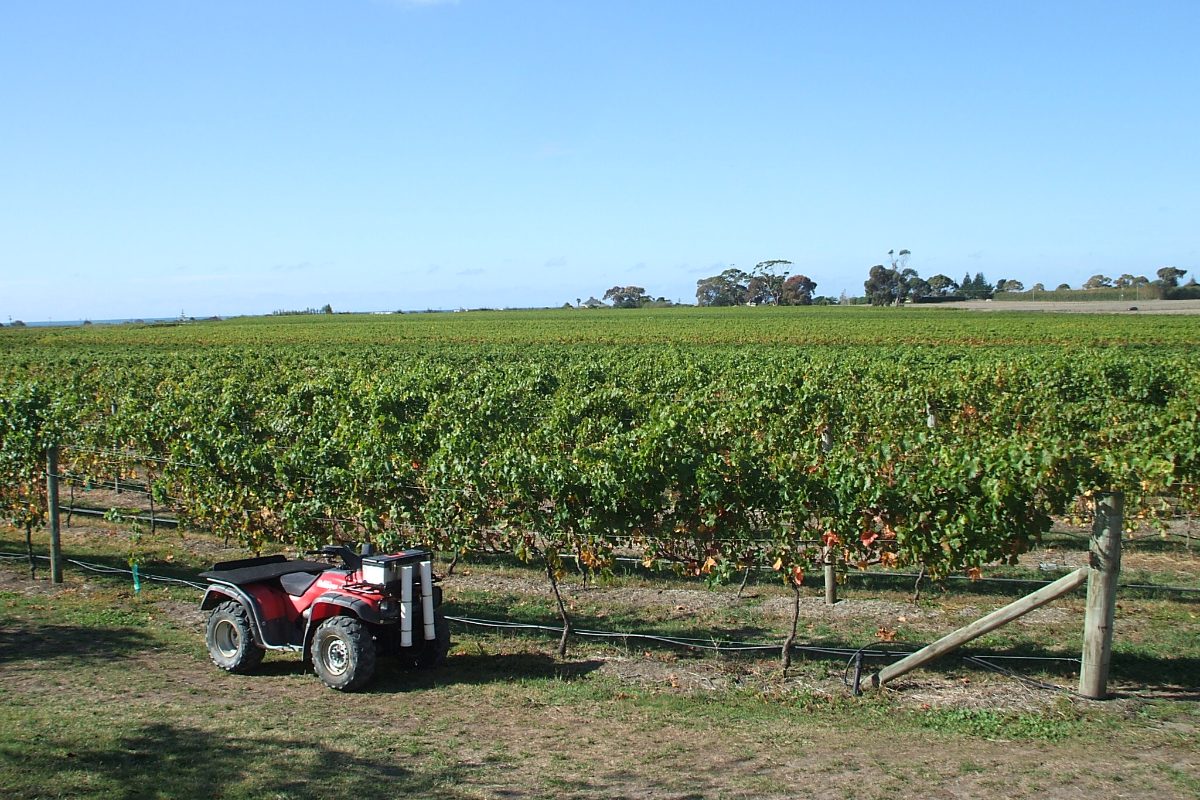
The vineyards change through the year. In spring the new shoots come through on bare wood; by midsummer the rows are dense and green; in autumn, from about March, the harvest is on. In winter the vines are pruned back to stumps and the plains are quiet.
Late on a warm afternoon, at a cellar door in the Gimblett Gravels: where the cellar door lets you walk among the vines, go to the end of a row, crouch and lay your palm on the stones. The growers say this ground runs some five degrees warmer than other soils about 30 centimetres down, and gives its heat back to the air through the evening. Feel the warmth the stones still hold. Then taste a glass of the red grown on them, and ask whether you can find the warmth in it.
How to visit
New Zealand's limit for drivers aged 20 and over is 250 micrograms of alcohol per litre of breath, or 50 milligrams per 100 millilitres of blood. For drivers under 20 it is zero. Five small pours at each of four cellar doors add up, so choose a driver who will spit or not taste, or take a tour. These limits are for drivers; a bike is not a licence to drink, so riders should spit too and stay safe on the road sections.
Getting there
Napier is the natural base, and Hastings and Havelock North are good alternatives if you want to wake up among the vineyards; our guide to where to stay compares them. From central Napier, Taradale is about 15 minutes by car and Havelock North about 23 minutes. Hawke's Bay Airport is about 10 minutes from Napier. The cellar doors are spread across the plains, so the choice is between driving yourself, taking a tour, cycling or hiring a vintage car with a driver.
| Way | How it works | From | Best for |
|---|---|---|---|
| Drive yourself | Your own car and a driver who does not drink | Tastings only | Freedom to choose, if someone is happy to stay sober |
| Guided tour | Pick-up in Napier; tastings included | $110 for 3 hours; $175 for four wineries | Everyone in the group can taste |
| By bike | Hire a bike and ride the flat Wineries Ride | Bike hire, plus tastings | A fine day and a relaxed pace, spitting as you go |
| Vintage car | Art Deco Trust car and driver, up to four people | $270 an hour | A special occasion, with Napier’s Art Deco in the day |
Tour prices from Napier Tours and the Art Deco Trust, read 29 September 2026. The vintage car must be booked 72 hours ahead; a typical three hours takes in about three wineries, and tastings and meals are extra.
Guided tours
A tour is the simplest answer if everyone in the group wants to taste. Napier Tours, one of several operators, collects from Napier accommodation and includes the tastings in its price: about three hours for a shorter wine and Art Deco tour, or six hours and four wineries for a full day, with a minimum of two people. Other companies offer similar half and full days, and the Napier i-SITE can book them. Ask before you book which wineries a tour visits, since some favour the same few, and whether lunch is included.
By bike
The Hawke's Bay Trails are one of the best ways to see the wineries. The Wineries Ride runs 30 to 60 kilometres on lime-sand paths with short sections on the road, and Hawke's Bay Tourism describes it as all flat, apart from an optional climb of Roys Hill. Bikes can be hired in Napier or at hire bases on the trail itself, near Ash Ridge and Sileni, which saves the ride out. The Water Ride, 35 to 76 kilometres, follows the rivers and the coast instead and passes fewer wineries. On a bike, four cellar doors are plenty for a day, and a morning start gives you the cooler hours on the trail.
The cellar doors
Hawke's Bay Tourism counts more than 35 cellar doors, and New Zealand Winegrowers more than 30. Most charge a small fee for a tasting, often waived if you buy a bottle or two. Several ask you to book: Craggy Range requires it, and Mission Estate, Te Mata and Trinity Hill recommend it, especially at weekends. Hours are longest from spring to autumn; several close or shorten their days in winter. These eight between them cover the region's history, its landscapes and its best wines. By car or on a tour, four or five in a day is a comfortable pace; more than that and the wines start to blur.
| Cellar door | Where | Open | Tasting from | Food |
|---|---|---|---|---|
| Mission Estate | Taradale | Mon–Sat 9–5, Sun 10–4.30 | $15 | Restaurant |
| Church Road | Taradale | From 10.30am, last tasting 3.30–4 | $25 | Orton’s, lunch Thu–Mon |
| Trinity Hill | Gimblett Gravels | Daily 11–5 | Ask when booking | Platters |
| Te Mata Estate | Havelock North | Mon–Sat 10–5; Sun 11–4, Sept–Mar | $25 | Snacks only |
| Black Barn | Havelock North | Daily 11–4 | $20 | Bistro |
| Craggy Range | Havelock North | Daily 10.30–5, booking required | $50 | Restaurant |
| Elephant Hill | Te Awanga | Fri–Sun 11–5 in winter | $20 | Kitchen paused |
| Clearview Estate | Te Awanga | Wed–Sun 11–3.30 | Ask when booking | Restaurant, lunch Wed–Sun |
From each winery’s own website and Hawke’s Bay Tourism, read 29 September 2026. Tasting fees are the lowest listed and are waived at several wineries when you buy: two bottles at Te Mata, Black Barn and Elephant Hill, three bottles a person at Craggy Range. Mission Estate’s restaurant closes on Sunday and Monday in winter. Hours change with the seasons, so check before you go.
Esk Valley, one of the region's best-known names, was hit hard by the cyclone. Hawke's Bay Tourism lists its cellar door as moved to State Highway 50, and when we checked it showed no opening hours, so confirm with the winery before you plan a visit.
Plan around the week
Early in the week is the hardest time to visit. Clearview opens Wednesday to Sunday, Church Road's restaurant Thursday to Monday, Elephant Hill only Friday to Sunday in winter, and Te Mata closes on winter Sundays. A Thursday, Friday or Saturday gives you the widest choice; on a Monday or Tuesday, build the day around the estates that open every day, such as Mission Estate, Trinity Hill, Black Barn and Craggy Range.
With children or non-drinkers
Wine country works for a mixed group if you choose the stops. Hawke's Bay Tourism describes Clearview's restaurant as family-friendly, Craggy Range offers a non-alcoholic tasting for those who are not drinking, and the vineyard restaurants make a long lunch the centre of the day for everyone. The flat trails suit older children on bikes.
A day in wine country
This is one way to see all four landscapes in a day by car or on a tour, with lunch at a vineyard. By bike, choose two of them.
On the map, Napier sits on the coast at the top. Taradale is just inland to its south-west. Hastings lies in the middle of the plains to the south, with Havelock North and Te Mata Peak just beyond it, the Gimblett Gravels to its west along Gimblett Road, and Te Awanga on the coast to its east, facing Cape Kidnappers.
Access
The wineries are on the flat plains, but facilities vary from one cellar door to the next, so ask when you book if steps or distances matter. The Wineries Ride is flat but long; a guided tour or a car is the easier way to cover the region.
Making the most of it
Book the one you most want
Craggy Range requires a booking, and Mission Estate, Te Mata and Trinity Hill recommend one. Build the day around the one or two you care most about, book those, and leave the rest to chance.
Ask for the older wine
Ask at each cellar door whether an older vintage is open. The premium tastings are the likeliest place to find one: Te Mata's Heritage tasting is $150 and Church Road's Icon tasting $75, so ask which wines they include before you book. For anyone curious about wine, tasting a great red at ten years old is the best lesson Hawke's Bay offers.
Taste one grape across the region
The quickest way to understand Hawke's Bay is to follow one wine through the day: chardonnay at Te Mata, Church Road and a coastal winery at Te Awanga, say, or syrah at three cellar doors in the Gravels. The differences between neighbours teach you more than any label.
Use the vintages as a guide, not a rule
A vintage chart is an average, and good winemakers make good wine in difficult years. Still, the years critics praise are worth seeking out: 2013 and 2014 for the reds, now mature; 2020 and 2021, which the Gimblett Gravels growers rate highly; and for chardonnay 2021 and 2024. The best Hawke's Bay reds need time, so a young bottle bought at the cellar door may be one to keep rather than open that night.
Eat at a vineyard
The long lunch among the vines is half the pleasure of the region. Our guide to where to eat covers the winery restaurants around Havelock North and Taradale, and the Sunday farmers' market in Hastings.
Take wine home
Buying at the cellar door often waives the tasting fee, and it is the only way to find some small-production wines. If you are flying, ask whether the winery ships, within New Zealand or abroad; customs allowances at home decide what is worth sending.
Choose your season
From spring to autumn most cellar doors keep their fullest hours. Harvest falls in autumn, from about March, when the vineyards are busiest. In winter some close for part of the week: Te Mata closes on Sundays and Elephant Hill opens only Friday to Sunday. Hawke's Bay Winegrowers listed Taste Hastings for 13 November and Harvest Hawke's Bay for 21 November 2026; the dates of the F.A.W.C! food and wine festival had not been announced when we checked, so look at the festival sites before you plan around them.
Nearby
Napier is the base for most visitors, and our Napier guide covers everything else the town holds. Its Art Deco centre pairs naturally with a wine day, and the Art Deco Trust's vintage cars can take you from one to the other.
Hastings, in the middle of the plains, has its own Art Deco and Spanish Mission buildings from the rebuilding after 1931, and a farmers' market on Sunday mornings; Havelock North is the prettiest village to stay in if you want the vineyards on your doorstep.
Te Mata Peak, above Havelock North, has walking tracks and a road to the summit, and is worth a morning of its own. Beyond Te Awanga lies Cape Kidnappers and its gannet colony, reached on guided trips that the Napier i-SITE can book.
If you are touring the North Island, Hawke's Bay sits naturally between Taupō, about two hours inland, and Wellington, about four hours south; our Taupō guide covers the stage before.
A final word on Hawke’s Bay wine country
Hawke's Bay makes the kind of wine that rewards curiosity: reds that age, a syrah that has found its own voice, and a chardonnay Decanter calls underpriced. Give it a full day, choose a way to travel that lets everyone taste, and ask at every cellar door to try something older. There are few better wine lessons in New Zealand.
Andrew + Margaret
- Napier Overview
- Art Deco Napier Highlight
- Where to stay in Napier Decide
- Where to eat in Napier Practical
- Getting around New Zealand Practical
- Hawke’s Bay Tourism — cellar door guide Official
- Hawke’s Bay Winegrowers Official
- Gimblett Gravels Winegrowers Official
- New Zealand Winegrowers — Hawke’s Bay Official
- Hawke’s Bay Trails — the rides Official
- Art Deco Trust — vintage car winery tour Booking
- Ministry of Transport — drink-driving limits Safety
- Jancis Robinson — New Zealand vintages Practical
What wine is Hawke's Bay known for?
Red blends of merlot and cabernet, syrah and chardonnay. New Zealand Winegrowers names red blends and chardonnay as its best-known wines, and the best syrah comes from the Gimblett Gravels.
Can you visit Hawke's Bay wineries without a car?
Yes. Guided tours pick up in Napier, the Art Deco Trust offers vintage cars with a driver, and the flat Wineries Ride on the Hawke's Bay Trails links cellar doors by bike.
Do you need to book Hawke's Bay cellar doors?
At some. Craggy Range requires a booking, and Mission Estate, Te Mata and Trinity Hill recommend one, especially at weekends. Check each winery before you go.